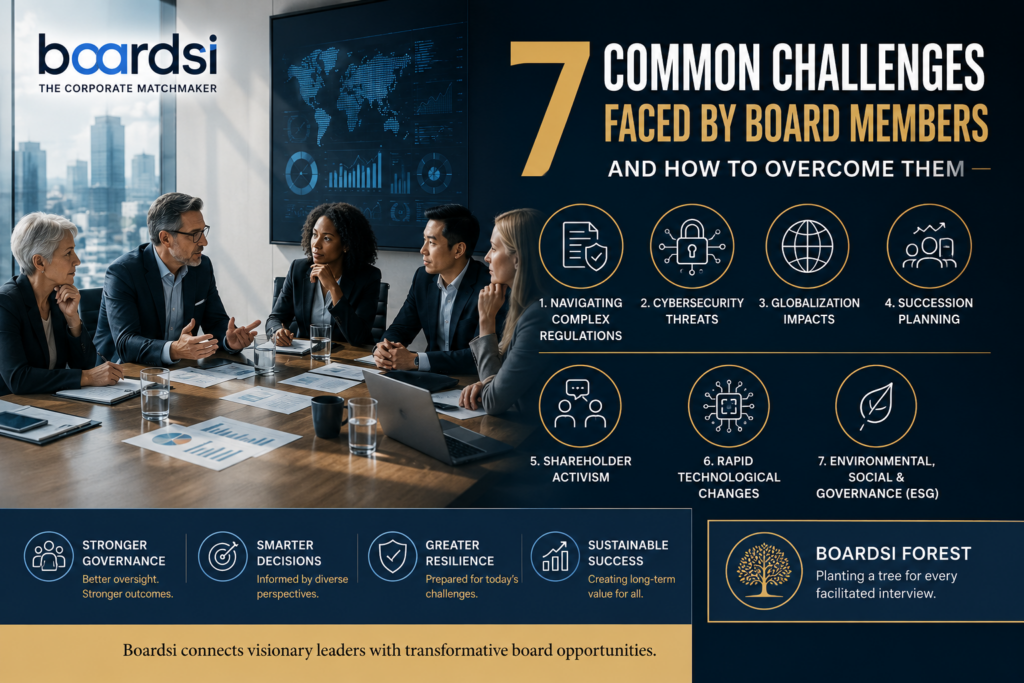
Serving on a company’s board of directors is both a privilege and a substantial responsibility. In today’s swiftly evolving corporate landscape, board members face a variety of challenges that can affect their effectiveness and the performance of the organizations they serve. Below, we discuss seven common challenges board members encounter and offer practical strategies to address these issues effectively.
1. Navigating Complex Regulations
The regulatory environment for businesses is more intricate than ever before. Board members must ensure compliance while fostering a culture of transparency and integrity. Actionable Takeaway: Regular training sessions on regulatory changes and employing compliance officers can be a proactive approach to staying ahead.
2. Cybersecurity Threats
As digital threats grow, boards must prioritize cybersecurity. Implementing robust security protocols and continuous monitoring are essential to protecting sensitive information. Actionable Takeaway: Ensure that cybersecurity experts are either on the board or consulted regularly to keep the board informed and responsive.
3. Globalization Impacts
Boards must adapt to the changing geopolitical landscape and its impacts on international operations. This involves understanding diverse cultural norms and economic conditions. Actionable Takeaway: Enhancing global literacy programs for board members can greatly facilitate better decision-making on international fronts.
4. Succession Planning
Effective succession planning ensures leadership continuity. Reflection on leadership needs and potential candidates regularly are key practices. Actionable Takeaway: Develop a clear, documented succession plan that’s revisited annually or as major changes occur.
5. Shareholder Activism
More shareholders are demanding a say in company affairs, which can shape strategic decisions. Board members should engage proactively with shareholders and consider their insights in decision-making processes. Actionable Takeaway: Regular, transparent communication with shareholders can preempt conflicts and align interests.
6. Rapid Technological Changes
With technology evolving rapidly, boards must keep abreast of technological advancements and their potential impacts. Actionable Takeaway: Regular technology updates in board meetings and strategic tech advisories can ensure the board’s technology quotient remains high.
7. Environmental, Social, and Governance (ESG) Issues
ESG factors are increasingly crucial in business strategies. Boards must integrate these into their core operations and reporting measures. Actionable Takeaway: Implementing ESG metrics into performance reviews and strategic planning can ensure better compliance and corporate responsibility.
Concluding Thoughts
Overcoming these challenges is not just about securing the company’s current standing but also about shaping its future. Engaging effectively with these issues requires a combination of strategic foresight, ongoing education, and open communication—a framework that Boardsi emphasizes through its innovative platform in connecting talented executives with dynamic board opportunities.
By fostering meaningful connections and leveraging advanced technology, Boardsi supports boards in navigating these complex landscapes more effectively, ensuring a more robust and resilient business environment.
—
BoardLeadership,