
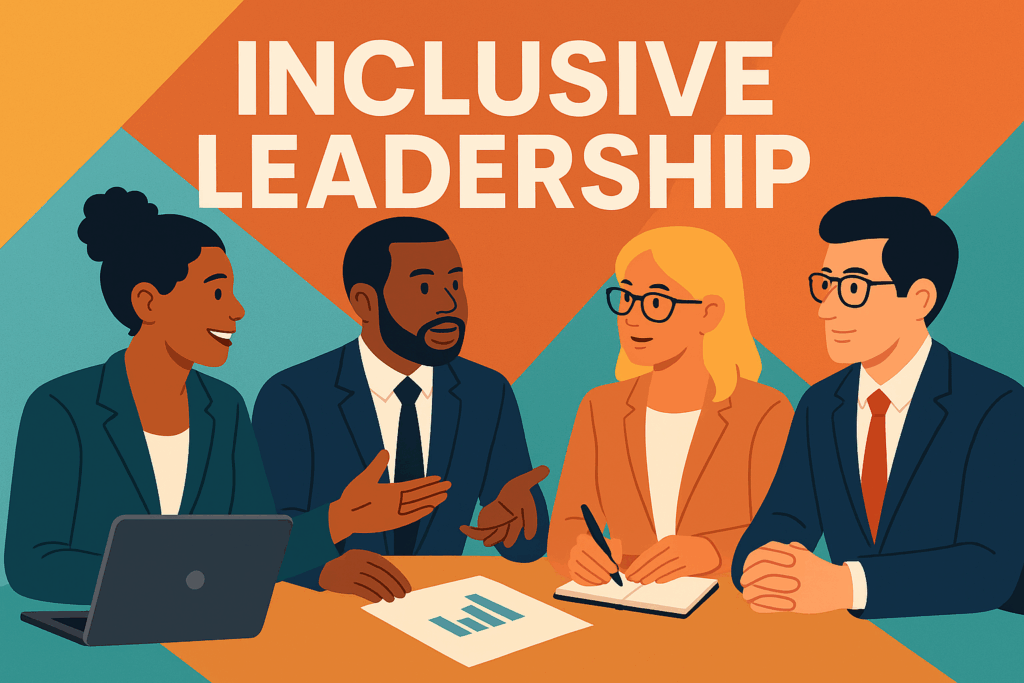
In today’s rapidly evolving corporate landscape, inclusive leadership is no longer a buzzword—it’s a business imperative. As boards strive to navigate uncertainty, embrace diversity, and drive strategic impact, inclusive leadership has emerged as a cornerstone of successful governance and executive effectiveness.
What Is Inclusive Leadership?
Inclusive leadership refers to a leadership style that actively seeks out and values diverse perspectives, creating a culture where all individuals feel respected, heard, and empowered to contribute. It’s about more than checking boxes on diversity—it’s about fostering equity, psychological safety, and belonging at every level of the organization.
Why Inclusive Leadership Matters for Boards
Diverse Thinking Drives Better Decisions
Boards with inclusive leaders benefit from cognitive diversity. When leaders invite different perspectives—be it from gender, race, background, industry experience, or generation—they reduce the risk of groupthink and open the door to innovative solutions.Stronger Company Culture and Retention
Inclusive leadership at the board level trickles down through executive teams and into the entire organization. Companies that model inclusivity from the top experience higher employee engagement, stronger retention, and better employer branding.Enhanced Governance and Risk Mitigation
Inclusive boards are better equipped to identify blind spots and anticipate risks. With more comprehensive viewpoints at the table, they’re more adept at spotting issues early and guiding organizations through complex environments.Investor Confidence and ESG Alignment
Environmental, Social, and Governance (ESG) criteria are more than just compliance—they’re a metric of long-term value. Inclusive leadership aligns with the “S” in ESG, signaling to investors a commitment to social responsibility and sustainable growth.
Characteristics of an Inclusive Leader
To truly embrace inclusive leadership, board members and executives must cultivate specific traits, including:
Empathy and Cultural Intelligence: Understanding the unique experiences and values of others.
Openness to Feedback: Actively listening and adapting based on input from all levels.
Accountability for Inclusion: Making inclusivity a measurable priority in board evaluations and decision-making processes.
Commitment to Continuous Learning: Engaging in DEI (Diversity, Equity, Inclusion) training and dialogue to challenge biases and grow.
How Boardsi Supports Inclusive Leadership
At Boardsi, we believe that the future of corporate leadership depends on inclusivity. Our platform is designed to match forward-thinking companies with diverse executive talent who embody inclusive leadership principles. Whether you’re a board seeking your next member or an executive ready to lead with purpose, Boardsi is your trusted partner in building a more inclusive tomorrow.
Final Thoughts
Inclusive leadership is not a trend—it’s the foundation of modern board excellence. Companies that prioritize inclusion at the highest levels are not just doing the right thing—they’re building a competitive advantage. Now is the time for boards to take a hard look at how they lead and who they invite to the table.
Looking to diversify your boardroom with inclusive leadership?
Connect with Boardsi today and start your journey toward transformative governance.
#InclusiveLeadership,#BoardroomDiversity,#ExecutiveLeadership,#CorporateGovernance,#DiversityInBusiness,#LeadershipDevelopment,#Boardsi,#ESGLeadership,#BoardRecruitment,#InnovativeLeadership