In an Era of Complexity, the Governance Bar Has Been Raised
For decades, corporate boards were defined by what they prevented—fraud, risk, mismanagement. Today, the stakes are higher. Markets are faster, stakeholders are louder, and disruption is no longer episodic—it’s endemic.
To meet the moment, boards must shift from backward-looking oversight to forward-facing stewardship. Governance in 2025 is no longer just about compliance. It’s about context, courage, and catalytic value creation.
From Rubber Stamp to Strategic Partner
Boards can no longer afford to be reactive. The most effective directors now act as intellectual partners to the CEO, shaping strategy, not just signing off on it. They bring both challenge and clarity—questioning assumptions, testing resilience, and anticipating change before it hits the balance sheet.
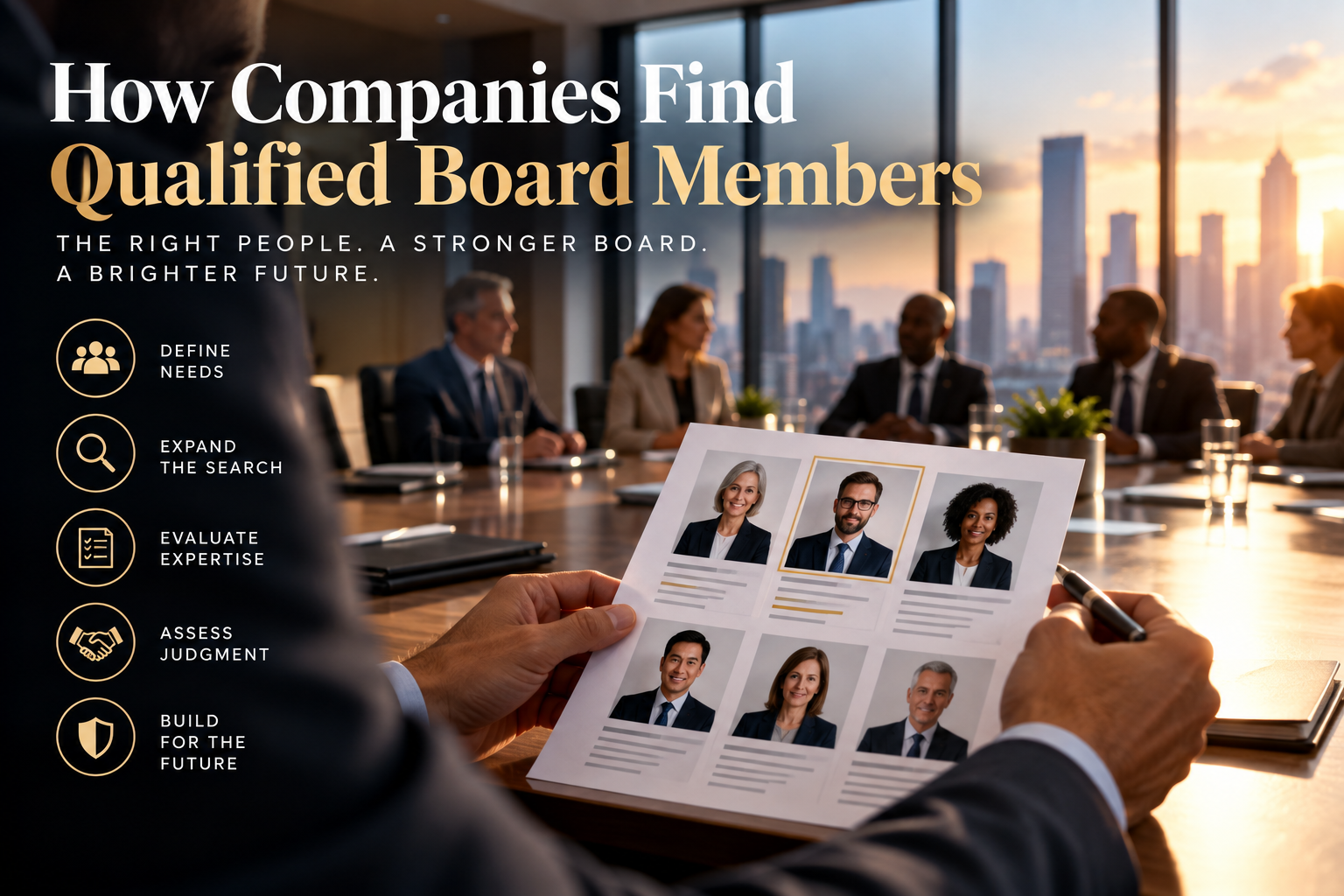
This requires a new board composition strategy—one that prioritizes digital fluency, geopolitical awareness, stakeholder empathy, and ESG literacy. Directors who only know capital markets and quarterly performance metrics are no longer enough.
Trust Is the New Governance Currency
Shareholder primacy is being replaced by stakeholder accountability. Customers, employees, regulators, and communities now have a seat at the governance table—whether boards acknowledge it or not.
Trust is fragile. Boards that fail to address culture, ethics, and transparency risk reputational tailspin. Those that lead with integrity—setting the tone from the top—build durable advantage. This means not just having the right policies, but the right posture.
Succession Planning Isn’t Just for CEOs Anymore
Board effectiveness is directly linked to the readiness of those who sit around the table. Yet too many boards operate without intentional renewal. Stale perspectives can’t drive fresh strategy.
Forward-thinking boards are now adopting succession planning not just for CEOs, but for themselves. This includes skills matrices, diversity benchmarks, and rigorous self-evaluation. Governance is no longer a static role—it’s a dynamic function that must evolve with the company.
A New Era Demands a New Type of Director
Today’s board directors must bring more than credentials. They must bring conviction. They must not only read reports—they must read the moment. And they must know the difference between operational noise and strategic signal.
Governance in the 2020s is being redefined not by bylaws, but by boldness. The most successful companies will be those whose boards are not just compliant—but catalytic.
The Bottom Line
Boardrooms are no longer just seats of accountability. They are now engines of transformation. The question for every director today is not “Are we doing things right?”—it’s “Are we doing the right things?”
Because in this environment, fiduciary responsibility is not just financial—it’s future-facing.
#BoardGovernance, #CorporateLeadership, #FutureOfWork, #ESG, #ExecutiveLeadership, #StakeholderCapitalism, #BoardOfDirectors, #StrategicStewardship