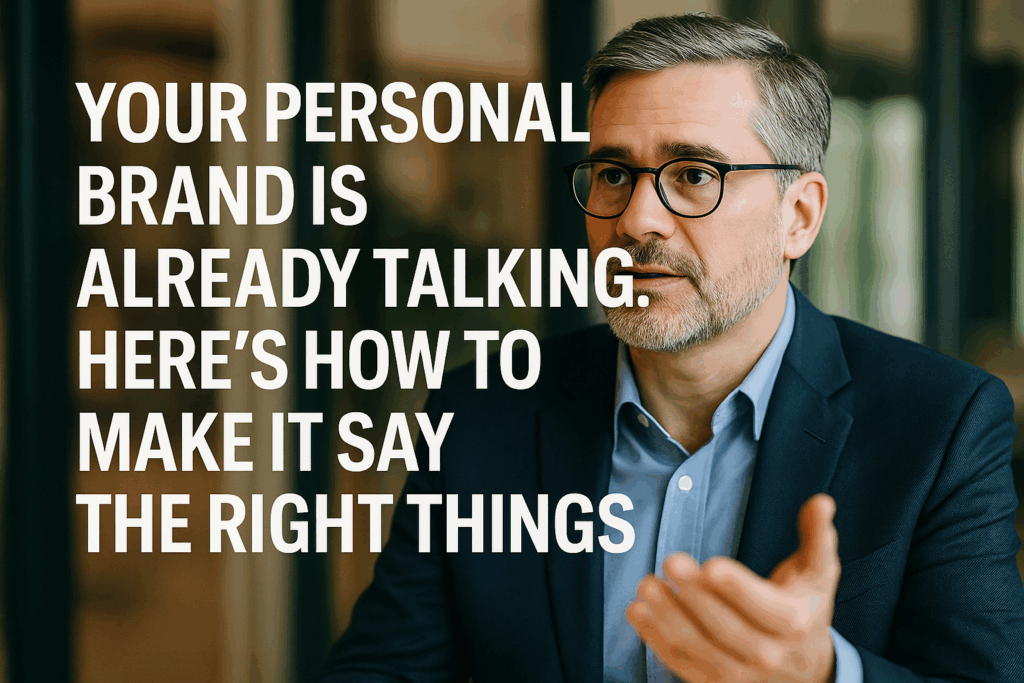
In today’s economy, trust travels faster than transactions. And whether you’re a founder raising capital, an executive leading change, or a rising leader positioning for your next move—your personal brand isn’t a luxury. It’s leverage.
But here’s the truth most professionals miss: You already have a personal brand. Even if you’ve never touched a LinkedIn headline or posted a single thought online, your reputation is already being shaped by what others experience—intentionally or not.
So the question isn’t if you have a personal brand. It’s whether you’re leading it or leaving it to chance.
Your Brand Is What Others Say in the Room You’re Not In
Jeff Bezos once called personal brand “what people say about you when you’re not in the room.” In leadership, that room often holds opportunity—an investor meeting, a board decision, a talent recruitment moment.
A strong personal brand answers three critical questions with clarity:
Who is this person?
What do they stand for?
Why does it matter to us right now?
If your LinkedIn summary reads like a résumé, your content is sporadic, and your presence feels overly curated or undercooked—you’re likely missing the mark.
Your Brand Is Built by Consistency, Not Charisma
You don’t need to be loud. You need to be clear. The most effective personal brands are not performative. They’re principle-based.
They are built at the intersection of three things:
Credibility: Your experience and results
Visibility: How and where you show up
Authenticity: How aligned your voice is with your values
Done well, your brand becomes an amplifier of your leadership—not a distraction from it.
Why Personal Brand Now?
The stakes have shifted. We live in an era of fractional executives, serial entrepreneurs, fluid career paths, and hybrid work. Your name is not just on your résumé—it’s on your ideas, your network, your digital footprint.
A strong personal brand:
Attracts the right opportunities instead of chasing them
Builds trust before the first meeting
Differentiates you in a sea of sameness
It’s also your hedge against obscurity in a world where attention spans are short—and perception often precedes performance.
Where to Start: Three Moves to Lead Your Brand
Define your brand positioning. What problem do you solve, for whom, and why are you credible? This should be distilled into a concise value statement.
Audit your digital presence. Search your name. Review your LinkedIn. Are you telling a cohesive story—or just listing credentials?
Share value consistently. Great personal brands give before they ask. Publish insights. Curate thoughtful content. Engage in real conversations.
Final Thought
In business, people don’t buy products. They buy stories. They buy trust. And they buy into people they believe in.
Your personal brand is not your ego. It’s your reputation at scale.
In the end, the most powerful brand you can build is the one that aligns what you believe, how you show up, and the impact you consistently deliver.
And that’s not self-promotion. That’s strategic leadership.
#PersonalBrand #Leadership #TrustCapital #ReputationMatters #ExecutivePresence #StrategicVisibility #CareerGrowth