In today’s governance landscape, the difference between a stagnant company and a thriving one often comes down to one factor: leadership at the top.
Not executive leadership.
Board leadership.
Organizations that consistently outperform their peers understand a critical truth—you don’t accidentally build a high performing corporate board. You design one.
The modern board is no longer a ceremonial body that meets quarterly to review financials. It is a strategic engine. A risk sentinel. A culture architect. A growth catalyst.
If you want to build a high performing corporate board, you must move beyond titles and résumés and begin thinking in terms of structure, trust, accountability, and long-term impact.
Here’s how.
1. Start with Purpose, Not Positions
Too many boards are assembled reactively—filling seats as vacancies arise, often through convenience or legacy relationships.
High-performing boards are different.
They begin with clarity of purpose:
What is this organization trying to become?
What risks threaten its trajectory?
What capabilities are required at the governance level?
When a board understands why it exists—its strategic mandate—it can align talent accordingly.
Purpose-driven boards:
Clarify their governance role versus management’s operational role
Establish a shared definition of success
Anchor decisions in long-term value creation
Without a clearly defined purpose, even the most accomplished directors operate in silos.
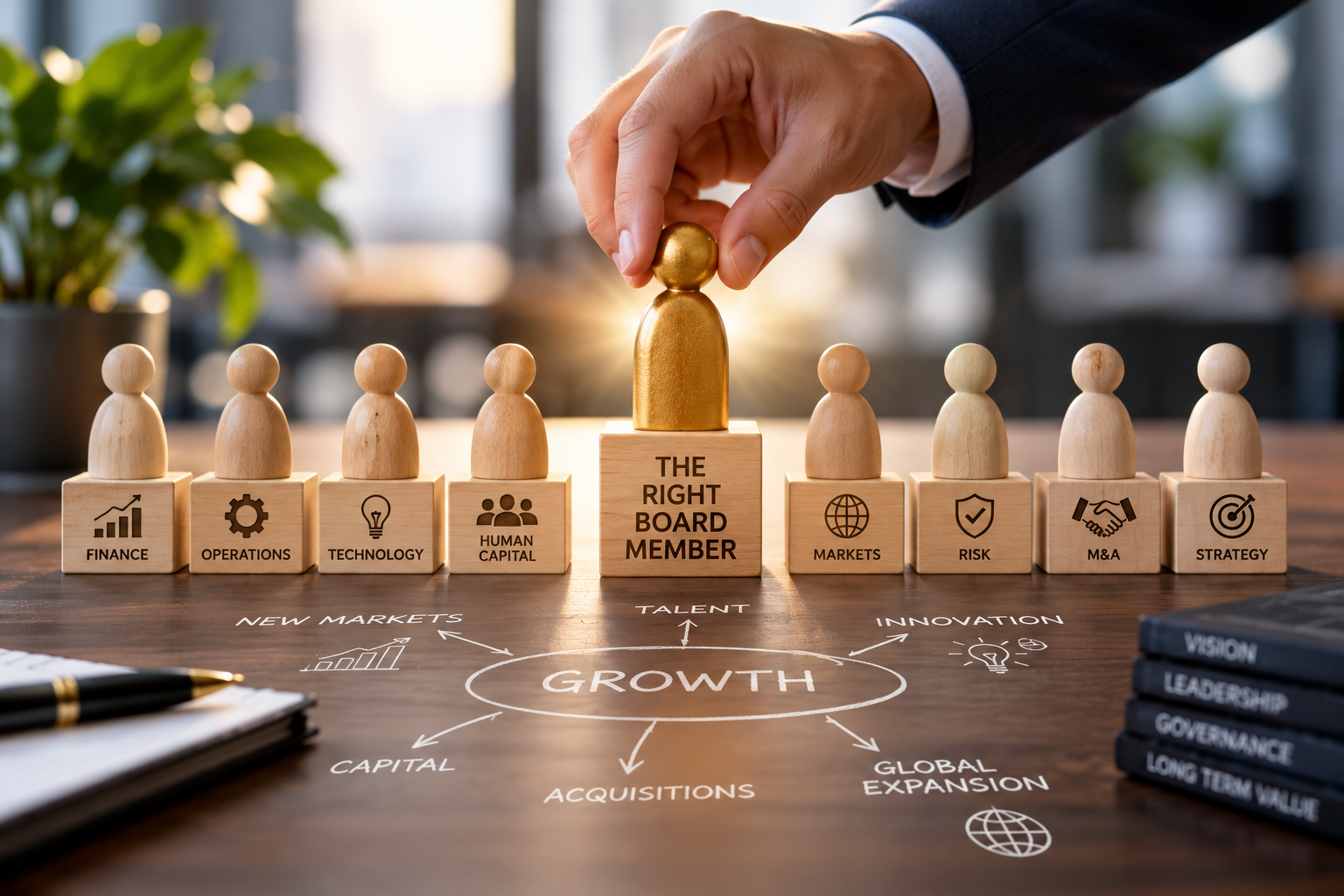
2. Recruit for Diversity of Thought, Not Just Prestige
To build a high performing corporate board, composition is everything.
But performance is not built on prestige alone.
While financial expertise and industry experience are important, high-functioning boards prioritize:
Cognitive diversity
Complementary skill sets
Varied professional backgrounds
Demographic diversity
Independent thinking
Research consistently shows that boards with diverse perspectives make better strategic decisions, manage risk more effectively, and avoid groupthink.
A board composed of individuals who all think alike may feel harmonious—but it will rarely be transformative.
The best boards create constructive tension.
They debate rigorously.
They challenge respectfully.
They decide collectively.
3. Establish a Culture of Trust and Accountability
Governance excellence is impossible without trust.
Board members must feel psychologically safe to:
Ask difficult questions
Challenge assumptions
Admit knowledge gaps
Disagree without personal fallout
At the same time, high performing corporate boards hold one another accountable.
They:
Expect preparation
Demand engagement
Evaluate their own effectiveness annually
Rotate leadership when necessary
Trust without accountability leads to complacency.
Accountability without trust leads to defensiveness.
Performance requires both.
4. Prioritize Strategic Oversight Over Operational Micromanagement
One of the fastest ways to undermine board effectiveness is role confusion.
When boards drift into day-to-day operations, they dilute their strategic influence. Conversely, when they disengage from oversight, risk exposure increases.
High-performing boards focus on:
Long-term strategy alignment
CEO evaluation and succession planning
Enterprise risk management
Capital allocation oversight
ESG and regulatory compliance
They ask forward-looking questions:
Where is our industry headed?
What blind spots are we missing?
What talent gaps will limit future growth?
Boards that stay future-focused create durable competitive advantage.
5. Commit to Continuous Education
Markets evolve. Technology accelerates. Regulations shift. Stakeholder expectations change.
If a board stops learning, it stops leading.
To build a high performing corporate board, organizations should:
Offer ongoing governance training
Conduct annual performance assessments
Benchmark against best-in-class boards
Stay informed on industry disruption
The most effective directors treat governance as a craft to be mastered—not a credential to be displayed.
6. Strengthen CEO and Board Chair Alignment
The relationship between the CEO and the board chair often determines governance health.
When aligned:
Strategy execution accelerates
Communication improves
Crisis response strengthens
When misaligned:
Organizational confusion increases
Trust erodes
Decision-making slows
Clear role delineation, structured communication cadence, and transparent performance expectations are essential to maintaining this partnership.
7. Build a Succession Mindset
High-performing boards think beyond their own tenure.
They proactively:
Develop director pipelines
Evaluate board refreshment needs
Plan CEO succession years in advance
Assess leadership bench strength
Succession is not a contingency plan—it is a leadership responsibility.
A board that avoids succession conversations risks instability during critical transitions.
8. Measure What Matters
If you want to build a high performing corporate board, you must measure performance intentionally.
Leading boards track:
Attendance and engagement metrics
Strategic milestone oversight
Risk mitigation effectiveness
Board self-evaluation outcomes
Stakeholder confidence indicators
Performance is not subjective—it is observable.
What gets evaluated gets improved.
The Strategic Advantage of Getting It Right
A high performing corporate board does more than fulfill fiduciary duty.
It:
Enhances investor confidence
Strengthens organizational culture
Attracts executive talent
Protects reputation
Drives sustainable growth
In a volatile global economy, governance quality is a competitive differentiator.
Companies that invest in board excellence outperform those that treat governance as compliance.
Final Reflection: Leadership at the Top
Peter Drucker once observed that “The best way to predict the future is to create it.”
Boards sit at the highest level of organizational influence.
Their vision shapes strategy.
Their discipline protects stability.
Their courage defines legacy.
If you want to build a high performing corporate board, begin with intention.
Design it carefully.
Develop it continuously.
Lead it courageously.
Because everything rises—and falls—on leadership.
And leadership starts in the boardroom.
#CorporateGovernance, #BoardLeadership, #HighPerformingBoard, #BoardOfDirectors, #GovernanceExcellence, #StrategicLeadership, #ExecutiveOversight, #BoardDevelopment, #BusinessStrategy, #LeadershipMatters, #BoardStrategy, #CEOLeadership, #CorporateGrowth, #Boardsi