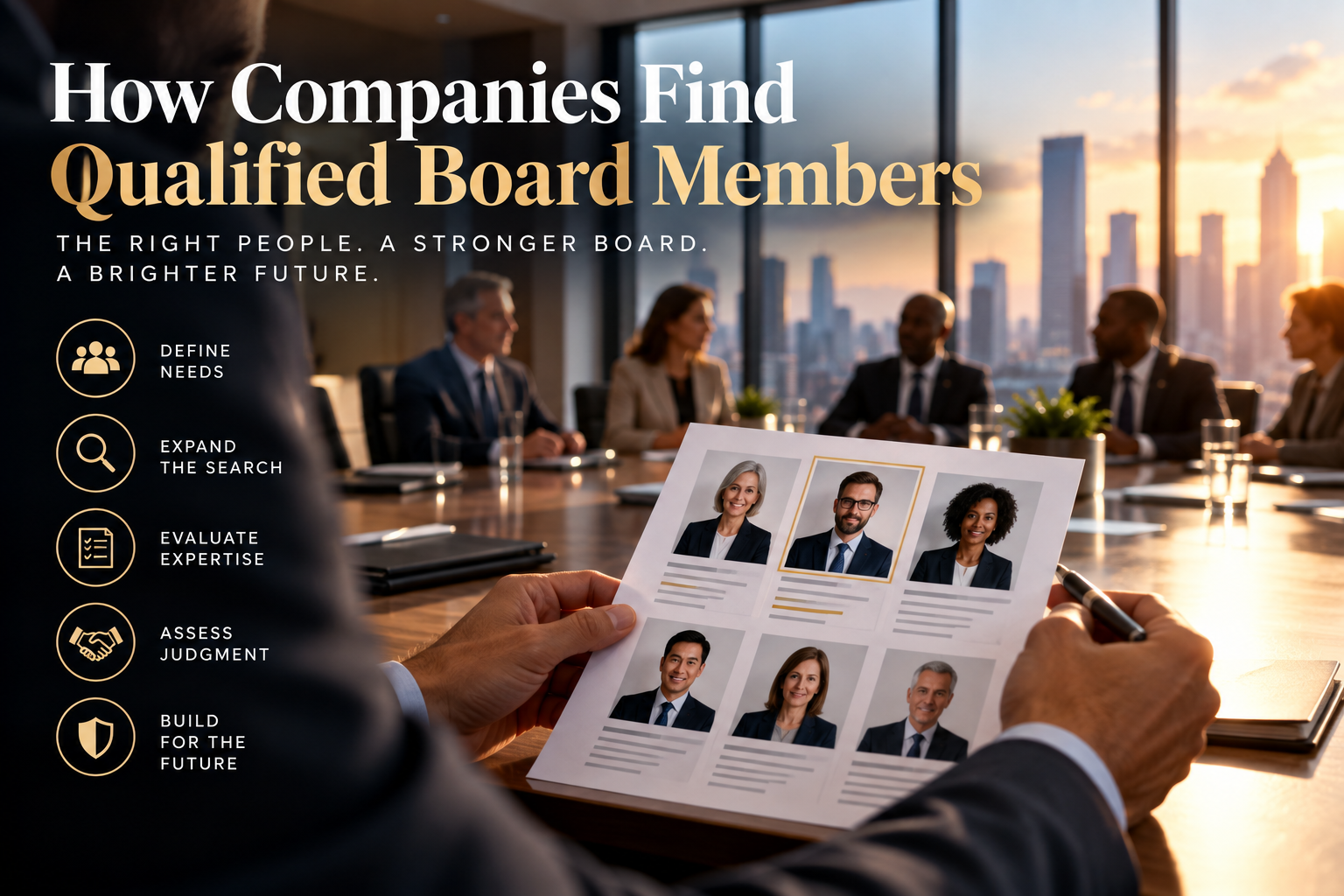
In the boardroom, insight isn’t measured by how much you know—but by how sharply you see. As governance grows more complex, the most effective boards are those that trade routine oversight for strategic foresight. They’re not just safeguarding enterprise value—they’re shaping it.
Here are five high-impact insights redefining how modern boards lead in today’s landscape.
1. Culture Is Not a Check-the-Box Topic—It’s a Strategic Lever
While most boards review culture as part of a risk matrix or ESG report, high-functioning boards understand that culture is a core business driver. They know it affects everything from brand trust to retention, innovation to crisis resilience.
The question isn’t, “Do we have the right culture metrics?”
It’s, “Are we modeling the culture we expect to see—starting in this room?”
Boards that ignore culture allow disconnection to metastasize. Boards that engage with it help CEOs shape environments where people thrive and performance follows.
2. Board Dynamics Are a Mirror of Leadership Integrity
You can’t fix what you refuse to surface. In low-trust boards, dissent gets buried, candor is political, and alignment is performative. In high-trust boards, uncomfortable truths are welcomed as a path to better decisions.
The courage to challenge assumptions—and be challenged in return—is what separates boards that supervise from boards that lead.
True board maturity shows up in how directors handle discomfort. Respectful dissent isn’t a threat; it’s the crucible of real alignment.
3. Oversight Without Curiosity Is a Liability
Compliance matters—but it’s not enough. The boards that create durable impact don’t just ask if the organization is in compliance; they ask if it is in alignment—with its purpose, values, and long-term strategy.
This means directors need more than financial fluency. They need contextual fluency: the ability to connect regulatory shifts, competitive pressures, and human factors into strategic clarity.
Boards that lead with curiosity don’t just mitigate risk. They anticipate it—and often outmaneuver it.
4. Psychological Safety Drives Performance at the Top
We don’t talk enough about fear in the boardroom. But it’s there—in the hesitation to speak candidly, the reluctance to admit what we don’t know, the posturing that masquerades as confidence.
High-performing boards create a culture where vulnerability isn’t penalized, it’s respected. Where directors can say, “I need more context,” or “I see this differently,” without being diminished.
Psychological safety isn’t softness—it’s what enables rigor. You can’t surface bold ideas or tough truths without it.
5. Boards Must Engage as Stewards, Not Just Strategists
It’s tempting to view governance as a technical discipline. But boards that leave the “human” out of decision-making often discover too late that they were solving for the wrong problem.
Stewardship requires zooming out: from this quarter to the next decade, from stock price to societal impact. It demands that directors think not just like fiduciaries, but like founders.
The most influential boards lead with a dual mandate: grow the enterprise and honor its legacy.
Final Thought:
We are entering an era where governance is not just about oversight, but about leadership at scale. Boards that ask better questions, model deeper trust, and lean into complexity with clarity will not just safeguard companies—they will transform them.
Because the real work of a board isn’t to predict the future.
It’s to prepare leaders to meet it—with courage, insight, and integrity.
#BoardLeadership, #CorporateGovernance, #ExecutiveInsight, #StrategicForesight, #OrganizationalCulture, #PsychologicalSafety, #CourageToLead, #LeadershipExcellence