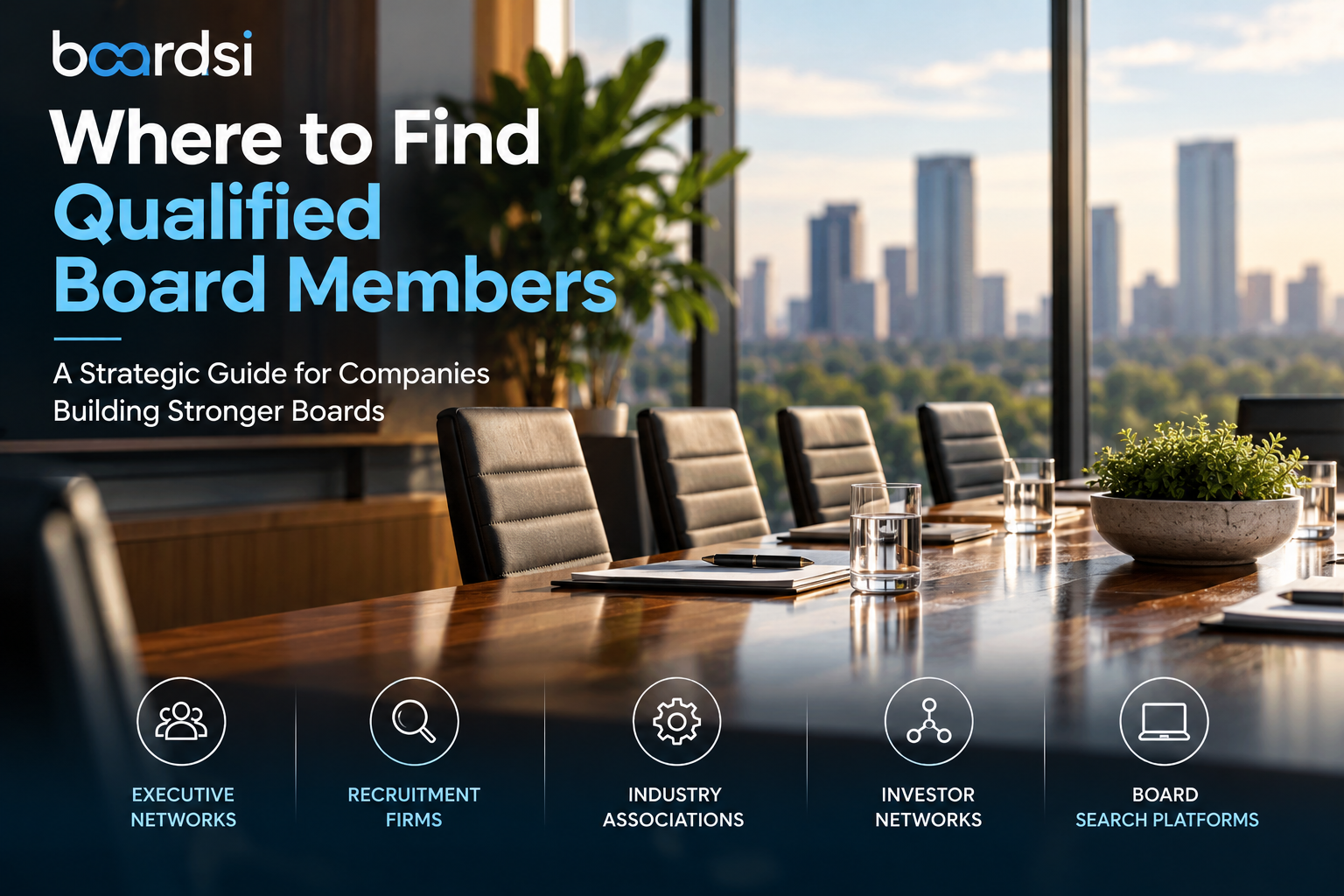

In an era where agility, innovation, and ethics define organizational success, board recruitment has become a critical function—not just a compliance step. Boards are evolving from ceremonial panels into strategic engines of influence, and the leaders you place in the boardroom today shape the resilience, reputation, and trajectory of your organization tomorrow.
At Boardsi, we work with thousands of businesses and executives worldwide. These are the board recruitment insights your leadership team must understand to stay ahead.
1. The Shift From Credential-Based to Capability-Based Selection
Traditional board recruitment leaned heavily on resumes and networks. While experience remains essential, high-impact boards now prioritize leadership agility, cultural fit, and the ability to navigate disruption. Forward-thinking organizations are seeking directors who bring innovation in governance, boardroom best practices, and digital boardroom insights—not just industry tenure.
2. Diversity Is Non-Negotiable
Board diversity isn’t a buzzword. It’s a business advantage. According to Harvard Business Review, diverse boards are better at stakeholder engagement, risk management, and long-term strategy. Whether in gender, ethnicity, experience, or thought, diversity on boards fuels richer discussions and stronger outcomes. Make it a cornerstone of your board recruitment strategy.
3. Talent Pipelines Must Be Proactive, Not Reactive
Gone are the days of last-minute appointments. High-performing companies build board talent management pipelines that mirror executive succession plans. Leveraging platforms like Boardsi helps you tap into a broader, global pool of vetted candidates—saving time while ensuring alignment with your mission, values, and corporate governance trends.
4. Board Readiness Is a Two-Way Street
Recruiting directors who are technically qualified but not board ready is a common mistake. True director development includes understanding fiduciary duties, emotional intelligence, and team dynamics. On the other side, organizations must also prepare new board members for onboarding with clarity around responsibilities, expectations, and cultural norms.
5. The Boardroom Is a Brand Extension
Your board members are ambassadors. In today’s hyper-connected world, every stakeholder interaction—investor meetings, public statements, media appearances—reflects on your company’s credibility. That’s why executive leadership development, boardroom insights, and corporate social responsibility experience are rising criteria in board candidate selection.
Final Thoughts
The future of leadership is being decided in boardrooms today. By applying these board recruitment insights, your organization can build a board that’s not only qualified but deeply aligned with your strategic vision.
Boardsi is here to guide you at every step—whether you’re building your first advisory board or refreshing your executive leadership team.
Let us help you recruit not just directors—but difference-makers.
#BoardRecruitment,#LeadershipInsights,#CorporateGovernance,#BoardDiversity,#Boardsi,#ExecutiveLeadership,#StrategicBoards,#ModernGovernance,#BoardroomBestPractices,#FutureOfLeadership