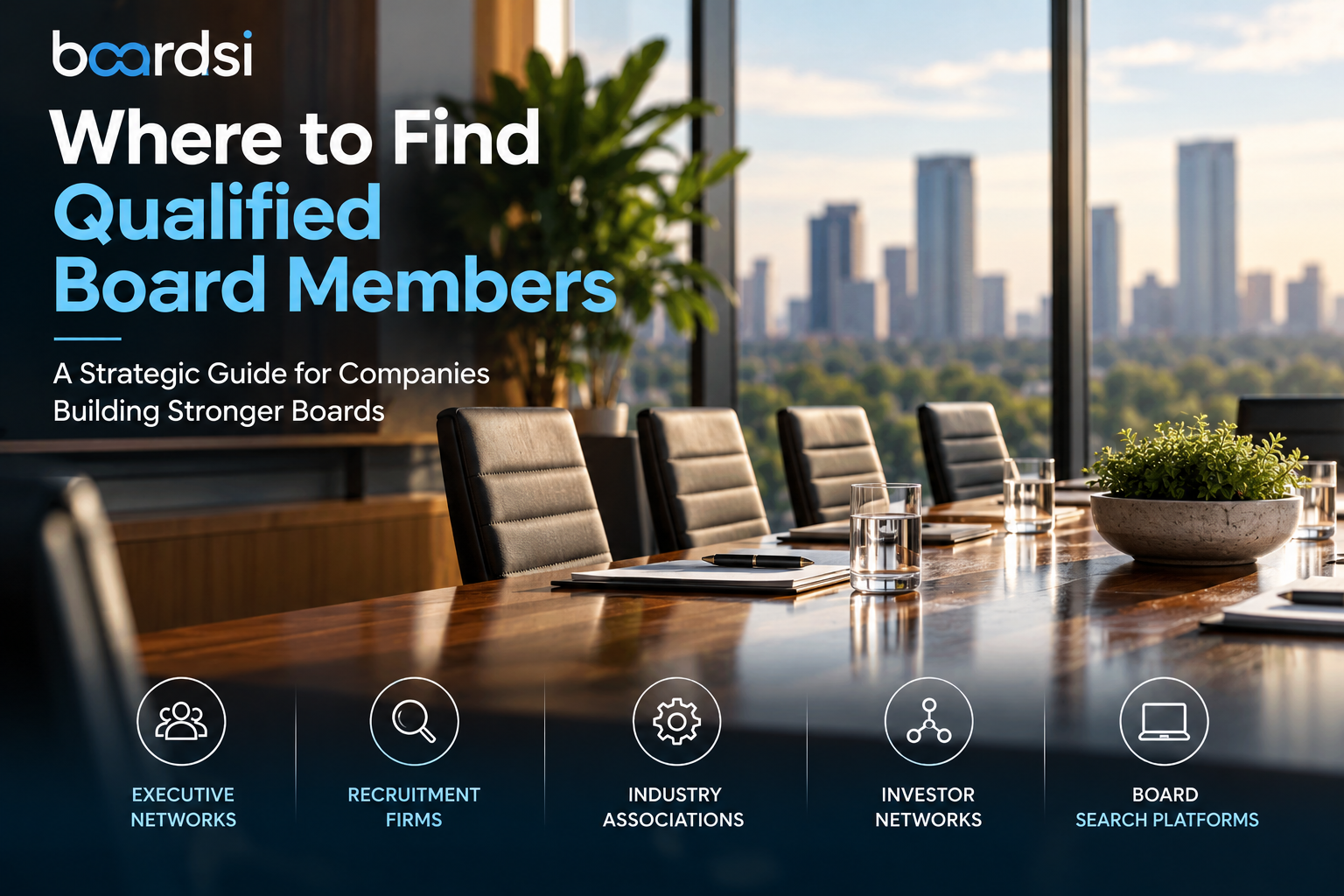

In a business environment defined by rapid disruption, expanding global markets, and constant innovation, the most valuable seats in the house may not be in the C-suite — they’re at the boardroom table. For ambitious executives and forward-thinking organizations alike, board opportunities have become more than prestigious titles; they’re strategic levers for influence, growth, and long-term impact.
Why Executive Board Roles Are Rising in Value
Once perceived as ceremonial, corporate boards have evolved into critical engines of strategy, risk management, and innovation. Today’s boards are charged with guiding companies through technological transformation, ESG imperatives, geopolitical uncertainty, and shifting consumer expectations.
For executives, serving on a board offers access to high-level decision-making far beyond their current role. It’s a front-row seat to observe and shape how different industries tackle growth, governance, and global challenges. For organizations, bringing in seasoned leaders with diverse experiences strengthens decision-making and investor confidence.
What Top Boards Are Looking For
The modern board seeks more than former CEOs and financial stewards. They’re actively recruiting:
Digital Transformation Leaders who understand AI, cybersecurity, and emerging tech.
Global Strategists with cross-border operational experience.
Diversity Champions committed to building inclusive leadership cultures.
Growth Architects who have scaled businesses or led major market expansions.
Functional expertise in areas like risk, compliance, sustainability, and talent strategy has become equally important to traditional financial oversight.
The Career Advantage for Executives
Joining a board isn’t just a résumé enhancer — it’s a leadership accelerator. Exposure to different business models, governance structures, and industry cycles expands strategic thinking and builds invaluable networks. Many executives report that board service sharpens their own decision-making, strengthens cross-functional collaboration, and deepens their understanding of investor and stakeholder priorities.
How Companies Benefit from Board-Level Talent
For organizations, the right board members bring:
Market Foresight: The ability to anticipate industry shifts before they impact performance.
Strategic Guidance: Insight rooted in experience, helping management avoid costly missteps.
Operational Perspective: Knowledge of best practices from other sectors and markets.
Capital Connections: Access to investors and funding networks that can accelerate growth.
Navigating the Path to the Boardroom
Breaking into board service requires a combination of expertise, visibility, and strategic positioning. Executives can strengthen their candidacy by:
Building a Distinct Value Proposition: Identify what you bring that aligns with board needs — whether it’s digital expertise, market expansion, or turnaround leadership.
Expanding Your Network: Engage with board search firms, industry associations, and existing directors.
Demonstrating Governance Acumen: Participate in nonprofit or advisory boards to showcase your ability to contribute at the governance level.
Positioning Thought Leadership: Publish, speak, and contribute to industry dialogues that highlight your expertise.
The Future of Board Service
As corporate governance becomes more complex, the boardroom will remain one of the most influential arenas for leadership. For executives ready to expand their impact — and for companies ready to future-proof their strategy — the right board opportunities are not just an honor, they’re a strategic imperative.
In an era when the pace of change can upend entire industries, the boardroom is where vision meets accountability. Those prepared to step into that arena will find themselves not only shaping the future of organizations but also redefining their own careers in the process.
#ExecutiveLeadership, #BoardOpportunities, #CorporateGovernance, #LeadershipDevelopment, #BoardroomStrategy, #CareerGrowth, #StrategicBoards, #ExecutiveCareers