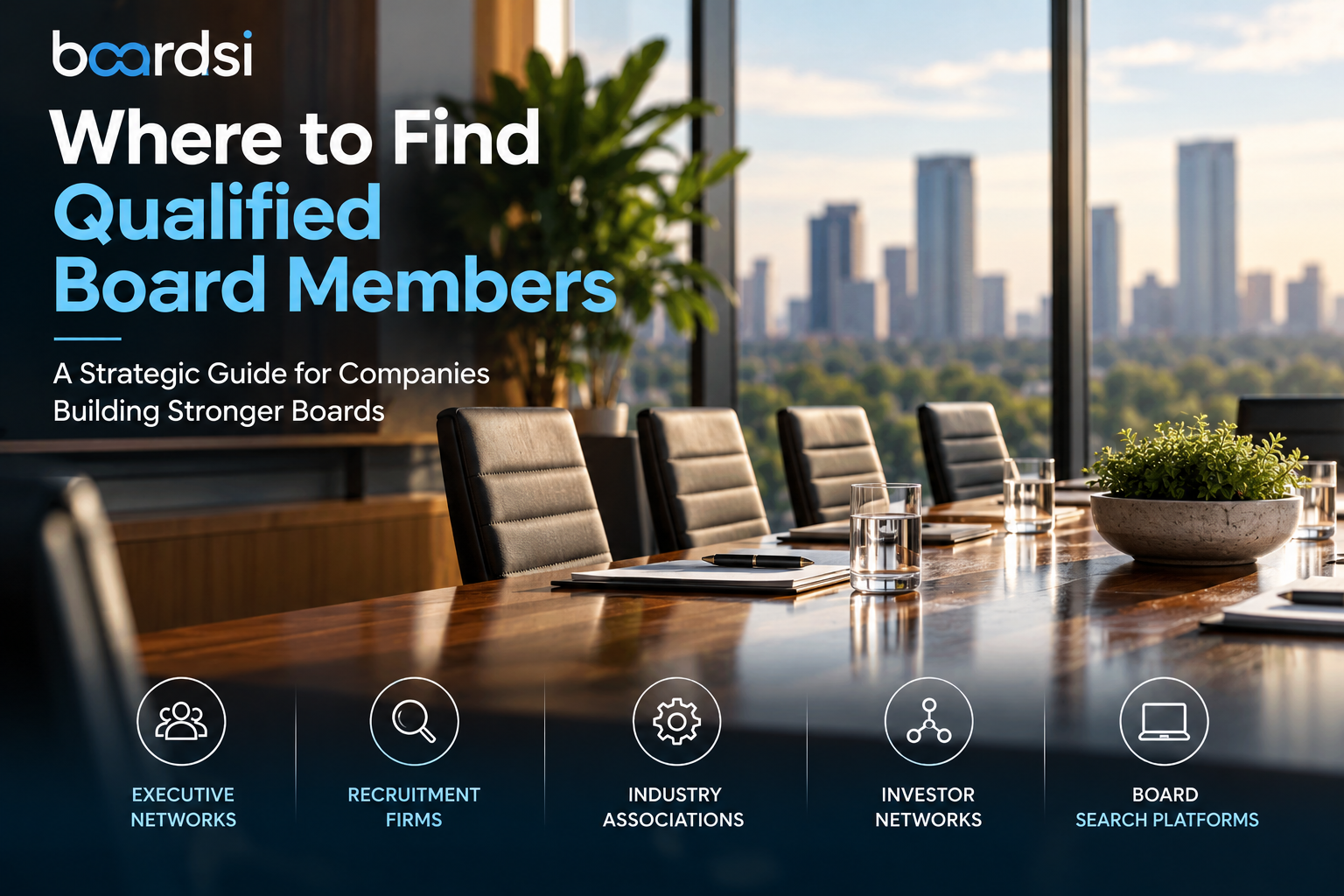

There is a dangerous misconception that follows many fast-growing companies.
Once revenue accelerates, funding arrives, and expansion begins, founders often believe the next milestone is recruiting recognizable names to their board of directors. Former Fortune 500 CEOs. Celebrity entrepreneurs. Well-known investors.
Prestige may impress investors.
But growth demands something far more valuable than reputation.
It demands relevance.
The companies that successfully scale from promising startup to enduring enterprise rarely do so because they assembled the most famous boardroom. They succeed because they surrounded themselves with directors who understood the unique challenges of scaling—and weren’t afraid to challenge leadership when it mattered most.
A growth-stage board isn’t ceremonial. It’s strategic infrastructure.
Every Stage Requires Different Leadership
A startup board often functions as an extension of the founding team. Conversations revolve around product-market fit, fundraising, hiring, and survival.
Growth changes everything.
The questions become more complex.
- How do we scale culture without diluting it?
- Which executives can grow with the company—and which cannot?
- How should governance evolve?
- When should international expansion begin?
- What risks are invisible because success is creating blind spots?
The board’s role evolves from supporting founders to strengthening the entire organization.
John Maxwell reminds us that “everything rises and falls on leadership.” Strong organizations are built not simply through visionary founders, but through systems of leadership that continue to mature as the business grows.
A growth-stage board becomes one of those systems.
The Best Board Members Ask Better Questions
Many founders expect board members to provide answers.
Exceptional board members do something more valuable.
They ask questions leadership hasn’t considered.
Instead of saying, “Here’s what I would do,” they ask:
“What assumptions are we making?”
“What happens if your biggest customer leaves tomorrow?”
“What leadership capability will this company need two years from now?”
“Where is growth creating operational risk?”
These questions force executive teams to think beyond quarterly performance.
They improve decision quality.
And over time, better decisions outperform brilliant ideas.
Independence Is More Valuable Than Agreement
Healthy boards are not echo chambers.
The strongest directors understand that their fiduciary responsibility is not to protect the CEO’s comfort—it is to protect the company’s future.
That requires courage.
Simon Sinek argues that great leadership is built on trust rather than authority. The healthiest organizations create environments where difficult conversations can occur before difficult outcomes become inevitable.
A board that agrees on everything is often a board that isn’t doing its job.
Constructive disagreement strengthens strategy.
Silent agreement weakens governance.
Growth Creates New Risks
Ironically, companies become more vulnerable after they begin succeeding.
Revenue masks inefficiencies.
Momentum hides poor decisions.
Strong hiring conceals weak management processes.
Customer demand can temporarily compensate for operational weaknesses.
By the time these problems become visible, they are often expensive to correct.
Experienced board members recognize these patterns because they’ve lived through them before.
Their value isn’t predicting the future.
It’s recognizing familiar mistakes before they become costly ones.
The Most Important Hire Isn’t Always an Executive
Growth-stage founders spend enormous energy recruiting executives.
Far less attention is often given to recruiting directors.
That imbalance can become expensive.
The right board member can influence CEO development, executive succession, capital allocation, governance, acquisitions, risk management, and long-term strategic direction.
Unlike executives, whose influence may be limited to a specific function, exceptional directors improve the quality of every major decision.
That’s leverage.
Diversity of Experience Beats Uniform Excellence
Effective boards don’t need directors who all think alike.
They need complementary expertise.
A scaling software company might benefit from directors with backgrounds in enterprise sales, cybersecurity, finance, international expansion, talent development, or regulatory affairs.
Different experiences create better conversations.
Different perspectives expose hidden assumptions.
The goal isn’t consensus.
The goal is stronger judgment.
Board Service Is Leadership, Not Recognition
Some directors view board appointments as career achievements.
The best directors view them as stewardship.
Leadership has never been about titles alone. Maxwell emphasizes that influence—not position—is the true measure of leadership. The most effective leaders create value by developing people, strengthening organizations, and preparing them for sustained success.
The same principle applies inside the boardroom.
The most valuable directors don’t dominate meetings.
They elevate them.
They listen before speaking.
They coach without controlling.
They challenge without undermining.
And they remember that governance exists to strengthen leadership—not replace it.
The Bottom Line
Every company eventually reaches a point where growth can no longer depend solely on the founder’s vision.
It depends on the quality of the leadership ecosystem surrounding that vision.
An exceptional growth-stage board does more than monitor performance.
It expands perspective.
It strengthens accountability.
It anticipates risk.
And perhaps most importantly, it helps founders become the leaders their next stage of growth requires.
In the end, companies are rarely limited by ambition.
More often, they are limited by the quality of the decisions made when everything appears to be going well.
That’s precisely when the right board matters most.