Why Board Service Is More Valuable Than Ever
For many executives and business leaders, serving on a board of directors represents the pinnacle of professional achievement. Board members play a critical role in shaping strategy, guiding leadership teams, overseeing governance, and helping organizations navigate growth and risk.
As companies face increasing complexity, the demand for qualified board members continues to rise. Organizations are seeking leaders with diverse experiences, industry expertise, financial acumen, and strategic insight.
If you’ve ever wondered how to become a board member, the good news is that board service is more accessible than many professionals realize. While experience and preparation are important, there are clear steps you can take to position yourself for board opportunities.
What Does a Board Member Do?
Before pursuing a board seat, it’s important to understand the responsibilities involved.
Board members are responsible for:
- Providing strategic oversight
- Supporting executive leadership
- Ensuring good corporate governance
- Monitoring financial performance
- Managing risk and compliance
- Protecting shareholder and stakeholder interests
- Helping organizations achieve long-term success
Unlike executives who manage daily operations, board members focus on the bigger picture and future direction of the organization.
Why Companies Need Strong Board Members
Modern boards are expected to do much more than approve budgets and attend quarterly meetings.
Today’s organizations need board members who can:
- Navigate economic uncertainty
- Guide digital transformation
- Advise on cybersecurity risks
- Support succession planning
- Strengthen corporate governance
- Drive innovation and growth
As a result, companies increasingly seek board candidates who bring unique perspectives and specialized expertise.
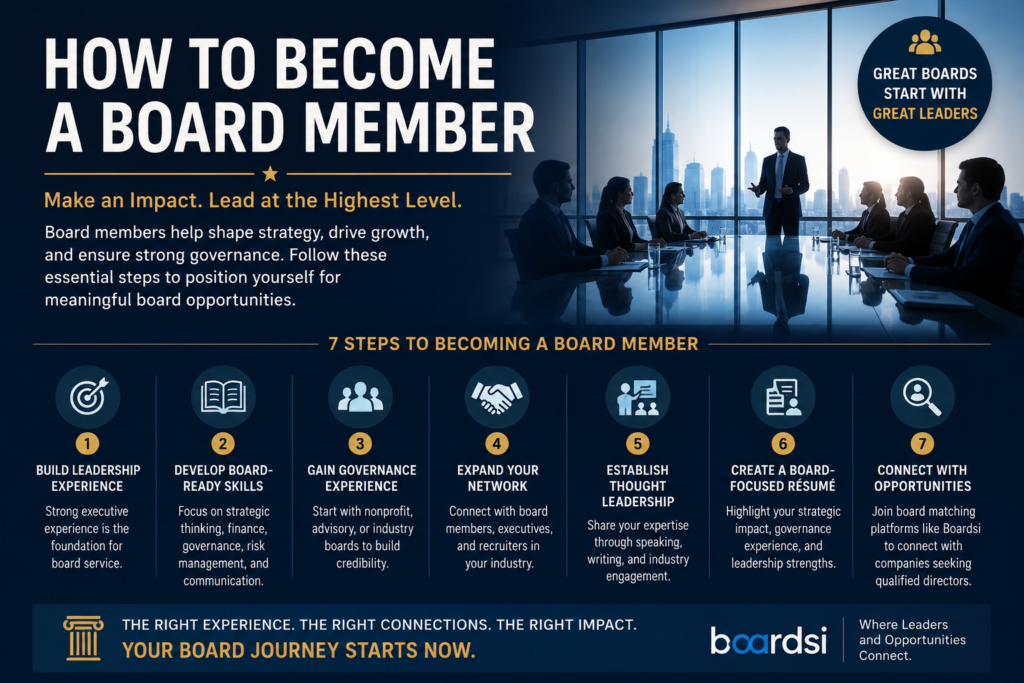
How to Become a Board Member
1. Build Executive-Level Experience
One of the most common paths to board service begins with leadership experience.
Many board members have backgrounds as:
- CEOs
- CFOs
- COOs
- Presidents
- Division leaders
- Entrepreneurs
- Senior executives
However, organizations are also seeking professionals with expertise in technology, cybersecurity, human resources, marketing, legal affairs, healthcare, and ESG initiatives.
The key is demonstrating strategic leadership and the ability to contribute at the governance level.
2. Develop Board-Ready Skills
Board service requires a different skill set than operational management.
Professionals seeking board positions should focus on developing:
Strategic Thinking
Boards must evaluate long-term opportunities and risks while guiding organizational direction.
Financial Literacy
Board members should understand financial statements, budgets, forecasting, and risk management.
Governance Knowledge
Understanding fiduciary responsibilities, compliance requirements, and governance best practices is essential.
Communication Skills
Board discussions often involve complex issues that require thoughtful dialogue and collaboration.
Risk Management
Strong board members understand how to evaluate risks while identifying opportunities for growth.
3. Gain Governance Experience
You do not need to start with a public company board.
Many successful directors build experience through:
- Nonprofit boards
- Advisory boards
- Industry associations
- Community organizations
- Startup boards
These opportunities allow professionals to develop governance skills, contribute strategically, and build a board-focused résumé.
4. Expand Your Professional Network
Networking remains one of the most effective ways to secure board opportunities.
Many board appointments occur through professional referrals and trusted relationships.
Focus on connecting with:
- Current board members
- Executive recruiters
- Corporate governance professionals
- Industry leaders
- Fellow executives
Attend governance conferences, leadership events, and board-focused networking opportunities to increase your visibility.
5. Establish Thought Leadership
Companies seek board members who are recognized experts in their fields.
You can build credibility by:
- Publishing articles
- Speaking at conferences
- Participating in industry panels
- Sharing insights on LinkedIn
- Contributing to professional organizations
Thought leadership demonstrates expertise while increasing your exposure to organizations seeking board talent.
6. Create a Board-Specific Résumé
A traditional executive résumé is not the same as a board résumé.
Board résumés should emphasize:
- Strategic leadership experience
- Governance expertise
- Financial oversight
- Risk management
- Industry knowledge
- Board and advisory experience
Focus less on operational accomplishments and more on enterprise-level impact.
7. Join a Board Matching Platform
One of the fastest ways to accelerate your board search is to join a professional board recruitment platform.
Organizations often struggle to identify qualified candidates, while talented executives struggle to access board opportunities.
Platforms like Boardsi help bridge this gap by connecting experienced professionals with companies seeking directors and advisors.
This creates a more efficient pathway for executives looking to secure their first board position or expand their board portfolio.
Common Misconceptions About Becoming a Board Member
Myth 1: You Must Be a CEO
While CEOs are common board candidates, organizations increasingly seek diverse expertise across multiple disciplines.
Myth 2: Board Positions Are Reserved for Retirees
Many companies actively recruit active executives who bring current industry knowledge and leadership experience.
Myth 3: You Need Previous Board Experience
While board experience helps, many organizations are open to first-time directors who possess strong leadership credentials and relevant expertise.
The Benefits of Board Service
Board membership offers significant professional and personal rewards.
Benefits often include:
- Expanded leadership influence
- Increased professional visibility
- Access to high-level networks
- Opportunities to shape organizational strategy
- Additional compensation
- Continuous learning and growth
For many executives, board service becomes one of the most fulfilling aspects of their careers.
The Future of Board Leadership
The boardroom is evolving rapidly.
Organizations now require directors who can provide strategic guidance in areas such as:
- Artificial intelligence
- Digital transformation
- Cybersecurity
- ESG initiatives
- Workforce development
- Innovation strategy
Professionals who invest in these capabilities position themselves as highly attractive board candidates.
As governance expectations continue to rise, the demand for skilled directors will only grow.
Final Thoughts
If you’re wondering how to become a board member, the path begins with intentional preparation, strategic networking, and a commitment to developing governance expertise.
Board service is no longer reserved for a select few. Organizations today are actively seeking experienced leaders who can provide strategic guidance, diverse perspectives, and strong governance oversight.
By building board-ready skills, expanding your network, gaining governance experience, and leveraging platforms like Boardsi, you can position yourself for meaningful board opportunities and make a lasting impact in the organizations you serve.
Ready to Explore Board Opportunities?
Boardsi connects executives, professionals, and industry experts with organizations seeking qualified board members and advisors. Create your profile today and take the next step toward joining a board.
#HowToBecomeABoardMember, #BoardMember, #BoardOfDirectors, #CorporateGovernance, #BoardLeadership, #ExecutiveLeadership, #AdvisoryBoard, #BoardOpportunities, #LeadershipDevelopment, #Governance, #StrategicLeadership, #BusinessLeadership, #BoardRecruitment, #ExecutiveNetworking, #BoardService, #LeadershipSkills, #ProfessionalGrowth, #BoardCareers, #Directorship, #Boardsi