As businesses continue to confront a rapidly changing economic landscape in 2026, corporate boards face an ever-increasing task of steering their organizations successfully through market uncertainties. The volatility we’re witnessing—from geopolitical tensions to emerging technologies—demands robust, adaptable governance strategies. Here’s how corporate boards can remain resolute and reactive.
Understanding the Present Landscape
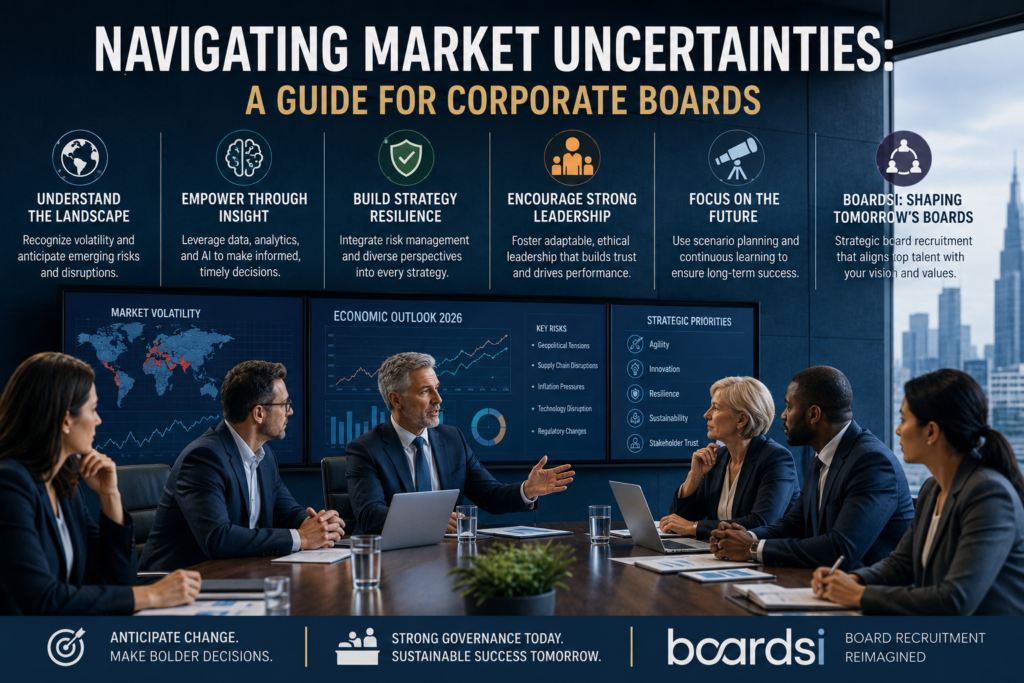
The past few years have shown that volatility is the only constant. With economic recoveries intertwined with setbacks like supply chain disruptions and fluctuating markets, boards need to continually adapt and foresee potential impacts on their businesses. This context makes it imperative for board members to possess a blend of expertise and agility.
Empowering through Insight
To navigate these challenging waters, knowledge is power. Corporate boards must utilize advanced analytics and AI-driven insights to predict market trends and assess risks effectively. Real-time data analysis aids in navigating sudden shifts, ensuring that decisions are information-rich and timely.
Strategy Resilience
Resilience is now a strategic imperative. It’s essential for boards to formulate strategies that are not just reactive but proactive. Diverse viewpoints contribute to a more comprehensive strategy, where risk management becomes integrated into every decision-making process.
Encouraging Strong Leadership
In tumultuous times, leadership can make or break a company. Boards play a critical role in defining the company’s leadership ethos, ensuring that it is adaptable, transparent, and ethical. This goes a long way in maintaining stakeholder trust and corporate reputation during crises.
Future-Focused Governance
With the pace of change accelerating, boards must look beyond the immediate challenges to ensure long-term sustainability. This involves embracing innovative practices like scenario planning and fostering a culture of continual learning and adaptation.
Boardsi’s Role in Shaping Tomorrow’s Boards
At Boardsi, we are committed to revolutionizing board recruitment by leveraging advanced technology coupled with meaningful human connections. Our aim is not just to fill positions but to strategically align talents to board roles where they can effectively guide companies through these uncertain times.
Conclusion
Corporate boards that anticipate change, harness innovative technologies, and embed resilience into their strategic planning are better positioned to navigate any uncertainty. By fostering robust governance frameworks and culture, Boardsi continues to empower boards and companies to not just survive but thrive amidst market volatilities.
In embracing these strategies, the role of boards evolves from mere governance to becoming pivotal strategic assets that drive their companies forward in unpredictable times.
#CorporateBoards, #MarketTrends2026, #RiskManagement, #InnovationInGovernance, #BoardsiLeadership, #FutureFocused, #BoardRecruitment, #StrategyResilience