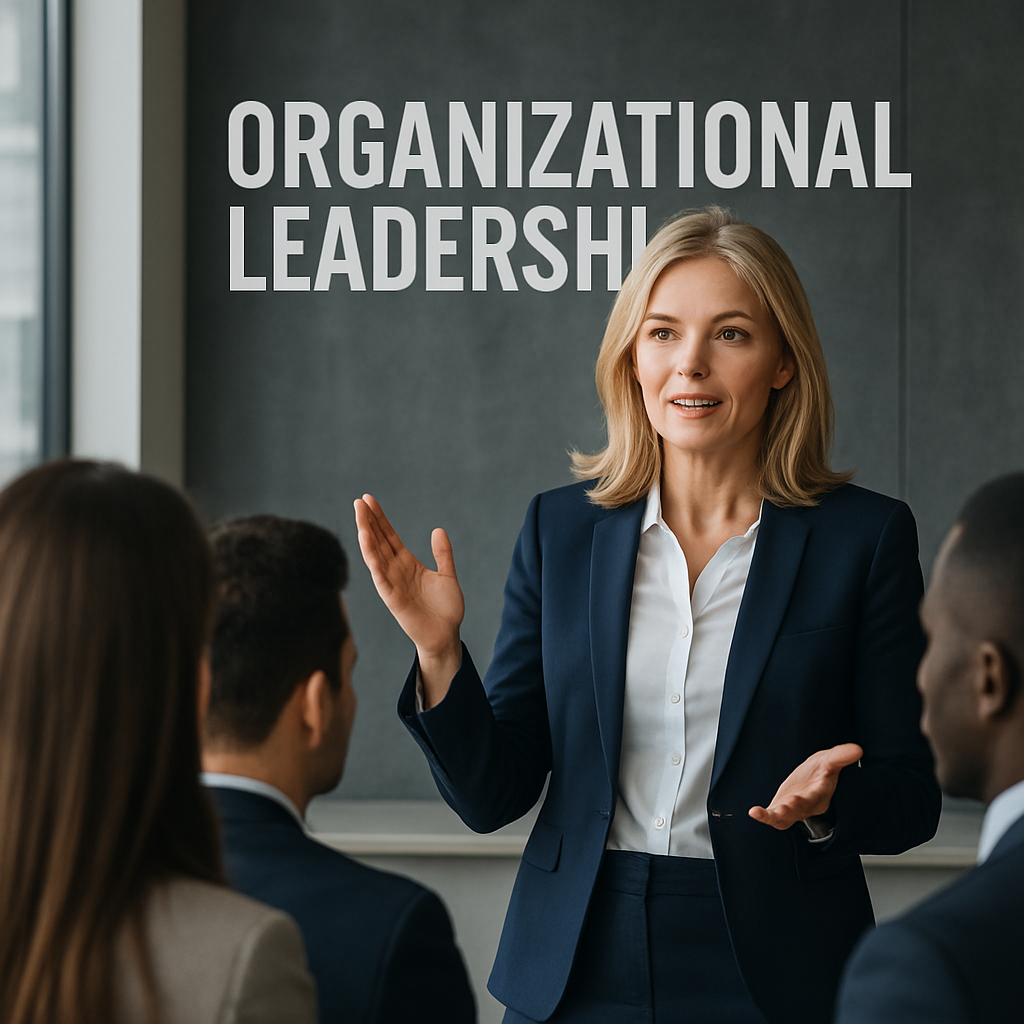
In a world obsessed with disruption and digital transformation, one principle remains timeless: great organizations rise on the shoulders of great leadership. Not leadership as a title or function—but organizational leadership as a discipline rooted in purpose, clarity, and alignment.
From startups to Fortune 500s, businesses are learning that sustainable growth hinges less on products or capital and more on the ability to lead well across the enterprise. Organizational leadership, in its most effective form, is not about authority. It’s about influence. And influence—measured by the ability to rally people toward a shared goal—is what separates companies that scale from those that stall.
What Is Organizational Leadership?
Organizational leadership is the practice of steering an entire system—people, processes, and priorities—toward a strategic vision. It transcends individual leadership by emphasizing culture, structure, and collective alignment. Where traditional leadership often focuses on top-down directives, organizational leadership fosters a distributed model: empowering leaders at all levels to take ownership of results.
This model matters because complexity is the new normal. As organizations scale, so do silos, bottlenecks, and confusion. Without unified leadership, even the most visionary companies risk internal drift.
The Three Anchors of High-Impact Leadership
Purpose-Driven Clarity
Purpose is not a poster on the wall—it’s the pulse of the organization. Leaders who articulate a clear “why” align teams faster and attract top talent who want more than a paycheck. According to Deloitte, purpose-driven companies outperform the market by 42% in financial returns.
Strategic Cohesion
It’s not enough to have a strategy. Leaders must ensure every department, initiative, and team goal ladders back to it. Organizational leadership builds this coherence—translating vision into day-to-day priorities and metrics.
Cultural Accountability
Great leaders design culture by what they tolerate, celebrate, and expect. Organizations with strong leadership cultures score significantly higher on engagement and retention. The best leaders don’t just manage performance; they model the behaviors they want scaled.
Why It’s More Urgent Than Ever
Post-pandemic volatility, hybrid work, generational shifts—these aren’t trends. They’re tectonic shifts. Organizations need leaders who can navigate complexity with resilience, empathy, and strategic acuity.
This is where many leadership models fall short. They equip individuals to manage, but not to lead organizationally. To lead across silos. To build trust at scale. To inspire action through purpose and strategy—not fear or control.
Building the Next Generation of Organizational Leaders
Here’s the truth: leadership doesn’t automatically rise with title or tenure. It must be developed intentionally. Organizations serious about scaling must do three things:
Invest in leadership development beyond the executive level
Build systems for cross-functional alignment and feedback
Create succession pipelines that promote vision-aligned talent
Final Thought
In a world of fleeting advantages, organizational leadership is the enduring edge. It cannot be outsourced. It cannot be automated. And in the hands of those who steward it wisely, it becomes the catalyst for not just growth—but greatness.
#OrganizationalLeadership,#ExecutiveLeadership,#LeadershipDevelopment,#BusinessStrategy,#CorporateCulture,#LeadershipMindset,#HighPerformance,#StrategicLeadership,#PurposeDriven,#ForbesStyle