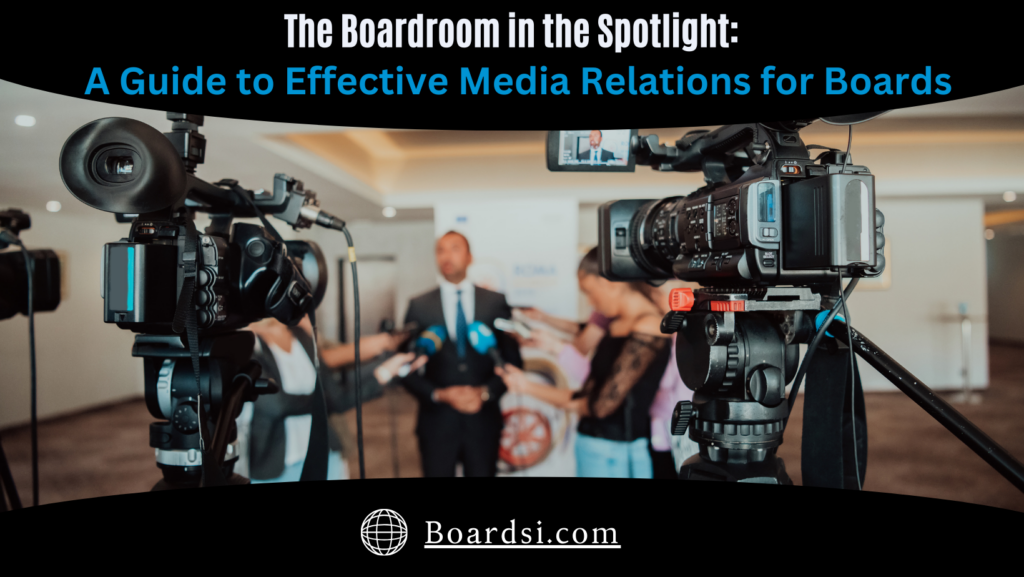
The media landscape has undergone a dramatic shift. Today’s boards operate under a constant media microscope. Effective media relations for boards is no longer a luxury, it’s a necessity. This article explores the importance of strategic media engagement, delves into best practices for board communication, and provides valuable tips for navigating media inquiries.
Why Prioritize Media Relations for Boards?
- Shape Public Perception: Proactive media engagement allows boards to shape public perception of the organization’s mission, values, and strategic direction.
- Enhance Transparency & Trust: Open and transparent communication with the media builds trust with stakeholders and fosters a positive reputation.
- Mitigate Crisis & Controversy: A well-established media relations strategy facilitates effective communication during times of crisis or controversy, minimizing reputational damage.
- Attract & Retain Top Talent: Positive media coverage showcasing the organization’s leadership and values can be a powerful tool for attracting and retaining top talent.
- Promote Shareholder Value: Strong media relations can contribute to increased investor confidence and ultimately, shareholder value.
Best Practices for Board Media Communication:
- Develop a Clear Media Relations Strategy: Establish guidelines for board communication with the media, including designated spokespersons and messaging frameworks.
- Media Training for Board Members: Equip board members with the necessary skills to confidently and effectively communicate with the media.
- Proactive Media Outreach: Develop relationships with key media outlets and journalists covering your industry.
- Transparency & Consistency: Be transparent and consistent in your communication, providing accurate and timely information to the media.
- Embrace New Media Platforms: Utilize social media platforms and other digital channels to communicate directly with stakeholders.
Tips for Navigating Media Inquiries:
- Be Prepared: Anticipate potential media inquiries and develop clear, concise talking points beforehand.
- Stay on Message: Stick to the key messages you want to communicate and avoid going off on tangents.
- Be Honest & Transparent: If you don’t know the answer to a question, be honest and offer to provide additional information later.
- Don’t Be Afraid of Silence: It’s okay to take a moment to collect your thoughts before responding to a question.
- Follow Up & Be Responsive: Respond to media inquiries promptly and follow up with any additional information promised.
Boardsi: Your Partner in Effective Media Relations
At Boardsi, we understand the importance of media relations for boards. We offer a suite of services designed to help boards navigate the media landscape:
- Media Relations Strategy Development: We assist boards in developing a comprehensive media relations strategy tailored to their specific needs and objectives.
- Media Training for Boards: Our experienced media trainers provide board members with the skills and confidence to excel in media interviews.
- Media Outreach & Crisis Communication: We help boards develop relationships with key media outlets and develop crisis communication plans to address unforeseen situations.
- Media Monitoring & Analysis: We monitor media coverage of your organization and provide insights to inform your ongoing media strategy.
By developing a strong media relations strategy, boards can effectively engage with the media, shape public perception, and navigate the ever-evolving media landscape. Partner with Boardsi today and ensure your board is prepared to communicate with confidence and clarity.
Ready to step into the spotlight? Contact Boardsi today and learn how we can empower your board with effective media relations strategies.
#boardmedia #mediarelations #boardcommunication #crisiscommunication #digitalage