In an era defined by accelerating disruption, strategic foresight is no longer a competitive advantage. It is a fiduciary responsibility.
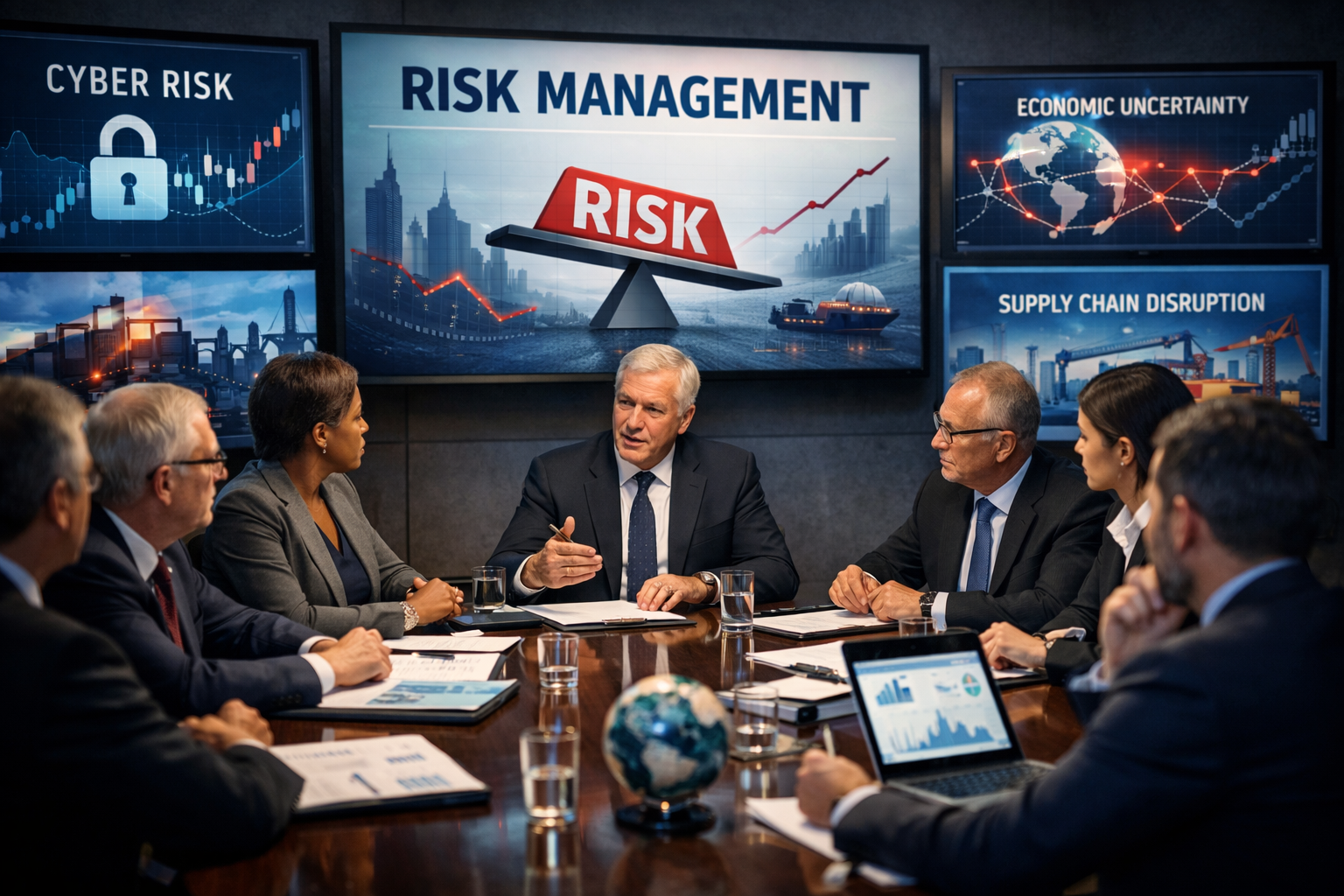
For decades, boards focused primarily on oversight—financial performance, compliance, executive succession and risk management. Today, those responsibilities remain. But they are no longer sufficient. Artificial intelligence is reshaping industries in real time. Geopolitical tensions are redrawing supply chains. Climate volatility is altering capital allocation. Stakeholder expectations are evolving faster than regulatory frameworks.
In this environment, governance without foresight is governance in hindsight.
The most effective boards are no longer asking, “What happened?” They are asking, “What’s next?”
From Oversight To Anticipation
Strategic foresight is not prediction. It is disciplined anticipation.
It is the structured practice of scanning external signals, assessing plausible future scenarios and stress-testing strategic assumptions before disruption forces reaction. It shifts the board’s posture from reactive oversight to proactive stewardship.
Traditionally, management teams owned strategy while boards evaluated it. That model worked in relatively stable markets. But when technological cycles compress and systemic risks compound, boards must elevate their role—not by operating the business, but by challenging the future.
High-performing boards institutionalize foresight by:
Embedding macro-trend reviews into every strategic discussion
Regularly stress-testing long-term strategy against multiple future scenarios
Allocating agenda time to emerging risks and weak signals
Aligning capital allocation with long-term strategic resilience
They treat foresight as an ongoing discipline, not an annual retreat exercise.
The Risk Of Linear Thinking
Most governance failures are not caused by negligence. They are caused by linear assumptions in non-linear environments.
Boards often anchor strategy to historical performance curves. But disruption rarely follows precedent. It compounds, intersects and accelerates.
Consider how quickly digital-native competitors redefined retail. Or how regulatory shifts reshaped financial services. Or how generative AI moved from experiment to enterprise priority in months.
The common denominator in organizations that faltered was not lack of intelligence. It was lack of imagination.
Strategic foresight forces directors to confront uncomfortable questions:
What assumptions underpin our current business model?
Which of those assumptions could become obsolete within five years?
If a new entrant designed this company from scratch today, what would it look like?
Where are we overconfident?
These are not operational questions. They are governance questions.
Building A Foresight-Ready Board
Strategic foresight begins with board composition.
Boards built for a previous era often lack fluency in emerging domains—digital ecosystems, cybersecurity architecture, AI ethics, climate risk modeling or geopolitical risk. Diversity of expertise, industry background and cognitive style becomes critical.
But composition alone is insufficient. Culture determines impact.
Foresight-ready boards cultivate:
Psychological safety that allows dissenting viewpoints
Curiosity over complacency
Data-informed debate without analysis paralysis
A long-term orientation that resists short-term market noise
When directors are empowered to challenge prevailing narratives, blind spots surface early—before they become crises.
Scenario Planning As Strategic Insurance
One of the most practical tools boards can deploy is scenario planning.
Rather than relying on a single forecast, boards should work with management to develop multiple plausible futures—best case, worst case and transformative case. These are not predictions; they are rehearsal.
Scenario planning strengthens governance by:
Clarifying trigger points that require strategic pivots
Identifying capital buffers required for resilience
Revealing talent gaps under different futures
Testing supply chain robustness under geopolitical stress
Organizations that practice scenario planning do not eliminate risk. They build strategic muscle memory.
And when volatility strikes, they respond with composure rather than panic.
The Long View Wins
Markets reward short-term performance. Stakeholders reward long-term stewardship.
Boards sit uniquely at the intersection of both pressures. Their responsibility is to protect the enterprise not just for the next quarter, but for the next decade.
Strategic foresight anchors governance in that longer horizon. It shifts conversations from “How do we hit next year’s targets?” to “What must be true for this organization to thrive five years from now?”
Companies that embed foresight into governance consistently demonstrate three advantages:
Resilience during disruption
Agility in capital deployment
Credibility with investors and stakeholders
Preparedness builds confidence. Confidence builds trust.
The Competitive Edge Of Preparedness
The boardroom of the future will not be defined by pedigree. It will be defined by preparedness.
Directors who commit to continuous learning, disciplined scenario analysis and macro-level awareness elevate governance from oversight to leadership. They do not wait for disruption to clarify priorities. They anticipate it.
In a business landscape where the only constant is acceleration, foresight is no longer theoretical. It is strategic insurance.
The question facing every board is simple:
Are we reacting to the future—or preparing for it?
The answer will determine not only enterprise value, but organizational legacy.