
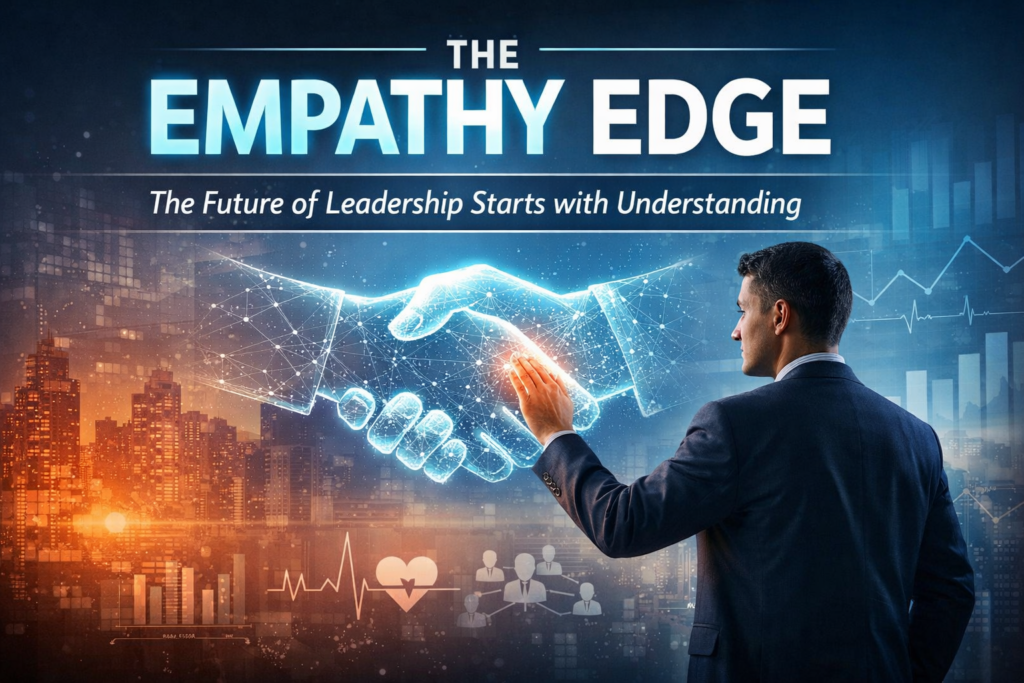
In an era marked by economic uncertainty, workforce transformation, and cultural complexity, one leadership trait is fast becoming a competitive advantage: empathy.
Not long ago, empathy was considered soft — a virtue best reserved for HR or team-building retreats. Today, it’s at the center of strategic decision-making. From boardrooms to breakrooms, executives who lead with empathy are not only cultivating healthier cultures — they’re driving performance.
Empathy Is Not Optional
According to a recent EY study, 86% of employees say empathetic leadership boosts morale, and 87% say it builds trust. But perhaps more striking: 60% of employees say they’d consider leaving their company if leaders didn’t show empathy.
The message is clear. In a talent economy, empathy is retention.
But it goes beyond keeping people happy. Empathetic leaders are better equipped to anticipate customer needs, respond to stakeholder concerns, and navigate disruption with agility. They understand the business case for compassion.
Empathy in Action
Consider Satya Nadella at Microsoft. When he stepped into the CEO role in 2014, the company was known more for its competitiveness than collaboration. Nadella made empathy central to the company’s culture — not as a buzzword, but as a business tool. The results? Microsoft’s market cap tripled under his leadership, and its internal culture shifted from cutthroat to connected.
Empathy also plays a critical role in innovation. Leaders who listen deeply — not just to data, but to lived experience — are more likely to build inclusive products, ask better questions, and challenge their own assumptions. Empathy drives relevance.
From Trait to Practice
Executive empathy isn’t about being nice. It’s about being attuned. It requires:
Curiosity without judgment — asking before assuming.
Presence under pressure — listening even when it’s inconvenient.
Courage to act — making decisions that reflect understanding, not just efficiency.
Cultivating empathy at the top also sends a powerful message throughout the organization: people matter here. And when people believe they matter, they rise.
The Leadership Advantage
The most effective leaders today are not the loudest in the room. They’re the most responsive — to context, to emotion, to change. They balance performance with people, outcomes with humanity.
Empathy, in this light, isn’t just emotional intelligence. It’s executive intelligence.
As leadership evolves, so must our definitions of strength. The future will favor those who can lead with clarity — and feel with depth.
Because in the end, empathy is not weakness.
It’s strategy.
#ExecutiveEmpathy, #LeadershipStrategy, #EmotionalIntelligence, #ModernLeadership, #EmpatheticLeadership, #WorkplaceCulture, #BusinessInnovation