
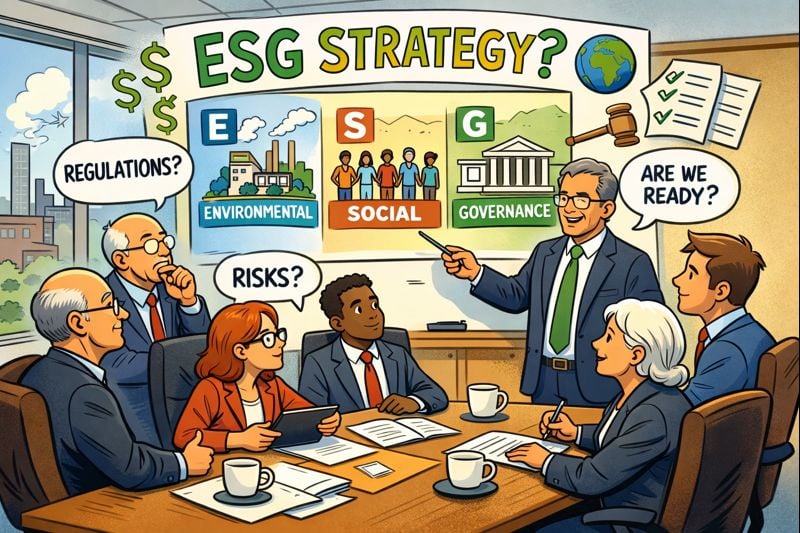
Environmental, Social, and Governance (ESG) expectations are no longer aspirational. They’re foundational. Once a niche concern championed by sustainability officers and CSR teams, ESG now sits squarely in the boardroom—and regulators, investors, employees, and customers are watching.
Yet while ESG rhetoric is louder than ever, real boardroom readiness remains inconsistent. Many boards still approach ESG as a box-checking exercise. But the game has changed. The question is no longer should boards oversee ESG strategy. It’s how well they’re doing it—and how quickly they’re evolving.
1. ESG Is No Longer About Optics—It’s About Impact
Today’s stakeholders are less impressed by glossy reports and more focused on meaningful outcomes. Investors want to see ESG tied to long-term value creation. Employees want to work for companies whose values align with their own. Regulators—from the SEC in the U.S. to the CSRD in Europe—are increasing mandatory ESG disclosures. This is no longer about being “on trend.” It’s about operational relevance and reputational resilience.
Boards must lead with substance, not symbolism.
2. From Oversight to Integration: Elevating ESG Governance
Boards that excel in ESG governance aren’t siloing the topic into one committee—they’re integrating it across strategy, risk, audit, compensation, and talent agendas. Forward-thinking boards are redefining ESG not as a standalone function, but as a strategic lens.
Key questions boards should ask:
Is ESG embedded in our core business strategy?
Are ESG metrics tied to executive compensation?
Are we evaluating ESG risk with the same rigor as financial risk?
3. The Skills Gap Is Real
Many boards still lack directors with deep ESG fluency. This isn’t about adding one sustainability expert—it’s about building ESG literacy across the board. Climate risk, supply chain ethics, DEI accountability, and data transparency are complex, evolving areas. Boards must upskill, fast.
Progressive organizations are investing in ESG education, scenario planning exercises, and third-party benchmarking to stay ahead of stakeholder and regulatory expectations.
4. Be Ready to Defend the “Why”
Stakeholder skepticism is growing. Boards must be able to articulate not just what they’re doing on ESG—but why. Why this climate target? Why that supplier code of conduct? Why those diversity goals?
This isn’t about political correctness; it’s about strategic clarity. Boards must ensure their ESG commitments are backed by business logic, not just brand positioning.
5. ESG Is the New Test of Fiduciary Foresight
Ultimately, ESG isn’t a side agenda. It’s a proxy for how well a board anticipates emerging risks, aligns to stakeholder expectations, and stewards long-term value. In that sense, ESG is a test of board effectiveness.
The boards that will lead in the next era aren’t just those checking ESG boxes—they’re those weaving ESG into the company’s future story.
Conclusion:
As ESG expectations intensify, readiness is no longer optional. It’s existential. Boards must move from compliance to conviction, from awareness to action. The future of corporate leadership will be written by directors who see ESG not as an obligation—but as an opportunity to lead, boldly and wisely.
#ESG #BoardLeadership #CorporateGovernance #Sustainability #StakeholderCapitalism #BoardStrategy #ClimateRisk #DEI #FiduciaryDuty #LongTermValue