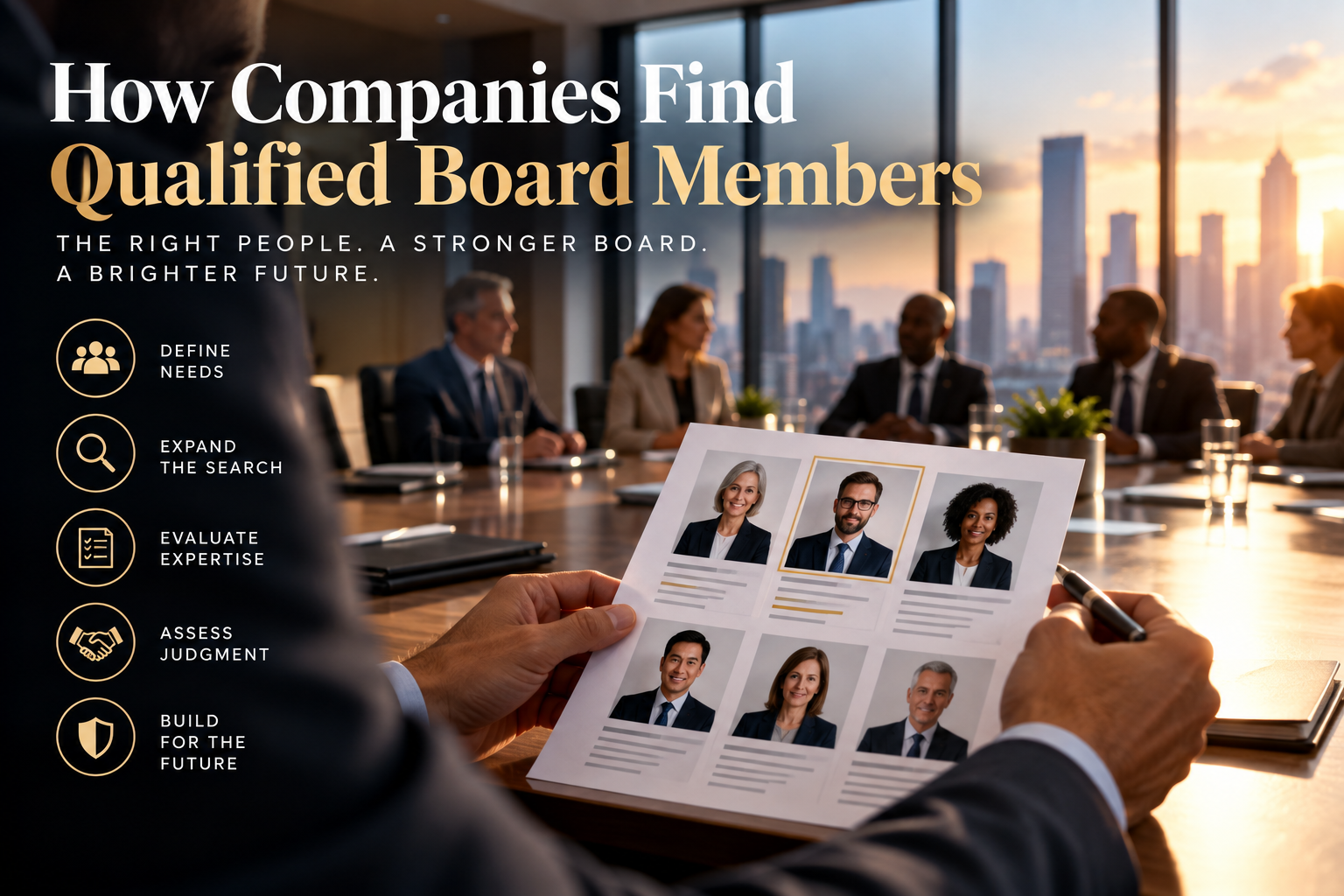
Serving on a company board is a position of distinction and significant responsibility. Company board members play a critical role in shaping the strategic direction and long-term success of an organization. This article delves into the core responsibilities and essential qualifications of effective company board members, equipping you to excel in this crucial governance role.
The Responsibilities of Company Board Members:
- Strategic Oversight: Provide guidance and direction on the organization’s long-term strategy, ensuring alignment with its mission and vision.
- Financial Oversight: Review and approve financial statements, monitor financial performance, and hold management accountable for financial stewardship.
- Risk Management: Identify, assess, and mitigate potential risks that could impede organizational success.
- Board Composition & Governance: Oversee board composition and governance practices, ensuring effective board dynamics and compliance with relevant regulations.
- Executive Oversight & Compensation: Appoint, evaluate, and compensate the CEO and other senior executives, ensuring alignment with strategic goals.
- Stakeholder Engagement: Represent the interests of all stakeholders, including shareholders, employees, customers, and the community.
Essential Qualifications for Effective Company Board Members:
- Strategic Thinking: Possess a future-oriented mindset and the ability to analyze complex information to make sound strategic decisions.
- Financial Acumen: Demonstrate a strong understanding of financial concepts and the ability to interpret financial statements.
- Business Expertise: Bring relevant industry knowledge and experience to the boardroom, offering valuable insights.
- Independent Judgment: Exercise independent judgment and act in the best interests of the organization, free from conflicts of interest.
- Integrity & Ethics: Uphold the highest ethical standards and demonstrate strong corporate governance principles.
- Effective Communication: Articulate ideas clearly, facilitate productive discussions, and build consensus among board members.
Developing Your Skills as a Company Board Member:
- Board Development Programs: Refine your knowledge and skills through targeted board development programs offered by organizations like BoardsI.
- Mentorship & Coaching: Seek guidance from experienced board members to accelerate your development.
- Continuous Learning: Stay up-to-date on evolving governance best practices through ongoing learning initiatives.
Boardsi: Your Partner in Empowering Effective Company Board Members
Boardsi offers a comprehensive suite of resources to support you throughout your board service journey:
- Board Development Programs: We offer a variety of programs designed to address the specific needs of company board members at all levels.
- Governance Best Practices Guidance: Stay informed on the latest governance best practices and regulatory requirements.
- Board Member Resources: Access a library of resources, including toolkits, templates, and white papers, to enhance your board effectiveness.
- Peer-to-Peer Learning Network: Connect with a network of experienced board members to share knowledge and best practices.
#companyboardmembers #boardgovernance #corporateg governance #Boardsi #boardresponsibilities #fiduciaryduty #strategicleadership #boarddevelopment