
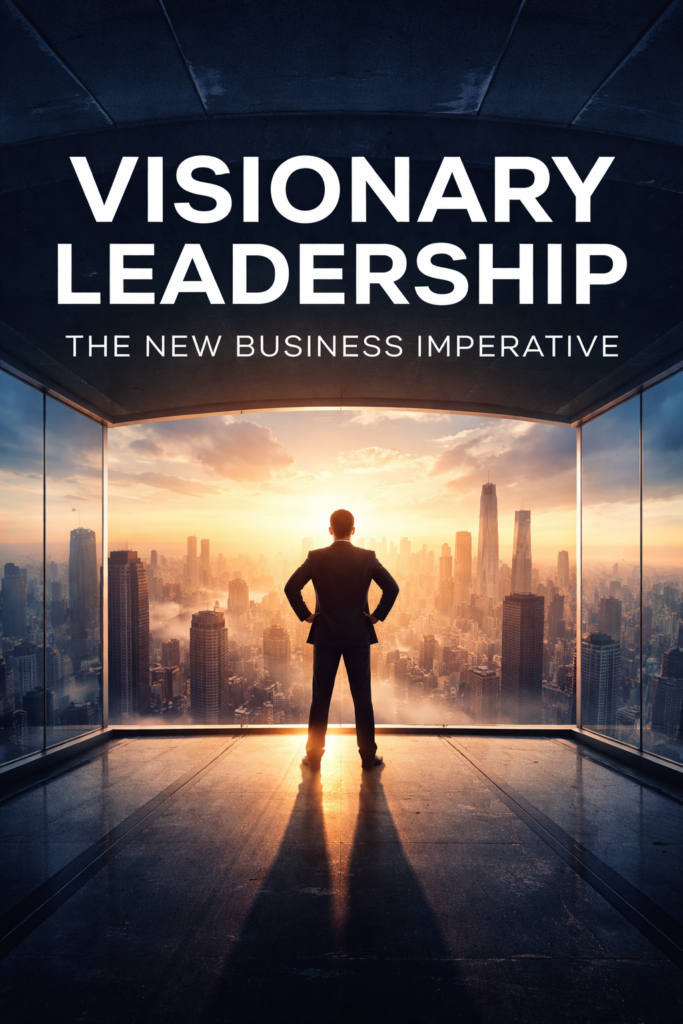
In an era defined by accelerated change, visionary leadership is not a luxury—it’s a strategic necessity. The difference between companies that adapt and thrive versus those that stall or fade often lies not in resources or market timing, but in the presence—or absence—of a leader with clear vision and conviction.
Today’s executives face pressure from all sides: disruptive technologies, evolving workforce expectations, stakeholder activism, and geopolitical unpredictability. Amid this turbulence, those who lead with vision offer more than direction—they instill clarity, courage, and momentum.
Vision Is Not Guesswork—It’s Strategic Insight
Visionary leaders are not merely dreamers; they are disciplined futurists. They possess a rare ability to spot trends before they become obvious, to synthesize signals from across sectors, and to define a compelling future-state that is both aspirational and attainable.
They don’t just ask, “What’s next?” They ask, “What matters next?”
Consider Satya Nadella’s transformation of Microsoft, or the way Mary Barra is steering General Motors toward an all-electric future. These leaders aren’t reacting to market forces; they are proactively shaping them. Vision is their compass.
Why Vision Matters More Than Ever
In volatile environments, people gravitate toward certainty. Visionary leaders offer that—not through false promises or fixed plans, but through a clearly articulated “why” and a flexible “how.”
They:
Inspire belief and trust at scale
Create alignment across diverse teams
Enable faster, more confident decision-making
Drive innovation by making room for possibility
Organizations led by visionaries are more agile, more resilient, and more magnetic—to customers, talent, and investors alike.
The Visionary’s Playbook
So how do you lead with vision in today’s climate? It begins with three core practices:
1. Anchor in Purpose, Not Prediction. Vision is not about being right—it’s about being aligned. Ground your leadership in values that won’t change even when circumstances do.
2. Think in Timelines, Not Quarters. Visionaries play the long game. They cultivate a 5–10 year horizon while executing in 90-day sprints.
3. Communicate to Mobilize. A vision that lives in your mind but fails to move your people is a missed opportunity. Translate vision into narrative. Repeat it often. Make it real.
The Call to Lead Differently
Visionary leadership is not the domain of a select few—it is a discipline, a mindset, and increasingly, a differentiator. In a post-strategy world, where frameworks age faster than roadmaps, it’s the clarity of your leadership vision that will determine your relevance—and your legacy.
Those who lead with vision won’t just survive disruption. They’ll be the ones causing it.
#visionaryleadership, #executivethinking, #futureofwork, #leadershipstrategy, #businessgrowth, #strategicleadership, #innovation, #forbesstyle, #thoughtleadership