In a time when agility and accountability define long-term success, executive leaders must evolve beyond operational excellence. Increasingly, they are being called to understand—and influence—how their organizations are governed at the highest level. Enter: board governance fluency.
This critical skill set is rapidly becoming a competitive edge for forward-thinking executives, and it’s reshaping how companies identify and select board members and advisors.
What Is Board Governance Fluency?
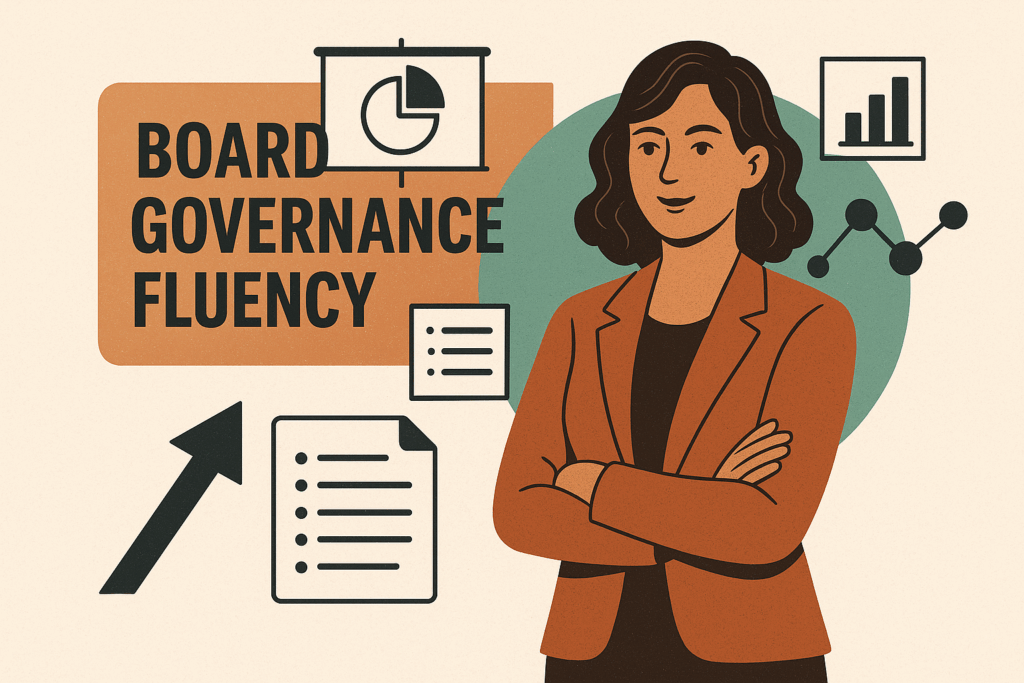
Board governance fluency is the ability to navigate and contribute meaningfully to board-level strategy, oversight, and fiduciary responsibility. It includes a working knowledge of governance structures, committee roles, regulatory obligations, and the dynamics that drive high-functioning boards.
It’s not about memorizing Robert’s Rules of Order—it’s about thinking and acting like a strategic partner to the board.
Executives with governance fluency can:
Translate operational decisions into governance implications.
Communicate effectively with board directors and committee chairs.
Understand board metrics and risk frameworks.
Participate in board discussions with insight and credibility.
Align corporate performance with long-term stakeholder value.
Why It Matters More Than Ever
As governance standards rise and stakeholder scrutiny intensifies, boards are no longer content with “good enough.” They want leaders who understand the boardroom—not just the back office.
Whether you’re a founder preparing for board meetings or a rising executive aiming for a board seat, board governance fluency builds trust, transparency, and long-term alignment between leadership and oversight.
At Boardsi, we’ve seen firsthand how executives who bring boardroom savvy—not just executive muscle—outperform peers. They’re more likely to be invited onto advisory boards, consulted during critical inflection points, and tapped for board roles that drive real impact.
Building Your Governance Skill Set
Here’s how executives can develop board governance fluency:
Join an Advisory Board: Serving on a startup or nonprofit board gives you valuable exposure to governance practices in a lower-risk environment.
Take Governance Training: Programs like the NACD or Harvard’s Corporate Governance course can deepen your understanding of board operations.
Learn from Mentors: Partner with a board-experienced advisor or executive coach who can offer feedback and real-world insights.
Leverage Platforms Like Boardsi: Boardsi connects executives with board and advisory opportunities tailored to their experience, industry, and leadership style. It’s a powerful gateway to board governance exposure and influence.
Final Thought: Governance Is Leadership
Governance isn’t just about compliance—it’s about stewardship. As an executive, your ability to lead at scale depends on how well you engage with the structures that protect and grow the enterprise. Board governance fluency ensures you’re not only ready for the boardroom—you’re relevant in it.
At Boardsi, we’re building the next generation of board-savvy executives. If you’re looking to elevate your impact and position yourself for advisory or board roles, start with fluency. Start with governance.
#boardgovernancefluency, #executiveleadership, #boardroomstrategy, #governancetraining, #advisoryboards, #leadershipdevelopment, #boardsi