
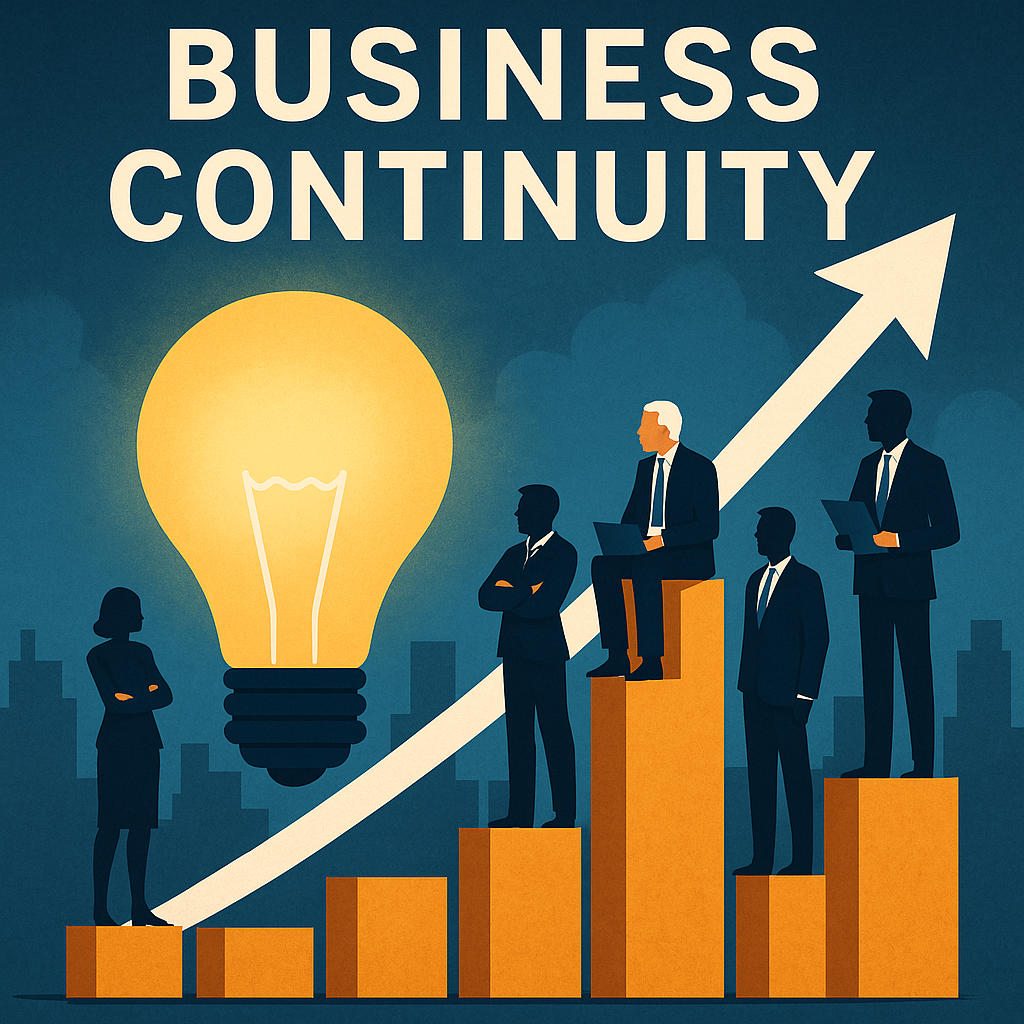
In today’s volatile business environment, business continuity is no longer just a compliance function—it’s a core leadership responsibility. For companies aiming to not just survive but thrive through disruption, the commitment to continuity must start at the top.
Boards and executive teams are uniquely positioned to embed resilience into the DNA of their organizations. From risk management to succession planning, the boardroom is where business continuity strategies are conceived, tested, and executed.
What Is Business Continuity—and Why It Matters More Than Ever
At its core, business continuity refers to an organization’s ability to maintain essential operations during and after a disruption—be it cyberattacks, natural disasters, market downturns, or geopolitical shifts. But continuity is no longer just about recovery. It’s about preparedness, adaptability, and strategic foresight.
Boards that integrate business continuity into their overall governance model gain a powerful advantage: they’re able to respond to crises with clarity and confidence rather than chaos.
The Board’s Role in Business Continuity Planning
While operational teams handle the day-to-day execution, it’s the board’s role to guide the strategic framework for continuity. This includes:
Championing a culture of resilience
Ensuring robust risk assessment and scenario planning
Demanding regular audits of crisis response plans
Aligning continuity efforts with long-term value creation
A proactive board sets the tone. It pushes executive leadership to move from reactive recovery to proactive resilience.
Succession Planning: A Business Continuity Imperative
One of the most overlooked aspects of business continuity is leadership continuity. Companies without a clear succession plan expose themselves to unnecessary risk—especially during times of crisis.
The best boards treat succession not as a checklist item, but as a living strategy. They invest in identifying future leaders, developing internal talent, and stress-testing executive transitions. In times of uncertainty, clarity in leadership is stability in business.
Business Continuity Is Strategic, Not Just Operational
Too often, business continuity is treated as a back-office IT or compliance concern. But in a connected, fast-moving world, every major decision—growth, innovation, M&A, cybersecurity—has continuity implications.
That’s why executive boards and advisory councils are increasingly adding members with backgrounds in risk management, transformation, and resilience. Strategic board composition becomes a competitive edge.
A Call to Action for Boards and Executive Leaders
Business continuity cannot be delegated. It must be owned at the highest level.
Boardsi connects companies with the executive talent needed to embed resilience and foresight into their strategy. Whether you’re building out your board, seeking advisors with continuity expertise, or planning for leadership transitions, now is the time to act.
Because in the end, business continuity is not just about weathering storms—it’s about ensuring your organization can lead through them.
Explore executive talent and board opportunities with Boardsi—where leadership meets lasting impact.
#businesscontinuity, #boardstrategy, #executiveleadership, #successionplanning, #riskmanagement, #corporateresilience, #leadership, #boardofdirectors, #governance, #crisismanagement