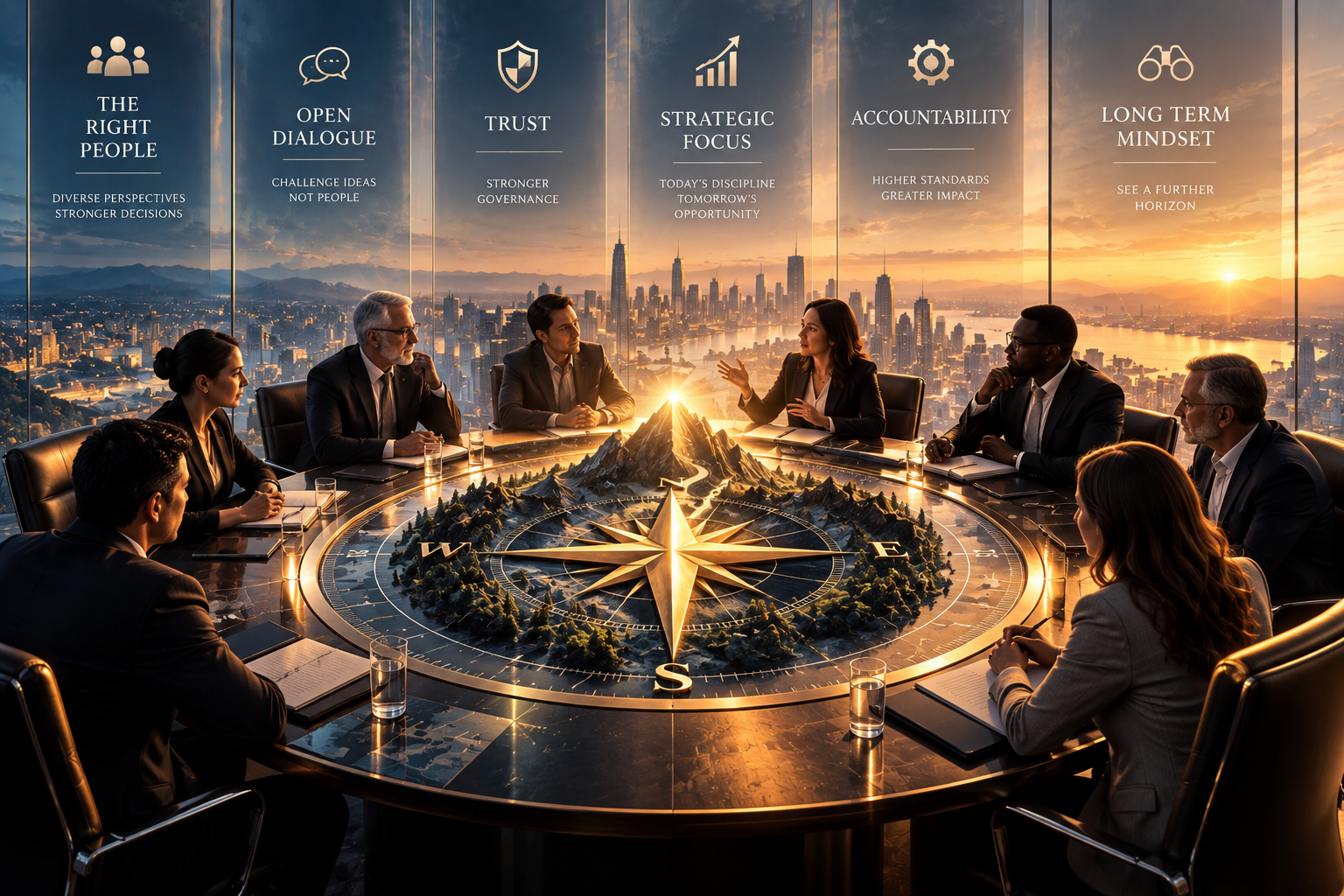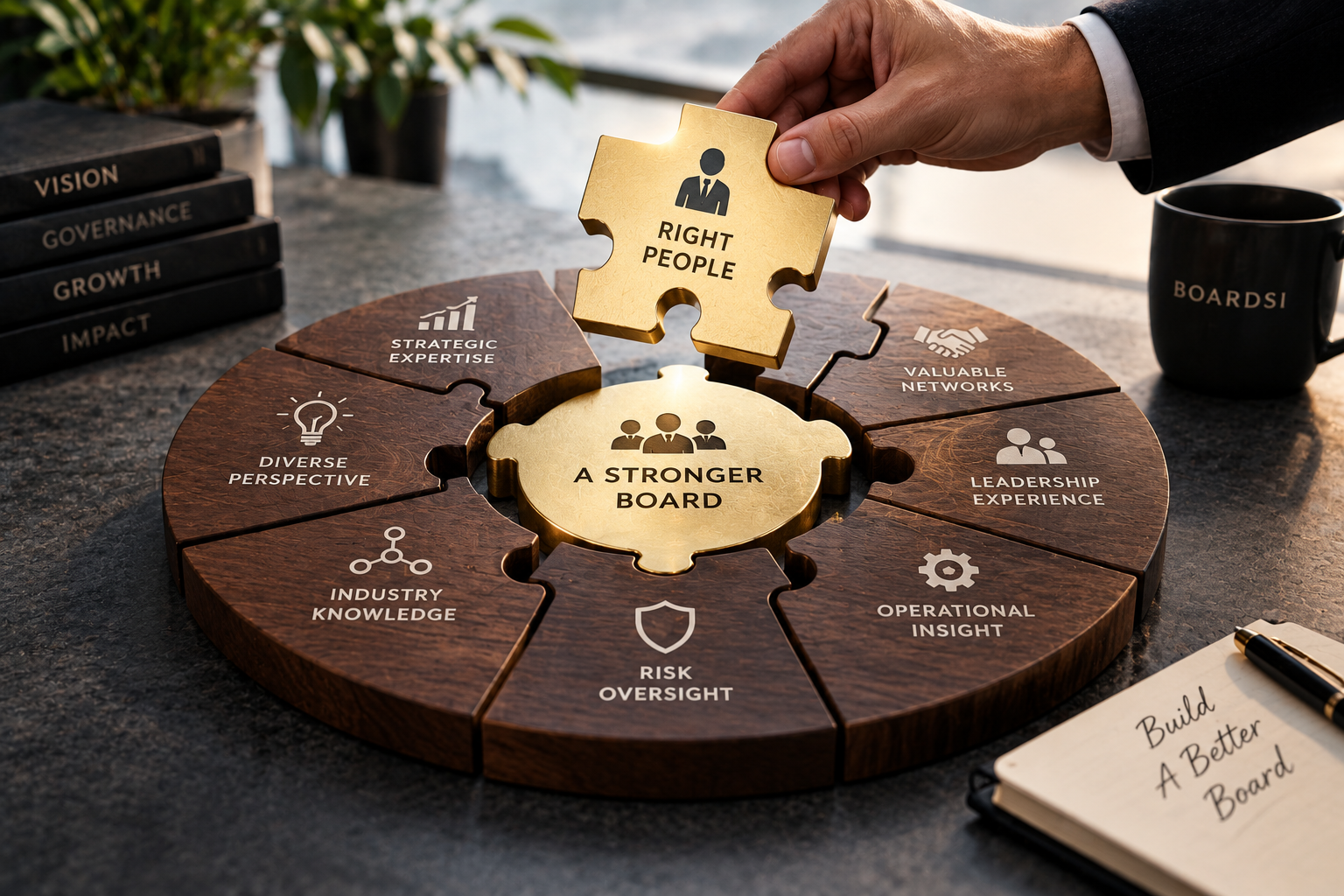
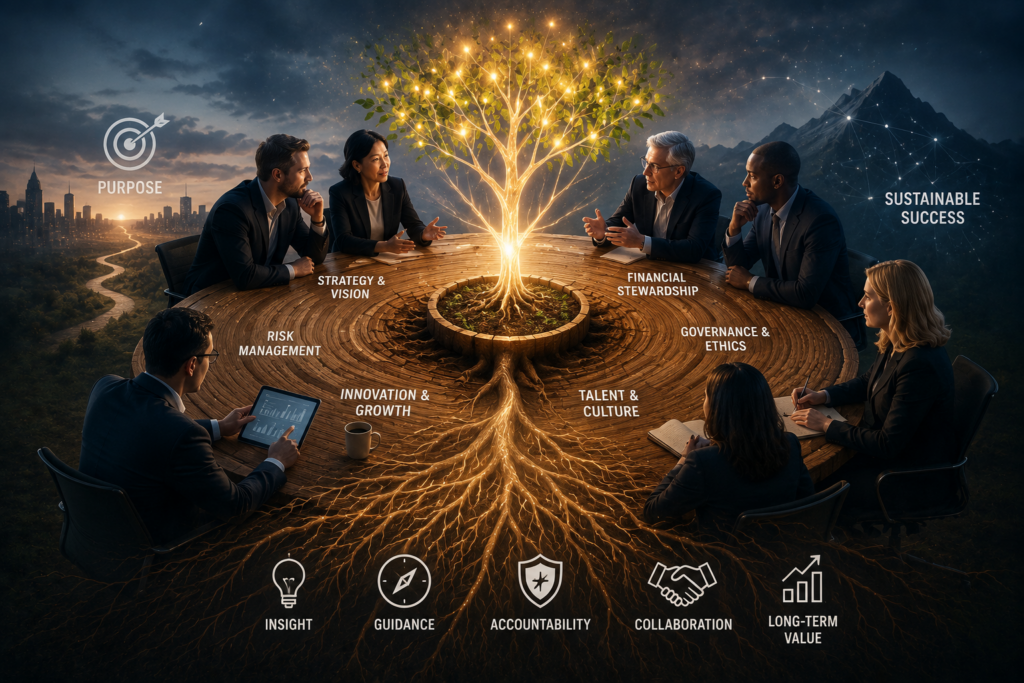
Strong Companies Begin with Strong Boards
Behind every successful organization is a leadership team making smart, informed decisions. But increasingly, the organizations outperforming their competitors have something else in common: they have built high-performing boards that provide strategic guidance, diverse expertise, and long-term vision.
The days when boards existed solely for governance and compliance are over. Today’s most effective boards actively contribute to growth, innovation, risk management, and executive development. They challenge assumptions, expand networks, and help organizations navigate increasingly complex business environments.
Whether you’re a startup preparing for rapid growth, a privately held company expanding into new markets, or an established enterprise facing disruption, building a high-performing board has become a strategic imperative.
What Is a High-Performing Board?
A high-performing board is more than a collection of accomplished professionals. It is a collaborative leadership team that works with executives to improve organizational performance while maintaining appropriate governance and oversight.
These boards contribute by:
- Providing strategic direction
- Offering industry expertise
- Identifying growth opportunities
- Strengthening corporate governance
- Supporting executive leadership
- Managing organizational risk
- Expanding valuable business relationships
- Encouraging innovation and accountability
Rather than simply reviewing reports, high-performing boards actively help leadership prepare for the future.
Why Building High-Performing Boards Matters
Today’s business environment changes rapidly.
Artificial intelligence, cybersecurity threats, economic uncertainty, supply chain challenges, workforce transformation, and evolving customer expectations require organizations to make faster and better-informed decisions.
No executive team possesses expertise in every discipline.
High-performing boards close those knowledge gaps by bringing together leaders with diverse backgrounds who contribute different perspectives and practical experience.
Organizations that invest in board excellence often benefit from:
- Better strategic decision making
- Stronger financial performance
- Improved governance
- Increased investor confidence
- Better crisis management
- Enhanced innovation
- Stronger leadership succession planning
Simply put, better boards help create better businesses.
Diversity Creates Better Decisions
One of the defining characteristics of high-performing boards is diversity—not simply demographic diversity, but diversity of experience, expertise, and perspective.
Effective boards often include leaders from multiple disciplines, including:
- Finance
- Technology
- Manufacturing
- Healthcare
- Marketing
- Sales
- Human Resources
- Cybersecurity
- Legal
- Artificial Intelligence
- International Business
When board members approach challenges from different viewpoints, organizations avoid groupthink and uncover more innovative solutions.
Healthy debate leads to stronger decisions.
Skills Should Drive Board Composition
Many organizations build boards based on personal relationships or familiarity.
The strongest organizations take a different approach.
They begin by asking:
- What expertise does our organization currently lack?
- What challenges are we likely to face over the next five years?
- Which industries are reshaping our market?
- What strategic capabilities will support future growth?
This skills-based approach ensures that every board member contributes meaningful value rather than simply occupying a seat.
Characteristics of High-Performing Board Members
Building high-performing boards starts with selecting the right people.
The best directors and advisors possess more than impressive resumes.
They demonstrate qualities such as:
Strategic Thinking
They focus on long-term opportunities rather than short-term distractions.
Executive Experience
They understand the realities of leading organizations through growth, change, and uncertainty.
Independent Judgment
Strong board members ask difficult questions while remaining objective and constructive.
Collaborative Leadership
High-performing boards work alongside executives rather than managing daily operations.
Integrity
Trust remains the foundation of every successful board relationship.
Board members must consistently demonstrate sound judgment, ethical leadership, and accountability.
Board Culture Matters
Even highly accomplished individuals can struggle to create value if the board culture is ineffective.
High-performing boards foster an environment where members:
- Encourage open discussion
- Respect differing viewpoints
- Challenge ideas professionally
- Share knowledge freely
- Maintain accountability
- Focus on organizational success over personal agendas
Culture determines whether expertise becomes collaboration—or conflict.
Continuous Board Development
Building high-performing boards is not a one-time event.
As organizations evolve, so should their boards.
Leading organizations regularly evaluate:
- Board effectiveness
- Skills gaps
- Committee performance
- Strategic priorities
- Governance practices
- Director engagement
Board education also plays an important role.
The best boards stay informed about emerging technologies, regulatory developments, cybersecurity risks, ESG considerations, artificial intelligence, and industry trends.
Continuous learning strengthens strategic oversight.
The Role of Advisory Boards
Not every organization requires a formal board of directors.
Many companies, particularly startups and emerging businesses, benefit from advisory boards.
Advisory boards provide executive-level expertise without assuming fiduciary responsibilities.
They often assist organizations with:
- Growth strategy
- Market expansion
- Fundraising preparation
- Product commercialization
- Executive coaching
- Digital transformation
- Customer acquisition
- Operational improvement
For many companies, advisory boards serve as an effective stepping stone toward building a future governing board.
Common Mistakes Organizations Make
Organizations often undermine board effectiveness by making avoidable mistakes.
These include:
- Recruiting only personal acquaintances
- Focusing exclusively on titles instead of expertise
- Lacking diversity of thought
- Defining unclear board expectations
- Failing to evaluate board performance
- Limiting communication with executives
- Ignoring future strategic needs
Building high-performing boards requires intentional planning, not convenience.
How Technology Is Changing Board Leadership
Digital transformation continues reshaping board responsibilities.
Today’s directors must understand issues including:
- Artificial intelligence
- Cybersecurity
- Data privacy
- Digital risk
- Cloud infrastructure
- Automation
- Digital governance
Boards that lack digital expertise may struggle to guide organizations through technology-driven disruption.
Adding experienced technology leaders has become increasingly important for organizations across every industry.
The Boardsi Advantage
Finding exceptional board talent has traditionally relied on personal networks and referrals.
Boardsi modernizes this process by connecting organizations with accomplished executives, industry experts, entrepreneurs, and professionals whose expertise aligns with each company’s strategic goals.
Whether organizations seek advisors or directors, Boardsi helps identify leaders who bring meaningful experience, fresh perspectives, and proven leadership to the boardroom.
The result is stronger governance, better strategic guidance, and more informed decision making.
Looking Ahead
Organizations that thrive over the next decade will be those that embrace collaborative leadership and strategic governance.
Building high-performing boards is no longer reserved for Fortune 500 companies. Businesses of every size can benefit from experienced leaders who provide insight, challenge assumptions, and help executives navigate uncertainty.
The strongest boards do far more than oversee performance.
They shape strategy, strengthen leadership, inspire innovation, and help organizations build sustainable success.
When companies invest in building high-performing boards, they are not simply filling seats around a table.
They are investing in the future of their business.
#BuildingHighPerformingBoards,#BoardLeadership,#BoardOfDirectors,#AdvisoryBoards,#CorporateGovernance,#BusinessGrowth,#ExecutiveLeadership,#StrategicLeadership,#BoardEffectiveness,#LeadershipDevelopment,#BusinessStrategy,#Boardsi