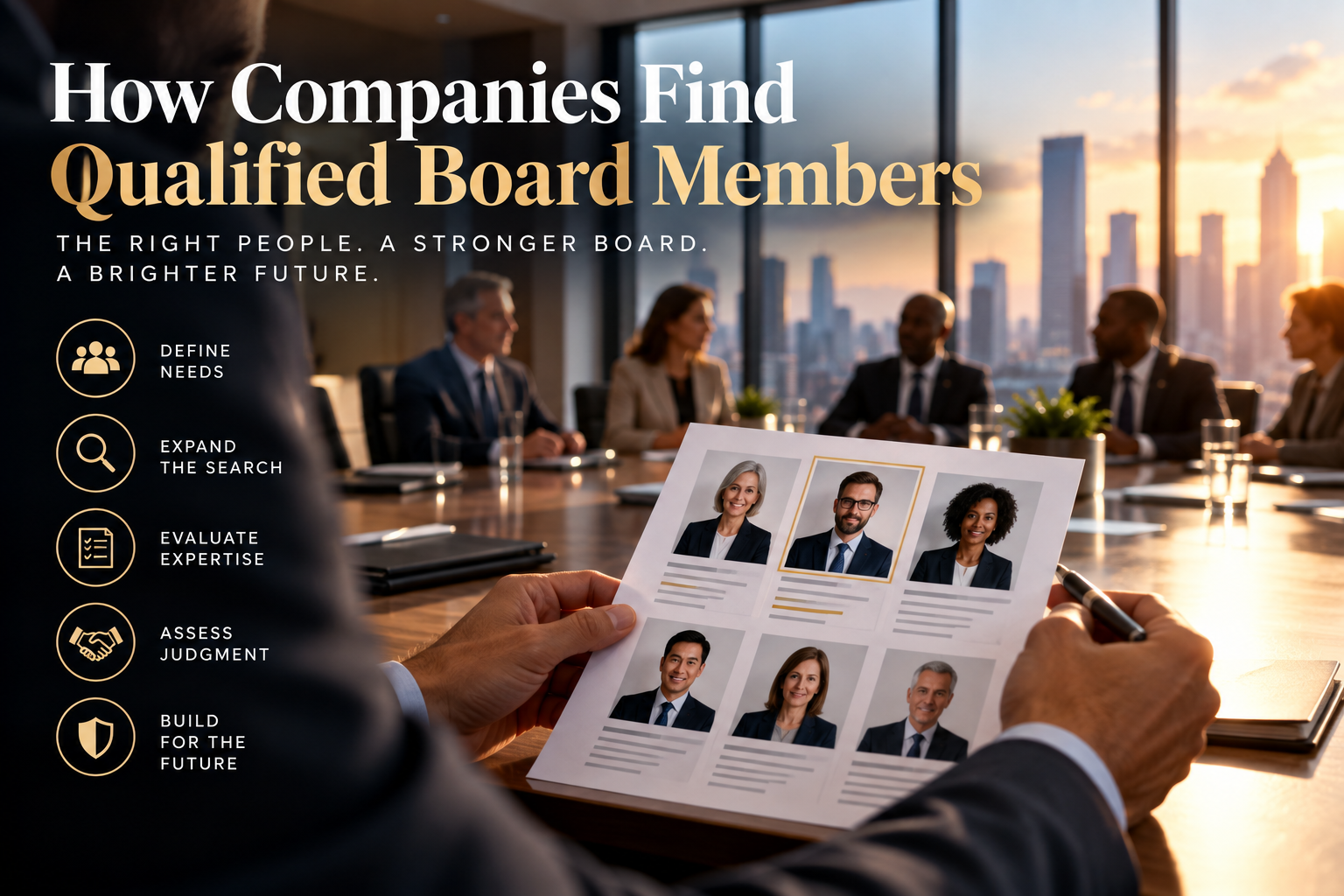

In a world reshaped by disruption, digital transformation, and stakeholder scrutiny, the effectiveness of a board of directors is increasingly linked not just to what it governs—but how it is composed. Enter board talent management—a rising strategic priority that goes beyond board refreshment to encompass intentional recruiting, succession planning, performance evaluation, and diversity of perspective at the highest level.
Why Board Talent Management Matters Now
Historically, board seats were filled through informal networks or tenure-based progression. Today, this approach is inadequate. Governance expectations have evolved, and so have the challenges boards must navigate: cybersecurity threats, ESG accountability, geopolitical risks, and innovation demands all require highly capable and dynamic leadership at the board level.
Strategic board talent management is about ensuring the right people are in the room—individuals who not only understand governance best practices but also bring functional expertise, diverse lived experiences, and adaptive thinking.
From Static Rosters to Strategic Composition
John C. Maxwell’s “Law of the Inner Circle” reminds us: “A leader’s potential is determined by those closest to them”. This is profoundly true in the boardroom. When boards prioritize talent management, they curate a circle of directors who elevate collective intelligence and decisiveness.
Best-in-class boards apply the same rigor to director recruitment and development as top companies apply to executive hiring. They ask:
What capabilities are missing from our current board composition?
How do we align director skills with our forward-looking strategic plan?
Do we have succession plans for key committee chairs and board leaders?
Core Elements of Board Talent Management
Skills and Gap Analysis
Boards should conduct a regular matrix review of current competencies, overlaying that with future business priorities.Diversity and Inclusion
Boards benefit from demographic diversity (gender, race, age) and cognitive diversity—different ways of thinking, backgrounds, and global perspectives. Studies consistently show that diverse boards outperform homogeneous ones.Succession Planning
Like C-suite succession, boards need continuity plans. Effective talent management includes staggered term limits, onboarding strategies, and mentoring of new directors.Performance Evaluation and Development
Annual assessments should be meaningful—not just a formality. Forward-thinking boards provide feedback, development opportunities, and sometimes coaching to underperforming directors.Candidate Pipeline Management
High-performing boards never stop networking. They maintain a “bench” of potential directors, including emerging leaders and underrepresented candidates, ready to step in when needed.
The Role of Technology and Search Partners
Firms like Boardsi bring a modern lens to board recruitment. Leveraging AI, expansive networks, and a focus on inclusion, they help companies break free from the “Rolodex” model and discover transformational talent. Technology enables alignment between board needs and candidates’ capabilities faster and more transparently than ever before.
Leadership Starts at the Top
Simon Sinek famously argued that great leaders “start with why”. The same applies to boardrooms. Why does this director matter? Why do their insights help us compete? Why are we better with them on board?
As pressure on corporate boards intensifies—from investors, regulators, and the public—organizations must treat board talent management not as a compliance exercise but as a competitive advantage.
#BoardTalentManagement,#CorporateGovernance,#BoardDiversity,#ExecutiveSearch,#Leadership,#BoardSuccession,#Boardsi,#GovernanceMatters,#FutureOfBoards,#BoardLeadership