The boardroom is changing.
Not long ago, board strategy sessions were largely predictable. Directors reviewed financial performance, discussed market opportunities, approved strategic initiatives, and scheduled the next planning retreat. Strategy was often treated as an annual exercise rather than an ongoing responsibility.
That world no longer exists.
Today, boards are operating in an environment defined by disruption. Artificial intelligence is reshaping industries. Cybersecurity threats evolve daily. Regulatory expectations continue to expand. Talent shortages persist. Geopolitical tensions influence supply chains and markets around the globe.
In this environment, strategy is no longer simply about growth.
It is about adaptability.
And the organizations that will thrive over the next decade will be led by boards that understand this distinction.
The Board’s Role Is Evolving
Many directors still view strategy through a traditional lens. Management develops the strategy. The board reviews it. Questions are asked. Adjustments are made. Approval is granted.
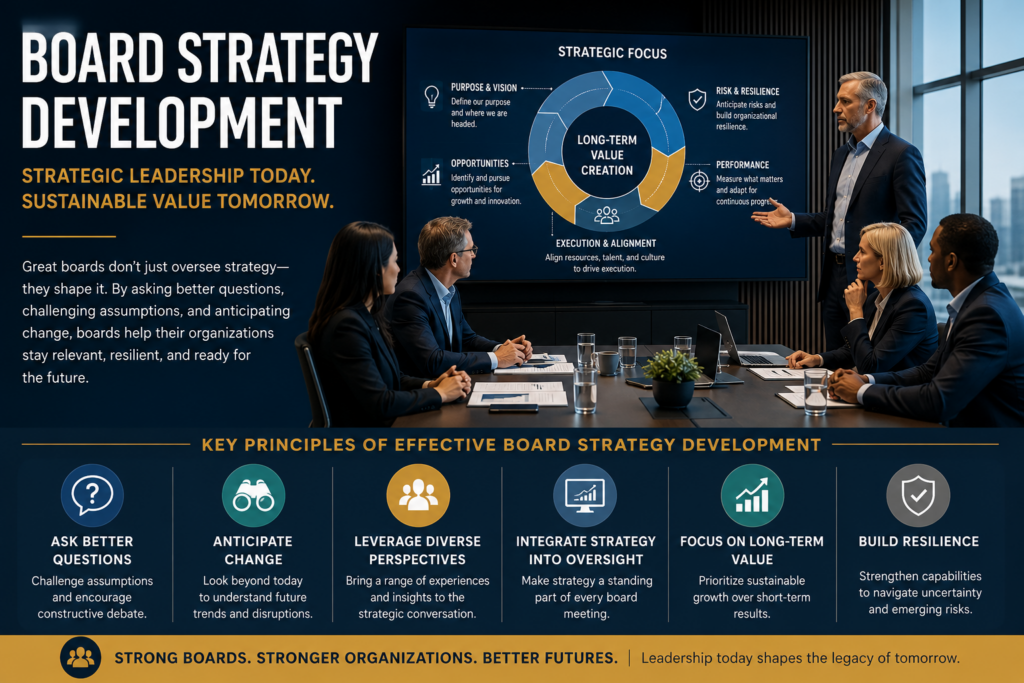
While oversight remains important, the most effective boards are moving beyond approval and toward strategic engagement.
The board is uniquely positioned to see beyond quarterly performance. Directors bring external perspectives, diverse experiences, and long-term thinking that can help management identify opportunities and risks that may not be visible from inside the organization.
A board should not manage the business.
However, it should challenge the thinking that shapes the business.
That is where strategic value is created.
The Danger Of Strategic Complacency
History is filled with examples of organizations that failed not because they lacked resources, talent, or market share.
They failed because they stopped questioning assumptions.
Markets change. Customers change. Technology changes.
Yet many organizations continue operating with strategic frameworks built for a business environment that no longer exists.
One of the most important responsibilities of any board is to challenge institutional complacency.
Directors should regularly ask:
- What assumptions are driving our strategy?
- What emerging threats are we underestimating?
- What customer expectations are changing?
- Which technologies could disrupt our business model?
- What would a new competitor do differently?
The answers to these questions often reveal vulnerabilities long before they appear on a financial statement.
Strategy Must Become A Continuous Conversation
The traditional annual strategy retreat still has value.
The problem is that many organizations treat it as the primary strategic discussion of the year.
Effective boards recognize that strategy should be integrated into every meeting.
Every agenda item should connect back to long-term objectives.
Every major decision should be evaluated through a strategic lens.
Every risk discussion should include strategic implications.
Strategy is not a document.
It is an ongoing process of adaptation, alignment, and decision-making.
Boards that embrace this mindset are better prepared to navigate uncertainty and capitalize on opportunity.
The Rise Of Scenario Planning
One of the most valuable strategic tools available to boards today is scenario planning.
The future is increasingly difficult to predict. Economic conditions can shift rapidly. New regulations can emerge unexpectedly. Technological breakthroughs can transform industries almost overnight.
Rather than relying on a single forecast, boards should encourage management teams to evaluate multiple possible futures.
What if artificial intelligence dramatically changes customer behavior?
What if interest rates remain elevated longer than expected?
What if supply chains face significant disruption?
What if a competitor introduces a fundamentally different business model?
The purpose is not prediction.
The purpose is preparedness.
Organizations that have explored potential scenarios before disruption occurs are often able to respond more quickly and effectively when change arrives.
Technology Can No Longer Be A Separate Discussion
Technology is no longer a support function.
It is a strategic function.
Whether discussing growth, customer experience, productivity, innovation, cybersecurity, or competitive positioning, technology now sits at the center of virtually every strategic conversation.
Boards should ensure they possess sufficient digital and technology expertise to evaluate opportunities and risks effectively.
This does not mean every director must be a technologist.
It does mean every board should have enough collective fluency to ask informed questions and challenge assumptions around technology investments and transformation initiatives.
Technology strategy and business strategy have become inseparable.
Board Composition Drives Strategic Quality
The quality of a board’s strategic oversight depends heavily on who occupies the seats around the table.
As business challenges become more complex, boards must continuously evaluate whether their composition aligns with the organization’s future needs.
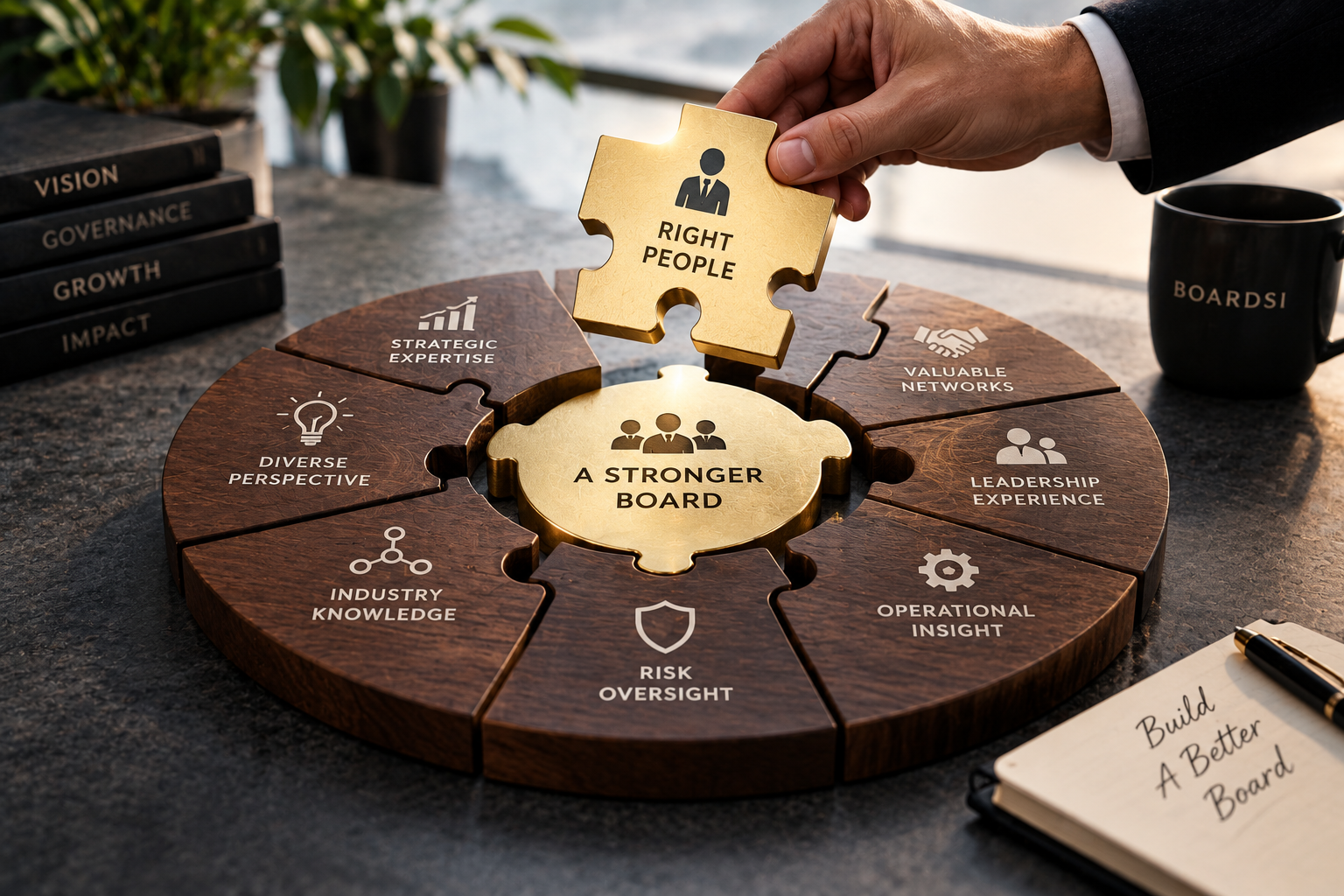
Directors with expertise in cybersecurity, artificial intelligence, digital transformation, human capital, international markets, and risk management are increasingly valuable.
The goal is not simply diversity of background.
It is diversity of perspective.
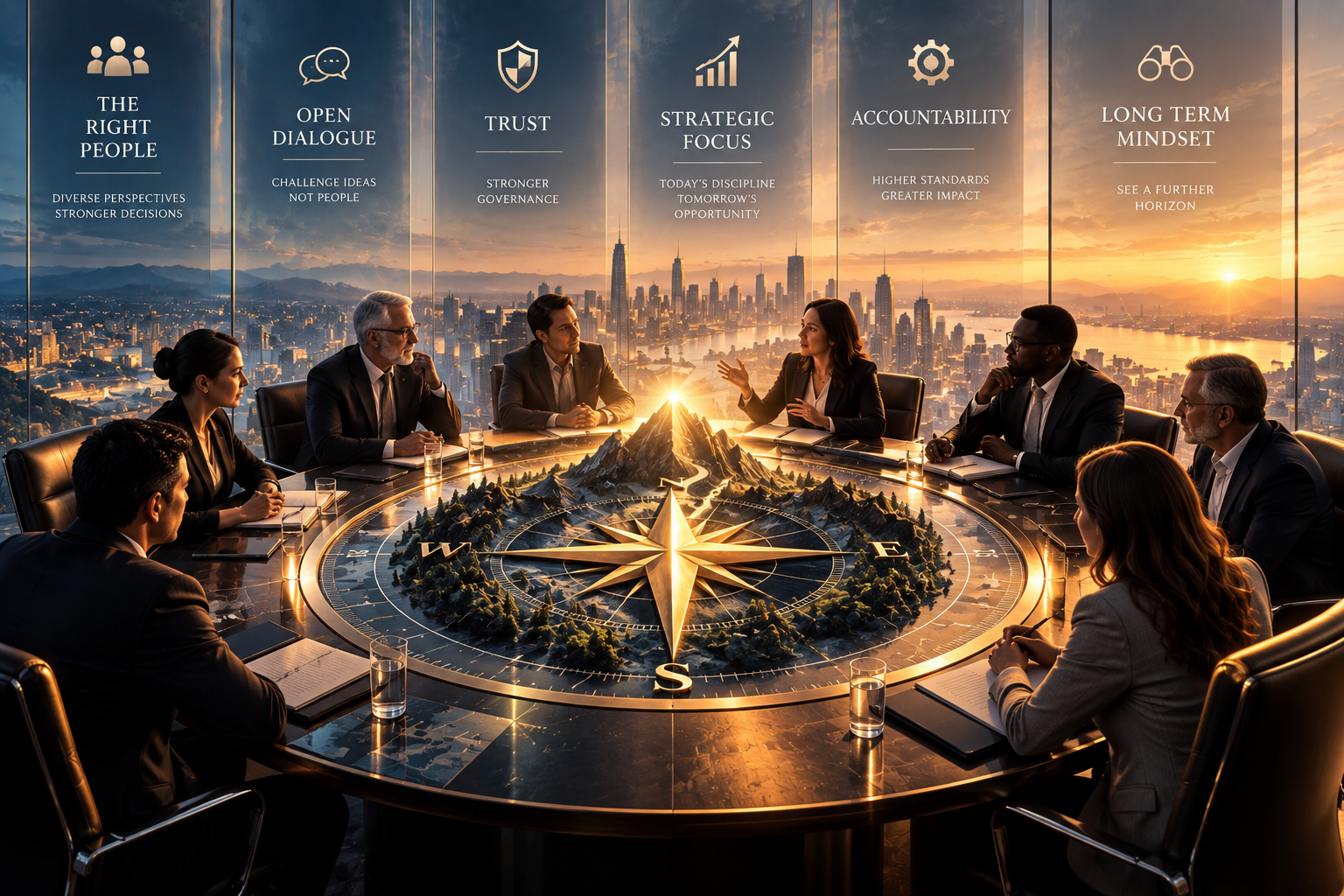
The strongest strategic discussions occur when directors bring different experiences, challenge conventional thinking, and offer insights that management may not have considered.
Great strategy rarely emerges from uniform thinking.
Measuring What Matters
Many boards spend significant time reviewing financial results while spending comparatively little time evaluating strategic progress.
Financial performance tells organizations where they have been.
Strategic indicators help reveal where they are going.
Boards should establish metrics that monitor progress against strategic priorities, including innovation initiatives, customer retention, talent development, technology adoption, market expansion, and organizational resilience.
If strategy matters, it should be measured.
And if it is measured, it should be reviewed consistently.
The Future Belongs To Strategic Boards
The role of the board is expanding beyond governance and compliance.
Today’s directors are expected to help organizations anticipate disruption, strengthen resilience, and position themselves for long-term success.
That responsibility requires more than oversight.
It requires strategic leadership.
The organizations that outperform their competitors over the next decade will not necessarily be those with the largest budgets or the most resources.
They will be the ones whose boards create an environment where strategy is continuously challenged, continuously refined, and continuously aligned with an evolving world.
Board strategy development is no longer a governance exercise.
It is a competitive advantage.
And for boards willing to embrace that responsibility, the opportunity to shape the future has never been greater.
#BoardStrategy, #BoardStrategyDevelopment, #BoardLeadership, #CorporateGovernance, #BoardOfDirectors, #StrategicPlanning, #BusinessStrategy, #CorporateStrategy, #ExecutiveLeadership, #StrategicLeadership, #Governance, #BoardEffectiveness, #RiskManagement, #DigitalTransformation, #InnovationLeadership, #BusinessGrowth, #FutureOfWork, #Leadership, #CorporateLeadership, #OrganizationalLeadership