Tag: board effectiveness

The Quiet Power Behind Every Great Boardroom Decision

In today’s complex business environment, boardroom decision making has become the defining capability of effective governance. The strongest boards are not those that reach quick consensus, but those that embrace disciplined challenge, transform information into judgment, and create the constructive tension required to make better, forward-looking decisions.

Read More »

The Courage to Build Trust in the Boardroom Why real governance begins where certainty ends

Trust in the boardroom is not built through alignment or authority. It is built in the quiet moments when leaders choose courage over certainty. When directors move beyond polished answers and step into honest dialogue, they create the conditions where real governance can happen. The strongest boards are not the ones that avoid tension, but the ones that can hold it—together.

Read More »

Board Recruitment Trends and Analysis: What Today’s Boardrooms Are Really Looking For

Board recruitment is no longer about filling seats—it is about building strategic capability. As organizations face increasing complexity, the shift toward skills-based selection, diversity, and forward-looking expertise is redefining how boards are formed. The future of governance belongs to companies that treat board recruitment as a competitive advantage, not an afterthought.

Read More »

Board Leadership Strategy: Why the Best Boards Don’t Just Govern—They Lead

Boards are no longer defined by oversight alone. In today’s complex business environment, the most effective boards act as strategic partners—challenging assumptions, expanding perspective, and helping organizations navigate uncertainty with clarity. Board leadership strategy is no longer optional; it is a competitive advantage that separates organizations that react from those that shape the future.

Read More »

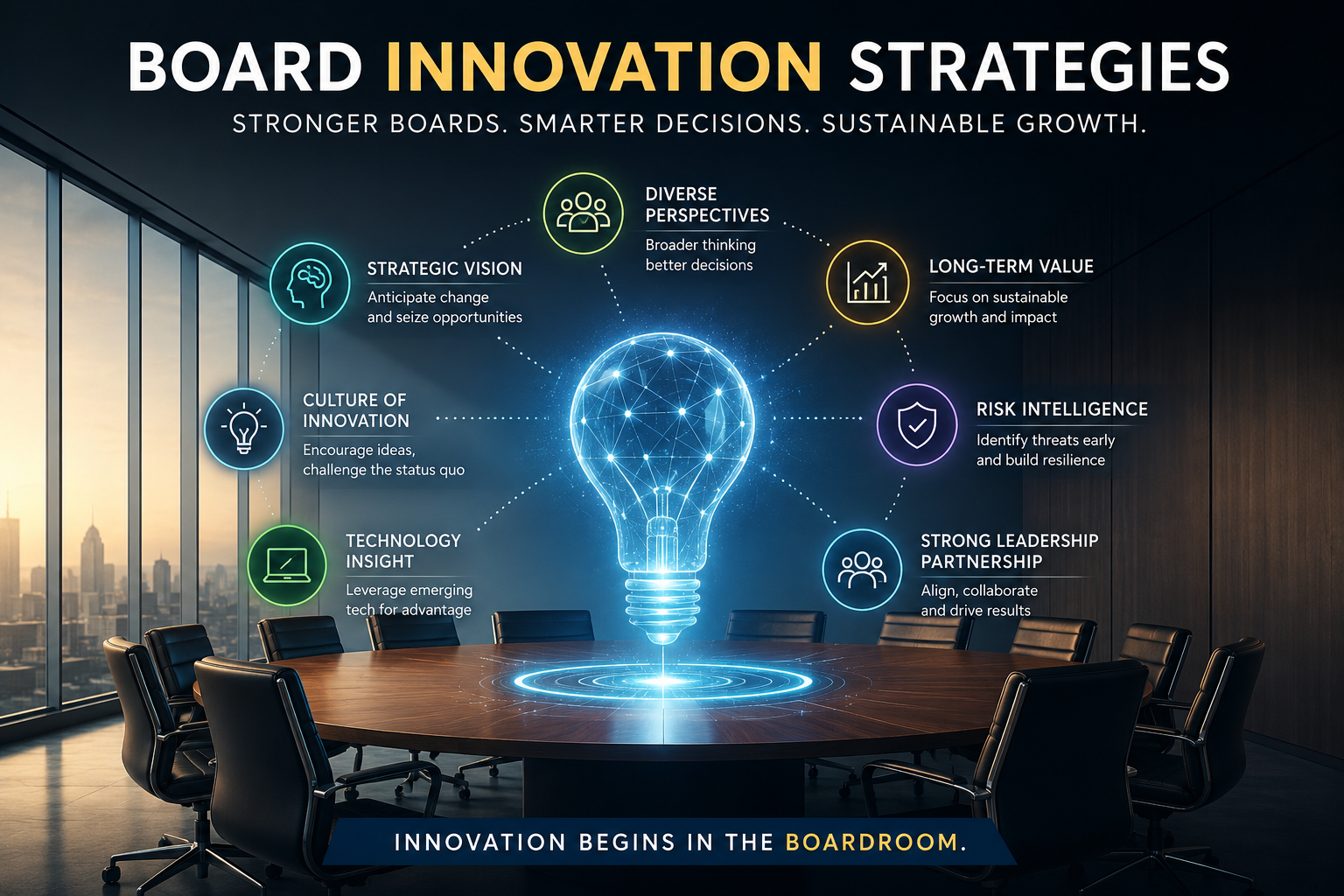
Boardroom Innovation: Why the Future of Governance Depends on It

Boardroom innovation is no longer a luxury reserved for forward-thinking organizations. It is a defining requirement of modern governance. As disruption accelerates across industries, boards must evolve from passive overseers to active architects of strategic insight. The future belongs to boards that challenge assumptions, embrace diverse perspectives, and lead with courage—not just compliance.

Read More »
The owner of this website has made a commitment to accessibility and inclusion, please report any problems that you encounter using the contact form on this website. This site uses the WP ADA Compliance Check plugin to enhance accessibility.