Great companies are not built on strategy alone. They are built on the systems, decisions, and leadership principles that turn strategy into sustainable success.
Every successful business reaches a point when growth demands more than ambition. Decisions become increasingly complex, risks become more consequential, and leadership responsibilities extend beyond immediate financial performance.
At this stage, one factor often separates organizations that sustain success from those that struggle to maintain momentum: business governance.
Business governance is not simply a collection of policies, procedures, or board meetings. It is the framework through which organizations establish accountability, exercise oversight, make strategic decisions, and protect their long-term interests.
When implemented effectively, business governance becomes a competitive advantage. It strengthens leadership, improves decision-making, builds stakeholder confidence, and creates the conditions for sustainable growth.
For executives, entrepreneurs, and board members, understanding business governance is no longer optional. It is an essential leadership responsibility.
What Is Business Governance?
Business governance refers to the structures, processes, principles, and relationships that guide how an organization is directed, managed, and held accountable.
It defines how authority is distributed, how decisions are made, how performance is evaluated, and how leadership responsibilities are fulfilled.
Although business governance and corporate governance are often used interchangeably, business governance can be understood more broadly as the practices that support responsible decision-making across an organization, regardless of its size or ownership structure.
At its foundation, effective business governance addresses several critical questions:
- Who has the authority to make important decisions?
- How are leaders held accountable for their actions?
- What processes ensure responsible risk management?
- How does the organization balance short-term performance with long-term value?
- How are the interests of shareholders, employees, customers, and other stakeholders considered?
These questions influence everything from executive compensation and succession planning to capital allocation, organizational culture, and strategic expansion.
Without clear answers, even talented leadership teams can struggle with misalignment, inconsistent decision-making, and unnecessary risk.
With strong governance, organizations create clarity around responsibilities and establish a foundation for disciplined execution.
Why Business Governance Matters More Than Ever
The modern business environment presents challenges that demand greater oversight and stronger leadership judgment.
Organizations must navigate economic uncertainty, technological disruption, cybersecurity threats, regulatory requirements, shifting stakeholder expectations, and increasingly complex competitive markets.
These challenges cannot be addressed through operational excellence alone.
They require governance structures capable of anticipating risks, challenging assumptions, and guiding strategic decisions.
1. Business Governance Strengthens Organizational Accountability
Accountability is one of the most important characteristics of effective leadership.
When responsibilities are unclear, organizations often experience delayed decisions, inconsistent execution, and uncertainty about who owns critical outcomes.
Strong business governance establishes defined roles for executives, directors, and other decision-makers.
It also creates mechanisms for evaluating performance, monitoring progress, and addressing problems before they become systemic.
Accountability should not be confused with excessive control.
Effective governance gives leaders the authority to act while ensuring that authority is exercised responsibly.
2. Business Governance Improves Strategic Decision-Making
Strategy determines where an organization intends to go. Governance helps ensure that the organization makes responsible decisions along the way.
Effective governance encourages leaders to examine opportunities through multiple perspectives.
Before approving a major investment, acquisition, expansion, or organizational transformation, a well-governed business considers financial implications, operational capabilities, potential risks, and long-term strategic alignment.
This process does not eliminate uncertainty.
Instead, it creates a more disciplined approach to managing uncertainty.
Organizations with strong governance are better positioned to challenge assumptions, evaluate alternatives, and avoid decisions driven solely by short-term pressure.
3. Business Governance Builds Trust and Credibility
Trust is an essential business asset.
Investors want confidence that capital is being managed responsibly. Employees want to believe leadership decisions are fair and consistent. Customers and business partners want assurance that the organization operates with integrity.
Effective business governance supports these expectations through transparency, ethical standards, and clear accountability.
When governance practices are credible, stakeholders gain greater confidence in the organization’s leadership and decision-making processes.
Over time, that confidence can strengthen relationships and support long-term business opportunities.
4. Business Governance Supports Sustainable Growth
Growth introduces complexity.
A company operating with a small leadership team may initially rely on informal communication and centralized decision-making.
As the business expands, however, those same practices can become limitations.
Additional employees, investors, markets, and business units create a need for more structured oversight.
Business governance helps organizations establish decision-making processes that can scale alongside their operations.
Rather than allowing growth to outpace leadership capabilities, governance creates the infrastructure needed to support expansion responsibly.
The Role of the Board of Directors in Business Governance
For organizations with a board of directors, the board plays a central role in effective business governance.
While executive management is generally responsible for operating the business, the board provides oversight, strategic guidance, and accountability.
The distinction is important.
A board should not simply duplicate the responsibilities of the executive team. Its value comes from bringing independent judgment, relevant expertise, and a broader perspective to decisions that affect the organization’s future.
Effective boards contribute to business governance in several important areas.
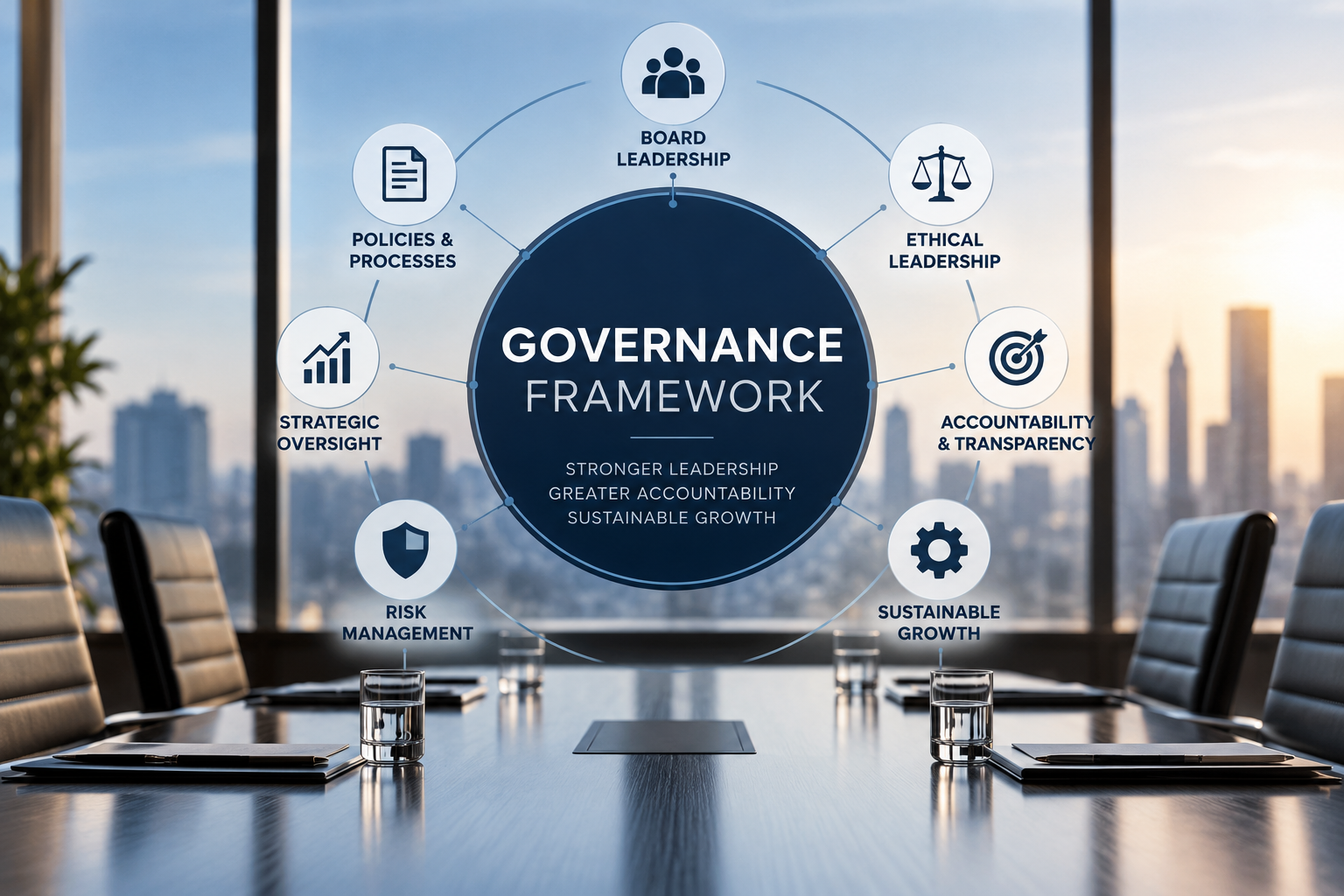
Strategic Oversight
Boards help evaluate whether organizational strategies align with long-term objectives.
They challenge assumptions, assess significant opportunities, and monitor management’s progress toward established goals.
Risk Management
Boards oversee how management identifies, evaluates, and responds to material risks.
These may include financial, operational, legal, technological, reputational, and strategic risks.
Executive Accountability
Boards evaluate senior leadership performance, oversee executive succession planning, and help ensure that leadership decisions support the organization’s interests.
Financial Stewardship
Boards oversee financial reporting, internal controls, capital allocation, and other matters that influence organizational financial health.
Ethical Leadership
Boards help establish expectations for integrity, transparency, and responsible conduct.
Through their oversight responsibilities, directors influence the standards that shape organizational behavior.
The most effective boards understand that governance is not about controlling every decision. It is about ensuring that the right decisions are made through appropriate processes and with sufficient accountability.
Five Principles of Effective Business Governance
Although governance structures vary across organizations, several fundamental principles support effective oversight and responsible leadership.
1. Clear Roles and Responsibilities
Effective governance begins with clarity.
Boards, executives, committees, and management teams must understand their respective responsibilities and decision-making authority.
Ambiguity creates unnecessary friction.
Clear governance structures establish who recommends decisions, who approves them, who executes them, and who evaluates the results.
2. Transparency in Decision-Making
Transparency allows stakeholders and decision-makers to understand how important decisions are reached.
This does not mean every piece of organizational information must be publicly available.
It means leaders should establish appropriate reporting practices, communicate material information accurately, and maintain reliable channels for oversight.
Transparency helps organizations identify issues early and builds confidence in leadership.
3. Ethical Leadership and Integrity
Governance systems are only as effective as the people responsible for implementing them.
Policies cannot compensate for a leadership culture that tolerates dishonesty, conflicts of interest, or irresponsible conduct.
Ethical leadership requires consistency between organizational values and executive behavior.
Boards and executives must demonstrate that integrity is not simply an expectation for employees but a standard applied throughout the organization.
4. Independent Judgment and Constructive Challenge
Healthy governance requires the ability to ask difficult questions.
Boards and leadership teams benefit when individuals bring different experiences, perspectives, and areas of expertise to important discussions.
Constructive disagreement can expose weaknesses in assumptions and reveal risks that might otherwise remain overlooked.
The goal is not conflict for its own sake.
It is better decision-making.
5. Long-Term Value Creation
Short-term financial results matter, but sustainable business performance requires a longer perspective.
Effective governance helps leaders consider how today’s decisions will influence future competitiveness, organizational capabilities, financial stability, and stakeholder relationships.
This long-term orientation encourages responsible investment, thoughtful succession planning, and disciplined strategic execution.
Business Governance and Corporate Governance: Understanding the Difference
Business governance and corporate governance share many foundational principles, including accountability, transparency, oversight, and ethical decision-making.
However, their application can differ.
Corporate governance generally refers to the formal systems through which corporations are directed and controlled, including the relationships among shareholders, boards of directors, and executive management.
Business governance is a broader term that can encompass governance practices across corporations, privately held businesses, partnerships, and other organizational structures.
For example, a privately owned company without a formal board may still benefit from documented decision-making authority, financial controls, an advisory board, and structured risk oversight.
Similarly, a growing family business may introduce governance practices to clarify ownership responsibilities, prepare future leaders, and support succession planning.
The essential lesson is that governance should evolve with the organization’s complexity.
Businesses do not need to wait until they become large corporations to establish responsible governance practices.
How Strong Business Governance Creates a Competitive Advantage
Governance is sometimes viewed as an administrative obligation that slows business decisions.
In reality, effective governance can improve an organization’s ability to act with confidence.
When leadership responsibilities are clear, decisions can move through established processes without unnecessary confusion.
When risks are regularly evaluated, organizations can identify vulnerabilities before they escalate.
When boards provide relevant expertise, executives gain access to perspectives that may improve strategic planning.
And when accountability is embedded in the culture, teams have greater clarity about expectations and performance.
Consider a growing company preparing to enter a new market.
Without an effective governance framework, the expansion might depend primarily on executive enthusiasm and projected revenue.
With stronger governance, leadership can evaluate market demand, financial exposure, operational readiness, regulatory considerations, and potential execution challenges.
The decision may ultimately be the same.
But the quality of the decision-making process is significantly stronger.
That is the practical value of business governance.
It does not guarantee success. It improves the organization’s capacity to pursue success responsibly.
Common Business Governance Challenges Organizations Must Address
Even organizations that recognize the importance of governance can struggle with implementation.
Several challenges frequently undermine governance effectiveness.
Unclear authority: When decision-making responsibilities overlap, important matters may be delayed or handled inconsistently.
Insufficient board expertise: Boards without the appropriate combination of skills and experience may struggle to provide meaningful oversight.
Limited transparency: Incomplete reporting or poor communication can prevent directors and executives from identifying emerging problems.
Reactive risk management: Organizations that address risks only after problems occur may face avoidable financial and operational consequences.
Short-term thinking: Excessive emphasis on immediate results can weaken investment in long-term capabilities and resilience.
Governance that exists only on paper: Formal policies provide limited value when they are not reflected in everyday leadership behavior.
Addressing these challenges requires more than creating additional rules.
It requires an organizational commitment to effective leadership, clear accountability, and continuous improvement.
How Executives Can Strengthen Business Governance
Executives play an essential role in translating governance principles into organizational practice.
Regardless of whether they serve on a board, senior leaders can take practical steps to improve governance effectiveness.
Evaluate Existing Governance Structures
Begin by reviewing how important decisions are currently made.
Identify areas where responsibilities are unclear, oversight is inconsistent, or reporting practices could be improved.
Establish Meaningful Performance Measures
Governance becomes more effective when leaders can evaluate progress using relevant information.
Financial results, operational performance, strategic milestones, risk indicators, and organizational health measures can all contribute to stronger oversight.
Encourage Open Communication
Create an environment where leaders can raise concerns, challenge assumptions, and communicate risks without unnecessary fear or resistance.
A culture of constructive dialogue supports better governance decisions.
Strengthen Board and Leadership Capabilities
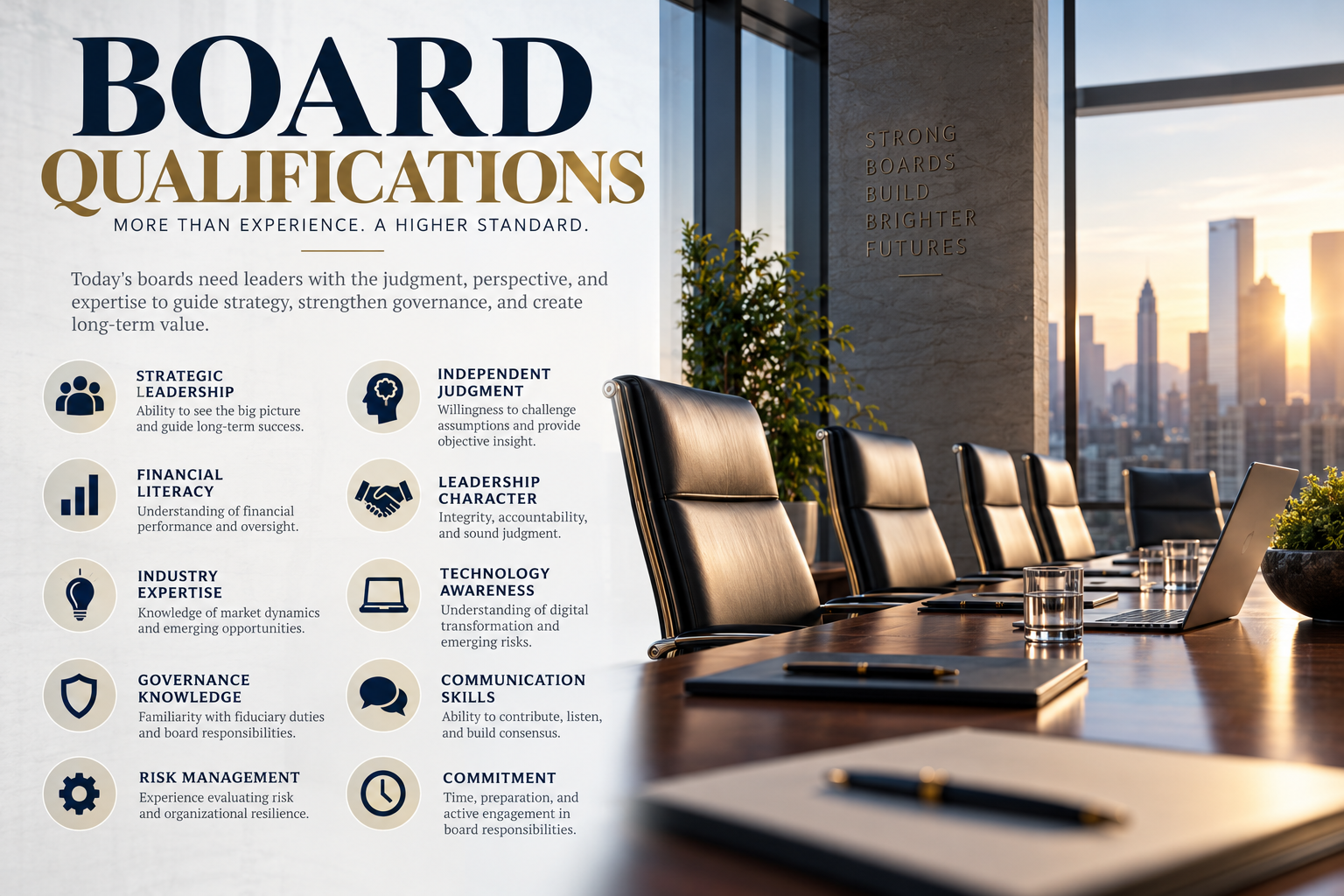
Organizations should regularly assess whether their leadership teams and boards possess the expertise required to address current and emerging challenges.
Capabilities in finance, technology, cybersecurity, operations, industry strategy, and organizational leadership may be particularly relevant depending on the business.
Review Governance Practices Regularly
Governance should not remain static while the organization changes.
As businesses expand, enter new markets, adopt new technologies, or experience leadership transitions, governance structures should be reassessed.
The goal is to ensure that oversight remains relevant to the organization’s evolving needs.
The Future of Business Governance: From Compliance to Strategic Leadership
The future of business governance will be shaped by organizations’ ability to balance accountability with adaptability.
Technological developments, including artificial intelligence, are introducing new questions about oversight, data responsibility, and organizational risk.
Cybersecurity continues to demand attention from executives and directors.
Leadership succession, organizational resilience, and evolving stakeholder expectations are also influencing governance priorities.
These developments reinforce an important principle: governance must be proactive rather than purely reactive.
Boards and executives cannot limit their attention to reviewing past performance and meeting minimum compliance requirements.
They must also consider the capabilities, risks, and opportunities that will define future performance.
This requires directors who understand the business, ask informed questions, and contribute strategic insight.
It also requires executives who view governance as a leadership discipline rather than an administrative burden.
Organizations that develop these capabilities will be better equipped to navigate complexity and pursue sustainable growth.
Why Board Composition Matters to Effective Business Governance
The effectiveness of a governance framework depends partly on the individuals responsible for providing oversight.
A board with relevant experience and complementary capabilities can help leadership teams evaluate complex decisions from multiple perspectives.
For example, an organization entering international markets may benefit from directors with global business experience.
A technology-driven company may benefit from board members who understand cybersecurity, digital transformation, or emerging technology risks.
A rapidly expanding business may require expertise in capital strategy, organizational scaling, and executive succession.
Board composition should therefore reflect the organization’s strategic priorities and risk profile.
For executives considering board service, this creates an important opportunity.
Board readiness is not simply about achieving a senior title. It is about demonstrating the judgment, governance knowledge, and strategic expertise that organizations need.
Executives who can clearly articulate their potential contribution to board oversight may be better positioned to pursue relevant board opportunities.
At Boardsi, connecting executive talent with board opportunities reflects the broader importance of aligning leadership expertise with organizational needs.
The right combination of governance capabilities, strategic perspective, and professional experience can help organizations build stronger leadership structures.
Final Thoughts: Business Governance Is a Leadership Responsibility
The strongest organizations understand that success is not determined solely by the quality of their strategy.
It is also shaped by how effectively they govern the decisions that bring that strategy to life.
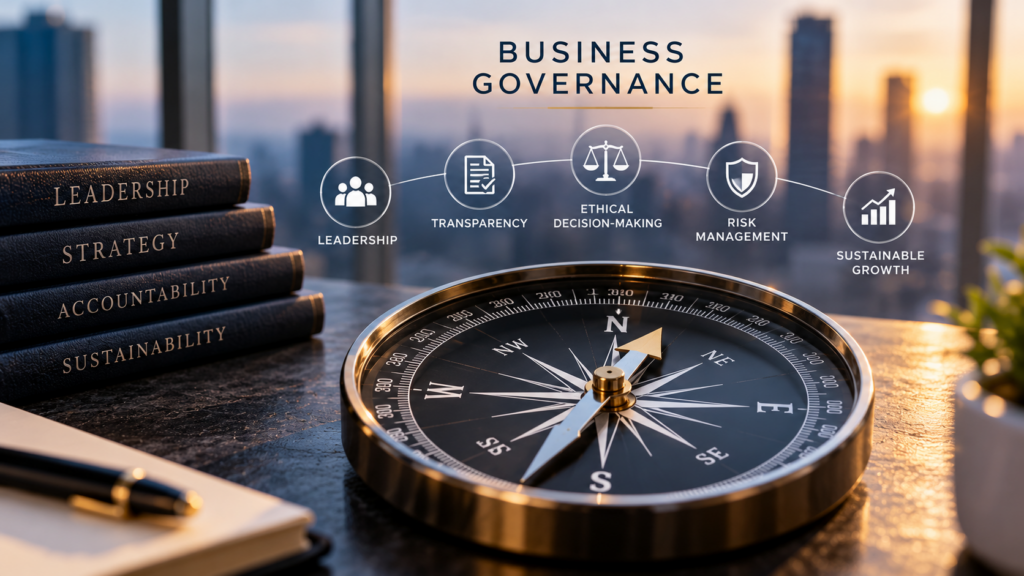
Business governance establishes the foundation for accountability, ethical leadership, strategic oversight, and responsible growth.
It gives executives clearer decision-making frameworks, provides boards with meaningful oversight responsibilities, and helps stakeholders develop confidence in organizational leadership.
Most importantly, effective governance encourages leaders to think beyond immediate results.
It challenges organizations to consider not only what they can accomplish today but also what they must build to remain successful tomorrow.
Great leadership determines the direction of an organization. Great governance helps ensure that direction is pursued with discipline, integrity, and accountability.
For executives seeking to strengthen their leadership impact or explore board service, developing a deeper understanding of business governance is an important step toward making a meaningful contribution.
Explore Board Leadership Opportunities With Boardsi
Boardsi connects experienced executives with organizations seeking board-level talent and strategic leadership expertise.
Whether you are exploring your first board opportunity or looking to expand your board leadership experience, understanding business governance can help you better communicate the value you bring.
Visit Boardsi to learn more about executive board opportunities and board leadership.
Frequently Asked Questions About Business Governance
What is business governance?
Business governance is the system of structures, processes, and principles used to direct an organization, establish accountability, oversee risks, and support responsible decision-making.
Why is business governance important?
Business governance helps organizations improve leadership accountability, strengthen strategic oversight, manage risks, build stakeholder confidence, and support sustainable growth.
What is the difference between business governance and corporate governance?
Corporate governance generally focuses on the formal oversight structures of corporations, particularly relationships among boards, shareholders, and executives. Business governance can apply more broadly to different types of organizations and their decision-making practices.
What role does a board of directors play in business governance?
A board of directors provides oversight of strategy, risk, financial stewardship, executive performance, and other matters relevant to the organization’s long-term interests.
How can small businesses improve governance?
Small businesses can strengthen governance by defining decision-making responsibilities, implementing financial controls, documenting key policies, establishing advisory relationships, and reviewing organizational risks regularly.
What are the key principles of good business governance?
Important principles include accountability, transparency, ethical leadership, clear decision-making authority, constructive oversight, and a commitment to long-term value creation.
#BusinessGovernance, #CorporateGovernance, #BoardGovernance, #BoardOfDirectors, #ExecutiveLeadership, #BoardLeadership, #StrategicLeadership, #CorporateLeadership, #BusinessStrategy, #RiskManagement, #LeadershipDevelopment, #BoardOpportunities, #SustainableGrowth, #Boardsi