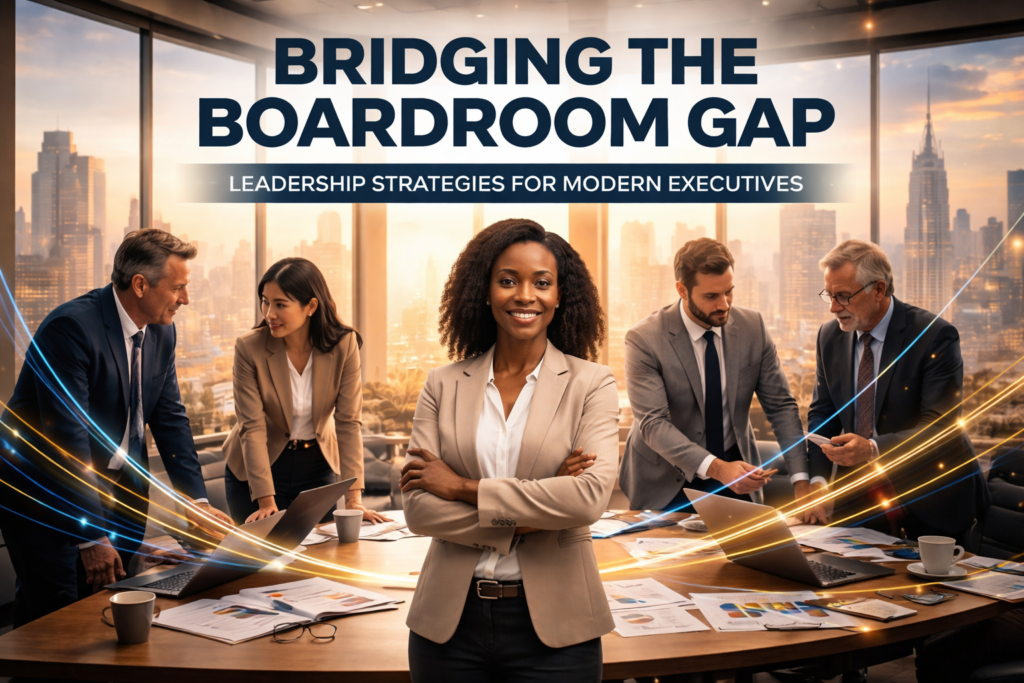
In today’s volatile, uncertain, complex, and ambiguous (VUCA) world, the modern boardroom is evolving—fast. Yet many executives still operate with a 20th-century playbook in a 21st-century arena. The result? A growing gap between traditional leadership methods and the adaptive, human-centered approach needed for lasting impact.
The Leadership Dilemma No One Talks About
While businesses chase innovation and digital transformation, a quieter crisis brews at the top: a widening disconnection between executives and their people. Decision-makers are too often insulated from real-world insights, shielded by layers of hierarchy and detached metrics.
This isn’t just a communication problem—it’s a leadership imperative. As John C. Maxwell reminds us, “Everything rises and falls on leadership.” A high-performing boardroom must not only make strategic calls but also cultivate trust, inclusion, and moral authority across the organization.
The Five Disconnects Modern Leaders Must Address
Drawing from research and timeless leadership principles, five critical gaps are widening in today’s executive suites:
Purpose vs. Profit – Leaders who over-index on quarterly returns often sacrifice long-term purpose. Simon Sinek’s “Start With Why” argues that purpose-driven companies don’t just outperform—they outlast.
Data vs. Dialogue – In an era of analytics, qualitative insights from frontline employees are undervalued. The best leaders don’t just ask for data; they listen to stories.
Position vs. Permission – As Maxwell outlines in The 5 Levels of Leadership, influence based on title (Level 1) is the weakest form. True leadership emerges when people follow you because they trust and respect you (Level 2 and beyond).
Control vs. Empowerment – Leaders who hoard decision-making power create bottlenecks. Empowered teams move faster, think smarter, and own outcomes.
Performance vs. People – Culture eats strategy for breakfast, and yet many boards still treat people as resources rather than humans. Brené Brown’s research on vulnerability shows that trust, empathy, and courage are not soft skills—they’re leadership superpowers.
A Blueprint for Bridging the Gap
To truly close the boardroom gap, today’s executives must evolve from managing systems to leading cultures. This requires three key shifts:
From Transactional to Transformational – Focus not just on what gets done, but on who people become in the process.
From Heroism to Humility – Great leaders don’t have all the answers—they ask better questions.
From Legacy Thinking to Legacy Building – True leadership success is measured by succession, not survival.
Final Thought: Leadership Is Not a Role—It’s a Responsibility
Executives must reimagine leadership not as a seat at the table but as a force for alignment, integrity, and inclusion. The boardroom of the future belongs to those who can bridge strategy with soul, and performance with purpose.
#Leadership, #ExecutiveLeadership, #BoardroomStrategy, #PurposeDriven, #CultureFirst, #BreneBrown, #SimonSinek, #LeadershipMatters, #AdaptiveLeadership, #LeadWithEmpathy