For years, governance was often treated as a matter of structure, compliance, and oversight. Boards met. Committees reviewed reports. Policies were updated. Responsibilities were documented.
That model is no longer enough.
Organizations today are navigating artificial intelligence, cybersecurity threats, shifting regulations, economic uncertainty, changing workforce expectations, succession challenges, and increasingly complex stakeholder demands. In this environment, governance cannot simply protect an organization from what might go wrong. It must help leadership prepare for what comes next.
That is where strategic governance consulting is becoming increasingly valuable.
At its best, strategic governance consulting helps boards and executive teams move beyond governance as an obligation and begin using it as a leadership advantage.
Governance Should Create Value, Not Just Control Risk
Traditional governance asks important questions.
Are we compliant? Are appropriate controls in place? Are directors fulfilling their responsibilities? Is management being properly supervised?
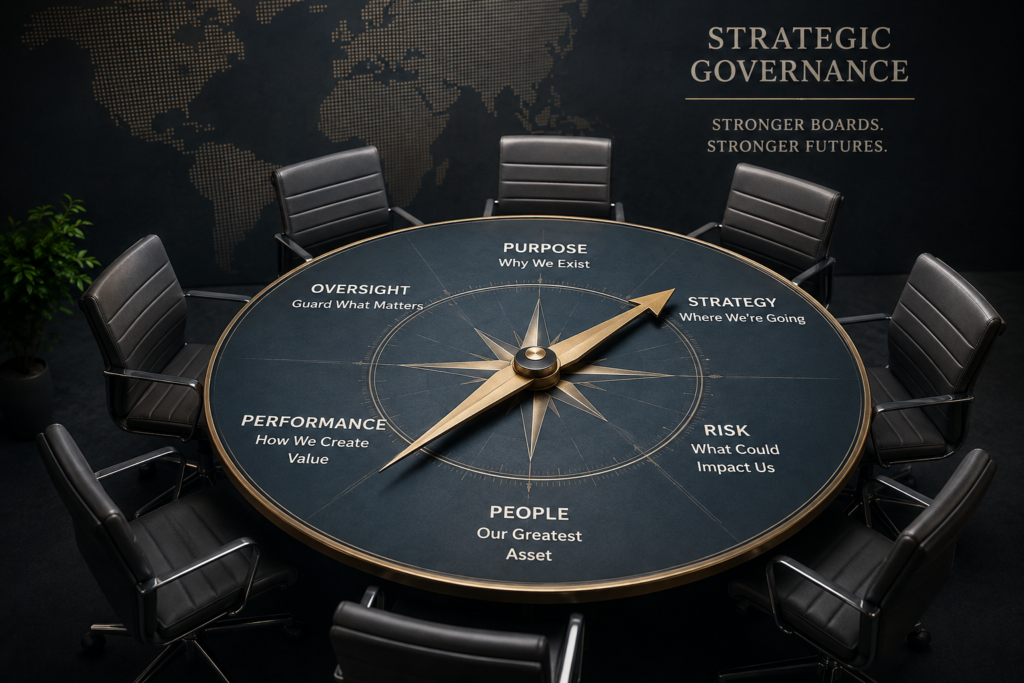
Strategic governance adds another layer of questions.
Does the board have the expertise the organization will need three years from now? Are directors spending enough time on the decisions that will shape future growth? Is the relationship between the board and CEO creating better strategic thinking? Are emerging risks being identified early enough? Does the board challenge assumptions without interfering with management?
The distinction matters.
Effective governance is not measured by the number of meetings held or reports reviewed. It is measured by the quality of leadership and decision making those structures produce.
A board can be busy without being effective.
Strategic governance consulting helps organizations examine that difference.
Start With the Organization’s Strategy
One of the most common governance mistakes is evaluating the board independently from the organization’s future.
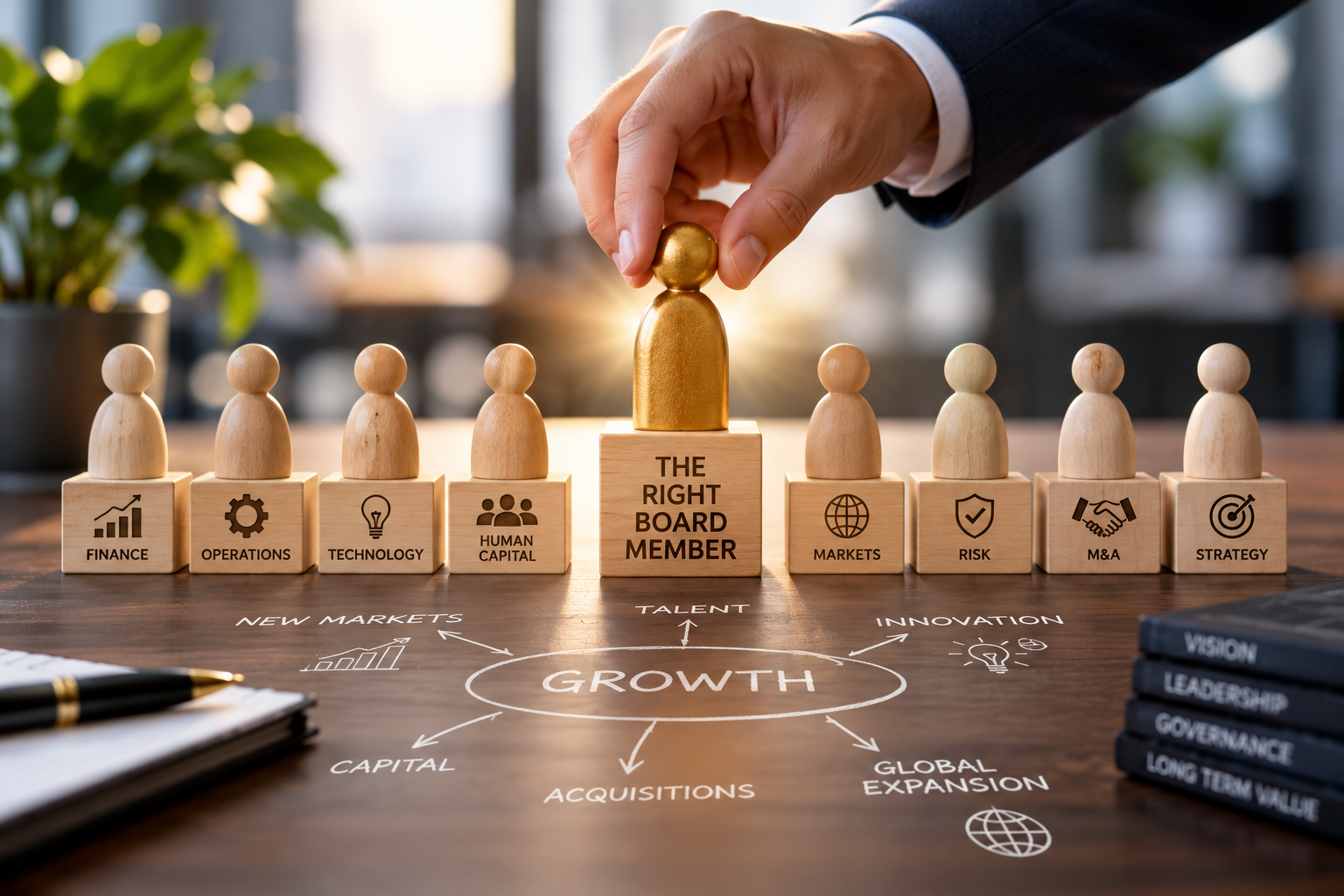
Board composition should follow strategy.
A company preparing for international expansion may need directors with global operating experience. A business considering acquisitions may benefit from deeper transaction and capital markets expertise. An organization undergoing digital transformation may require stronger technology, artificial intelligence, cybersecurity, or data governance capabilities.
The question should not simply be, “Do we have a good board?”
The better question is, “Do we have the right board for where this organization is going?”
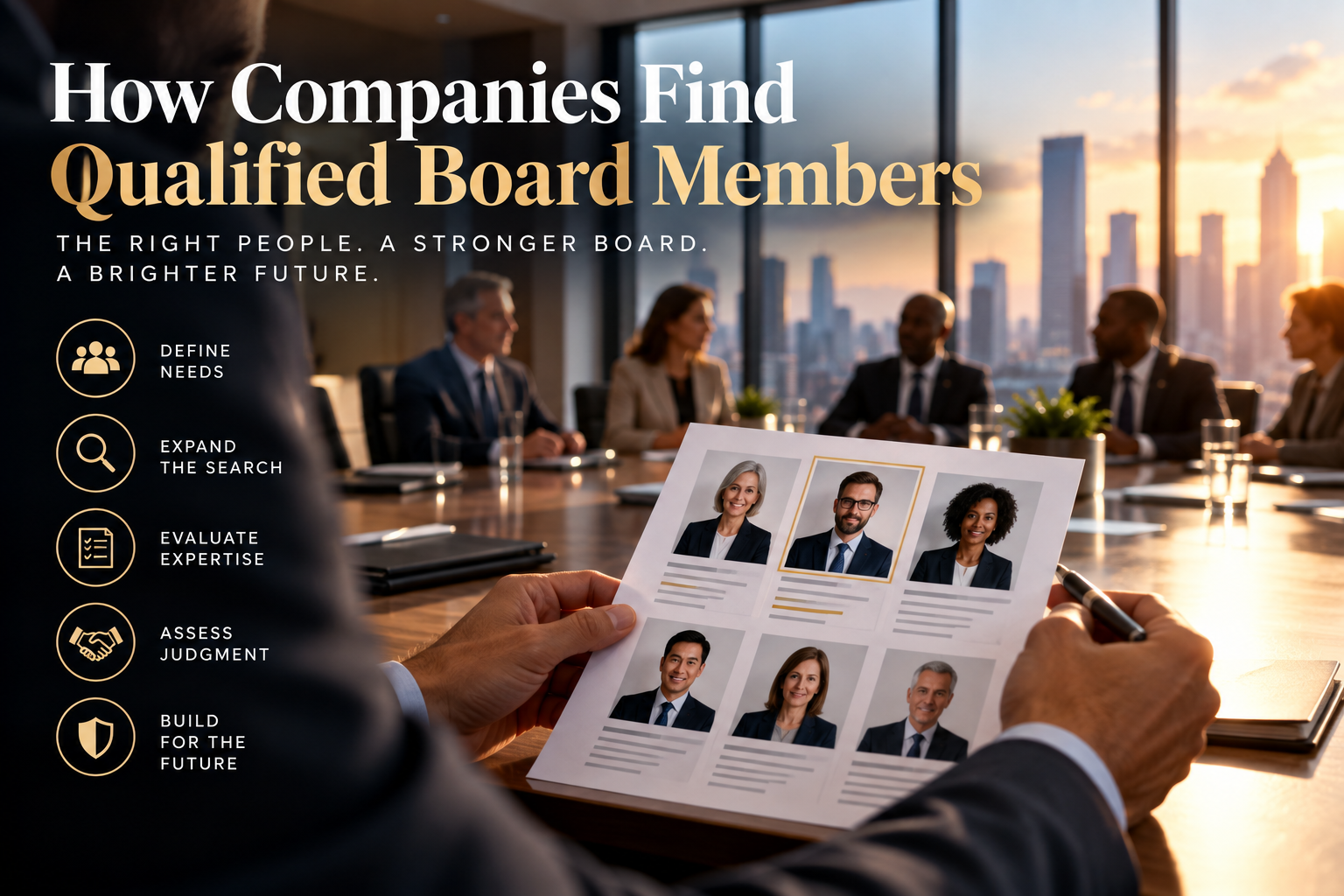
Strategic governance consultants can help leadership translate business priorities into governance requirements. That may include assessing board composition, developing a skills matrix, identifying capability gaps, reviewing committee structures, and establishing succession priorities.
The goal is not to assemble the most prestigious group of executives possible.
It is to assemble the most relevant one.
Clarify the Line Between Governance and Management
Some boards are too passive. Others become too operational.
Both create problems.
When directors simply approve management recommendations, the organization loses the benefit of independent judgment. When directors become overly involved in daily operations, they can undermine executives and blur accountability.
Strong governance requires a deliberate balance.
Directors should understand where oversight ends and management begins. CEOs should understand when the board needs greater visibility. Both sides should know which decisions require consultation, approval, challenge, or simply communication.
Strategic governance consulting can help establish this clarity before uncertainty becomes conflict.
Clear roles create better accountability.
They also create trust.
Improve the Conversations Inside the Boardroom
A board meeting should not become a presentation management gives to directors.
It should be a strategic conversation among experienced leaders.
Yet many boards still spend significant portions of their meetings reviewing information that could have been absorbed beforehand. That leaves limited time for the questions directors are uniquely positioned to address.
What assumptions are we making about the market?
Where are we most vulnerable?
Which opportunities deserve greater investment?
What capabilities will we need next?
What is management not seeing because it is too close to daily operations?
Strategic governance consultants can help boards rethink agendas, information flow, meeting preparation, decision processes, and director engagement so that valuable boardroom time is concentrated on consequential issues.
The objective is not more discussion.
It is better discussion.
Constructive Challenge Is a Governance Capability
Strong boards are not defined by agreement.
They are defined by their ability to disagree productively.
Directors must be willing to challenge assumptions, question strategy, raise uncomfortable risks, and introduce perspectives management may not have considered. But challenge without trust can quickly become conflict.
The best boards create an environment where intellectual tension improves decisions rather than damages relationships.
That requires directors who know how to ask difficult questions and executives who do not interpret every challenge as opposition.
Strategic governance consulting can help boards evaluate these dynamics and establish expectations for productive engagement.
A healthy boardroom is not one without disagreement.
It is one where disagreement makes the organization smarter.
Board Evaluation Should Lead to Board Development
Organizations routinely evaluate executives, employees, products, investments, and business units.
Boards should apply the same discipline to themselves.
Board assessments can examine preparation, participation, meeting effectiveness, committee performance, composition, strategic contribution, communication, and the relationship between directors and management.
But assessment alone creates little value.
The important question is what happens afterward.
Effective strategic governance consulting turns evaluation into development by identifying specific actions that strengthen the board over time.
That might mean recruiting expertise in an emerging area, redesigning committee responsibilities, improving board materials, creating director education opportunities, strengthening succession planning, or addressing gaps in participation.
Governance improvement should be continuous because the organization itself never stops changing.
The CEO And Board Relationship Matters More Than Most Governance Structures
Policies matter. Charters matter. Committees matter.
But governance ultimately happens between people.
Few relationships are more consequential than the relationship between the CEO and the board.
The strongest relationships combine trust with independence. Directors support the CEO without becoming unquestioning advocates. CEOs engage directors as strategic resources without treating the board as an obstacle to execution.
When that relationship works, difficult issues can surface early. Directors gain a clearer understanding of the business. CEOs gain access to experience and perspective they may not possess internally.
When it does not work, information becomes guarded, difficult conversations are delayed, and governance becomes reactive.
Strategic governance consulting can provide an objective perspective that helps both sides identify where communication, expectations, or decision processes need to improve.
The Future Of Governance Is Strategic
Governance will always include oversight, accountability, fiduciary responsibility, and risk management.
But exceptional governance must accomplish something more.
It must help organizations think farther ahead.
The strongest boards are increasingly asking questions about technological disruption, talent, geopolitical risk, changing customer behavior, capital allocation, competitive threats, succession, and the capabilities their organizations will need in the future.
That requires boards to evolve alongside the businesses they serve.
Strategic governance consulting provides organizations with an opportunity to examine whether their governance model is designed for yesterday’s organization or tomorrow’s challenges.
That distinction is becoming increasingly important.
Final Thoughts
The best governance does not slow organizations down.
It helps them move forward with greater clarity.
When the right directors are around the table, responsibilities are clear, information is useful, disagreement is constructive, and boardroom conversations remain focused on consequential issues, governance becomes far more than oversight.
It becomes a source of perspective.
It becomes a source of accountability.
It becomes a source of strategic intelligence.
And ultimately, it becomes a competitive advantage.
That is the real promise of strategic governance consulting. It is not simply about creating better boards.
It is about creating better leadership at the moments when the organization’s most important decisions are being made.
#StrategicGovernanceConsulting, #StrategicGovernance, #CorporateGovernance, #BoardLeadership, #BoardEffectiveness, #GovernanceConsulting, #ExecutiveLeadership, #BoardDevelopment, #BoardStrategy, #StrategicLeadership, #Leadership, #BusinessStrategy