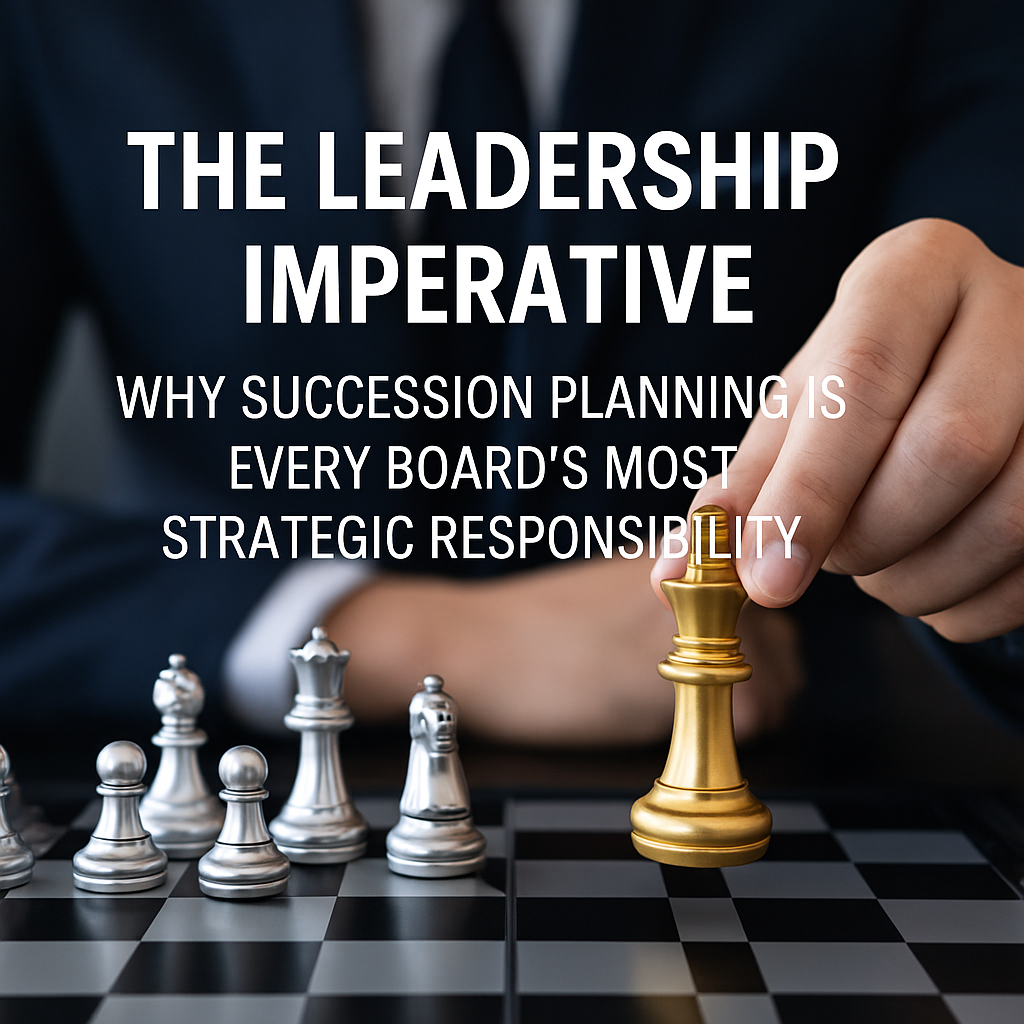
If leadership is the engine of enterprise, succession planning is the fuel line. When it works, momentum continues. When it fails, even the most powerful organizations stall.
We’ve all seen the cautionary tales—companies whose growth unraveled when a founder exited, institutions blindsided by the sudden departure of a CEO, promising startups that couldn’t scale beyond their original leadership team. The problem isn’t the change. It’s the lack of preparation for it.
Succession planning isn’t about contingency—it’s about strategy.
The Myth of Perpetual Leadership
Too often, boards and executives avoid succession discussions for fear of triggering uncertainty or conflict. Ironically, this silence creates exactly what it tries to prevent: confusion, division, and missed opportunity. Real leaders don’t avoid succession—they architect it.
At Boardsi, we’ve observed a growing number of forward-looking boards recognizing that preparing for the future of leadership is just as vital as preparing for the future of business. And the two are inextricably linked.
Beyond Replacement: Succession as Strategic Alignment
Effective succession planning isn’t merely identifying who steps in when someone steps out. It’s a dynamic, ongoing process that aligns talent development with long-term vision.
It asks bold questions:
-
What leadership competencies will our next chapter require?
-
Where do we see talent gaps across the C-suite and board?
-
How do we diversify our leadership pipeline—not just demographically, but intellectually and experientially?
In elite organizations, succession planning becomes a mirror reflecting values, culture, and purpose. It is both a readiness exercise and a values audit.
The CEO Succession Moment
Of all transitions, the CEO handoff is the most visible and high-stakes. Boards must approach it not as an event, but a process—one that begins years in advance and involves internal development, external benchmarking, and scenario planning.
One best practice: involve the outgoing CEO in preparing the ground but not in choosing their successor. Board-led, not CEO-led, succession protects the integrity and independence of the process.
Boardroom Accountability
Succession planning is a fiduciary duty. The board must not only oversee the process but embed it into the rhythm of governance—reviewing pipelines regularly, setting expectations with current leaders, and ensuring talent development is prioritized at every level.
When boards neglect this, they don’t just risk losing leaders. They risk losing momentum, trust, and market confidence.
Preparing for the Unknown
The next crisis won’t schedule itself around your talent pipeline. The next opportunity won’t wait for you to fill a leadership gap. Succession planning is how smart companies prepare for volatility—not by guessing the future, but by building leadership capacity to navigate it.
As leadership evolves, so must our approach to continuity. The question is no longer “Do we have a plan?” It’s “Are we building the leadership our future requires?”
If the answer is no, then the time to act isn’t next quarter. It’s now.
#SuccessionPlanning,#Leadership,#ExecutiveSearch,#CorporateGovernance,#Boardroom,#CEOTransition,#BusinessStrategy,#FutureOfWork,#Boardsi,#LeadershipDevelopment