In a business environment defined by accelerating complexity, one truth is becoming increasingly clear: traditional governance structures alone are no longer sufficient. As organizations navigate artificial intelligence, shifting regulatory landscapes, and evolving market expectations, the need for specialized insight has moved from optional to essential.
This is where advisory board appointments are quietly becoming one of the most strategic decisions a company can make.
Not as a symbolic addition.
But as a structural advantage.
The Governance Gap Is Growing
Most boards today are composed with excellence in mind—financial oversight, operational leadership, industry expertise. Yet the pace of change has outgrown even the most experienced boardrooms.
Artificial intelligence, digital transformation, cybersecurity, and global risk are not isolated issues. They are interconnected forces that influence strategy, compliance, reputation, and performance simultaneously.
The challenge is not awareness. Boards know these issues matter.
The challenge is capability.
Governance is not defined by what is discussed in the boardroom. It is defined by the quality of decisions that follow. And those decisions are only as strong as the perspective informing them.
Why Advisory Board Appointments Matter Now
Advisory board appointments provide something traditional governance often cannot deliver quickly enough: targeted, real-time expertise without structural friction.
Unlike formal board seats, advisory roles allow organizations to:
- Bring in specialized knowledge aligned to emerging priorities
- Test strategic thinking before committing to formal decisions
- Expand perspective without altering governance structure
- Move faster in response to market and technology shifts
In essence, advisory boards act as a strategic extension of leadership thinking.
They do not replace the board of directors.
They strengthen it.
From Static Governance to Dynamic Insight
Traditional boards were designed for stability. Advisory boards are designed for adaptability.
This distinction matters.
In a predictable environment, governance could rely on periodic reviews and structured oversight. Today, decision cycles are shorter, risks are more integrated, and opportunities emerge faster than quarterly meetings can accommodate.
Advisory board appointments introduce dynamic insight into a static system.
They allow organizations to continuously recalibrate strategy, challenge assumptions, and evaluate risk with greater precision.
This is not about adding more voices.
It is about adding the right voices at the right time.
Where Advisory Boards Create the Most Value
While every organization is different, advisory board appointments tend to deliver outsized value in five critical areas:
1. Artificial Intelligence and Emerging Technology
As AI becomes central to operations, boards need more than awareness. They need judgment informed by real-world implementation.
Advisors with direct experience help translate complexity into actionable strategy.
2. Strategic Growth and Market Expansion
Entering new markets or scaling rapidly requires perspective beyond internal experience. Advisory boards provide insight grounded in execution, not theory.
3. Risk and Compliance
Regulatory environments are evolving quickly, particularly around data and AI. Advisors help anticipate risk rather than react to it.
4. Capital Allocation and Investment Strategy
Experienced advisors bring pattern recognition—helping leadership allocate capital with greater confidence and discipline.
5. Organizational Transformation
Whether digital, cultural, or operational, transformation requires more than intention. Advisors help bridge the gap between vision and execution.
The Shift From Credentials to Relevance
One of the most important changes happening in governance today is how expertise is evaluated.
Historically, board composition emphasized credentials, tenure, and past leadership roles. While still valuable, these signals are no longer sufficient on their own.
What matters now is contextual relevance.
- Have they operated in environments similar to where the company is going?
- Do they understand the current risk landscape, not just historical ones?
- Can they challenge assumptions with practical insight?
Effective advisory board appointments prioritize experience in motion, not just experience in retrospect.
How Boardsi Elevates Advisory Board Appointments
At Boardsi, advisory board appointments are not treated as transactions. They are treated as strategic alignments.
The focus is not simply on filling a role, but on identifying individuals whose experience directly impacts the organization’s most pressing priorities.
Boardsi helps companies:
- Define the expertise gaps that matter most
- Identify vetted executives with relevant, current experience
- Align advisory roles with strategic objectives
- Accelerate access to high-impact leadership insight
In a market where timing is critical, this approach allows organizations to move with intention and speed.
The Cost of Waiting
Board composition compounds over time. So does the absence of the right perspective.
Organizations that delay strengthening their advisory capacity often find themselves reacting to challenges rather than shaping outcomes.
The difference is subtle at first.
Then it becomes material.
- Slower decision-making
- Misaligned strategy
- Increased exposure to risk
- Missed opportunities for growth
Advisory board appointments are not about adding complexity. They are about reducing blind spots.
A New Standard for Leadership
The organizations that will lead in the next decade are not those with the most information.
They are the ones with the clearest perspective.
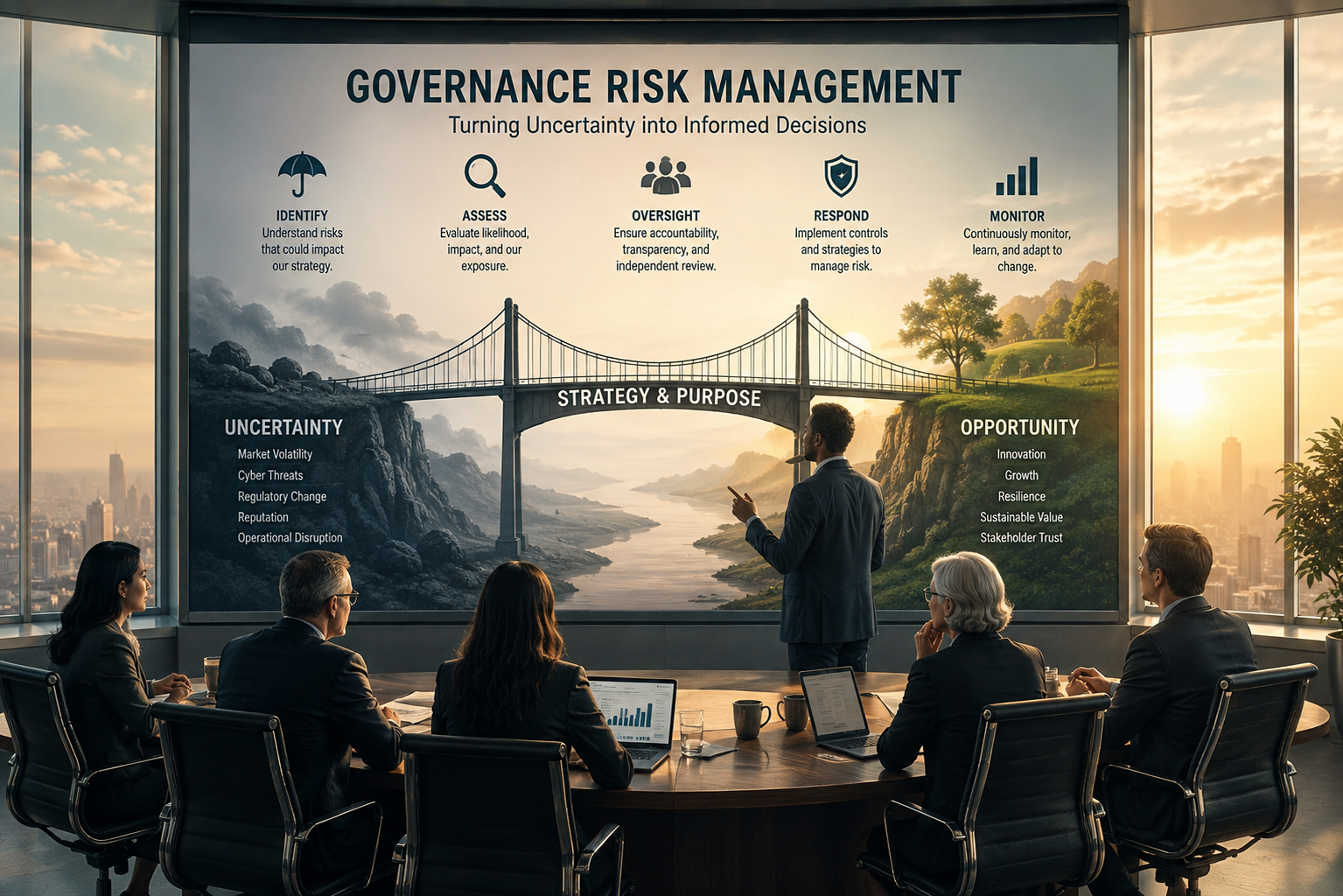
Advisory board appointments are becoming a defining factor in that clarity. They enable leaders to move from uncertainty to informed action, from reactive governance to proactive strategy.
Final Thought
The question is no longer whether companies should consider advisory board appointments.
The question is whether they can afford not to.
Because in a world where complexity is constant and change is accelerating, insight is not a luxury.
It is a competitive advantage.
#AdvisoryBoard, #AdvisoryBoardAppointments, #CorporateGovernance, #Leadership, #ExecutiveLeadership, #BusinessStrategy, #BoardLeadership, #GrowthStrategy