In business, strategy often gets the spotlight. Vision statements are polished, growth targets are celebrated, and innovation dominates executive conversations. Yet behind nearly every successful organization lies a less visible—but equally powerful—factor: boardroom dynamics.
The quality of interaction inside the boardroom frequently determines the quality of decisions outside of it.
Companies rarely fail because intelligent people were absent from leadership discussions. More often, organizations struggle because the right conversations never happened. Strong boardroom dynamics create an environment where insight is challenged, perspectives are expanded, and leadership moves from reactive management to strategic foresight.
As today’s business landscape becomes increasingly complex, the organizations that thrive will not simply have experienced boards. They will have boards that function with clarity, trust, accountability, and strategic alignment.
What Are Boardroom Dynamics?
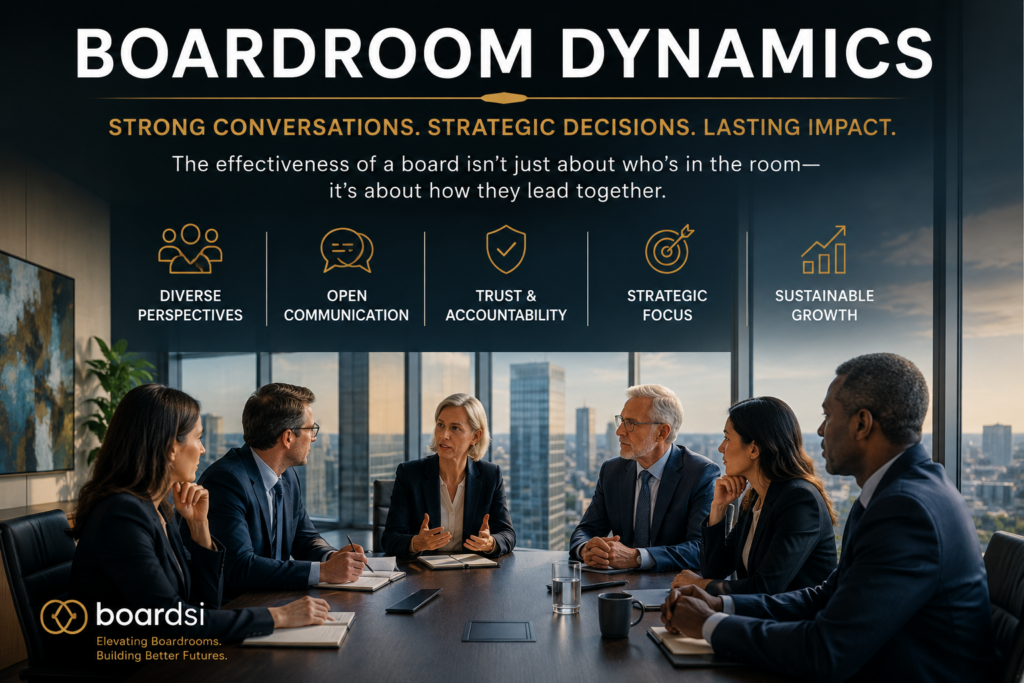
Boardroom dynamics refer to the relationships, communication patterns, decision-making behaviors, and leadership interactions that shape how a board operates.
These dynamics influence:
- How effectively leaders collaborate
- Whether diverse perspectives are welcomed
- How conflict is managed
- The speed and quality of strategic decisions
- The level of trust between executives and board members
Healthy boardroom dynamics create productive tension—the kind that sharpens thinking and improves outcomes. Dysfunctional dynamics, on the other hand, create silence, politics, and stagnation.
The difference is rarely technical expertise. It is cultural intelligence.
Why Boardroom Dynamics Matter More Than Ever
Modern boards face unprecedented pressure. Economic uncertainty, AI disruption, cybersecurity concerns, ESG expectations, and evolving workforce demands require boards to think beyond traditional governance.
The challenge is no longer simply overseeing performance. It is navigating complexity.
That requires boards capable of:
- Asking better strategic questions
- Challenging assumptions constructively
- Adapting quickly to market shifts
- Balancing innovation with risk management
- Aligning leadership around long-term vision
Without strong boardroom dynamics, even highly qualified boards can become ineffective.
A room full of accomplished executives means little if collaboration is absent.
The Traits of High-Performing Boardrooms
Exceptional boards do not happen by accident. They are intentionally built around leadership behaviors that encourage trust, strategic thinking, and accountability.
1. Psychological Safety
Strong boardrooms create environments where members feel comfortable expressing disagreement without fear of dismissal or political fallout.
The best decisions often emerge from respectful challenge, not passive agreement.
When psychological safety exists, boards become more innovative, transparent, and resilient.
2. Diversity of Perspective
Effective boardroom dynamics depend on cognitive diversity. Boards that include leaders from varied industries, backgrounds, and leadership experiences are often better equipped to anticipate disruption and identify opportunity.
Diversity is not simply a social initiative. It is a strategic advantage.
3. Strategic Communication
High-performing boards communicate with precision and purpose. Discussions remain focused on long-term impact rather than short-term distractions.
Strong communication also reduces friction between executives and board members, creating alignment throughout the organization.
4. Leadership Alignment
One of the greatest indicators of healthy boardroom dynamics is alignment between the board and executive leadership team.
Misalignment creates confusion, slows execution, and weakens organizational confidence.
Alignment, however, accelerates momentum.
The Cost of Poor Boardroom Dynamics
Organizations often underestimate how damaging unhealthy boardroom culture can become.
Common warning signs include:
- Dominating personalities controlling discussions
- Lack of engagement from board members
- Resistance to innovation
- Avoidance of difficult conversations
- Short-term decision-making driven by fear
- Poor succession planning
These issues rarely remain isolated within the boardroom. They eventually impact company culture, employee confidence, investor trust, and organizational performance.
In many cases, strategic failure begins with communication failure.
How Organizations Can Improve Boardroom Dynamics
Improving boardroom dynamics requires intentional leadership design.
Organizations should focus on several key areas:
Evaluate Board Composition
The strongest boards combine experience with perspective. Companies should regularly assess whether current board members bring the strategic insight needed for future growth.
Prioritize Executive Thought Leadership
Boards benefit from leaders who contribute more than operational expertise. Executive thought leaders elevate discussions through vision, insight, and industry awareness.
Encourage Constructive Challenge
Healthy disagreement should be viewed as an asset, not a threat. Boards that normalize thoughtful debate often make stronger long-term decisions.
Invest in Governance Development
Governance is no longer static. Boards should continuously evolve through education, leadership development, and exposure to emerging business trends.
The Strategic Role of Boardsi
As organizations seek to strengthen leadership and governance, strategic board placement has become increasingly important.
Boardsi helps organizations identify executives whose leadership style, expertise, and perspective align with evolving boardroom needs. Rather than focusing solely on credentials, the emphasis is placed on creating leadership ecosystems capable of driving meaningful growth.
The result is stronger alignment, healthier boardroom dynamics, and more future-focused decision-making.
Because ultimately, the effectiveness of a board is not determined by titles alone.
It is determined by how leaders think together.
Final Thoughts
The future of business leadership will belong to organizations that understand one critical truth: strategy alone is not enough.
Execution depends on people.
Leadership depends on trust.
And long-term success depends on boardroom dynamics.
The strongest organizations are built in rooms where leaders challenge each other respectfully, communicate openly, and remain aligned around a shared vision for the future.
In the years ahead, competitive advantage will not simply come from who sits at the table.
It will come from how the table functions.
#BoardroomDynamics, #CorporateGovernance, #ExecutiveLeadership, #BoardLeadership, #LeadershipStrategy, #BusinessGrowth, #ExecutiveThoughtLeadership, #BoardOfDirectors, #LeadershipDevelopment, #Governance, #StrategicLeadership, #BusinessLeadership