
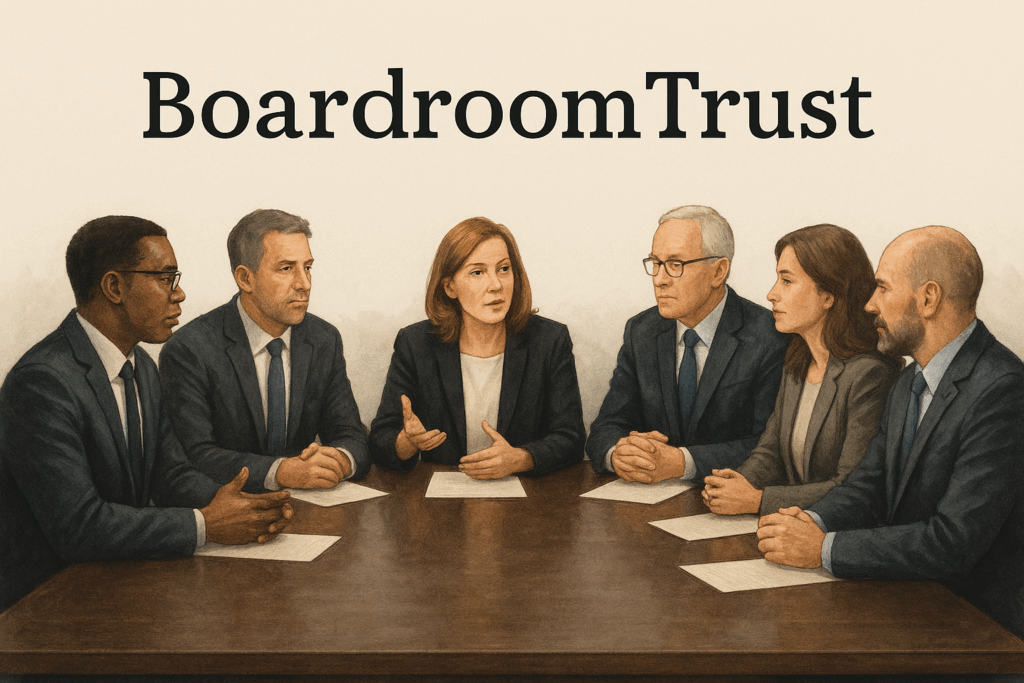
When we talk about trust at the board level, we often reach for metrics, performance reviews, or governance frameworks. But the truth is, trust doesn’t live in charts or checklists. It lives in the quiet moments—when a director admits they don’t know, when a CEO says “I got it wrong,” when a chair listens before deciding.
Trust isn’t built in the boardroom through status. It’s built through vulnerability.
The Myth of the Perfect Leader
We’ve been conditioned to believe that leadership—especially at the top—is about certainty. That strength means always having the answers. But if there’s anything my research has shown, it’s this: real leadership begins when the armor comes off.
In high-performing boards, trust is not a nice-to-have. It’s the foundation. And yet, it’s often the first thing sacrificed at the altar of efficiency or power. We forget that without trust, we can’t challenge ideas without attacking people. We can’t navigate crises without blame. We can’t evolve.
Trust Is Earned in the Small Moments
Here’s what trust actually looks like on a board:
A CFO who says, “I’m not sure how this impacts our long-term risk profile. Can we explore it together?”
A board member who asks, “What’s the story behind this data?” instead of dismissing it.
A chair who creates space for dissent without labeling it disloyal.
Trust is built not in grand gestures, but in micro-behaviors: consistency, empathy, transparency, and accountability. When we show up with curiosity instead of control, when we stay connected even in disagreement—that’s when trust takes root.
Daring to Be Known
To build trust, we must first be seen. And being seen requires courage.
Boards that build trust intentionally often do the following:
Normalize vulnerability. They open meetings with check-ins or reflective questions. Not as a warm-up, but as a way to bring their whole selves to the table.
Model candor with compassion. Feedback is direct but never dehumanizing. People feel safe to speak—and safe to be challenged.
Honor values over ego. Decisions are guided by shared purpose, not power plays or politics.
This doesn’t mean every meeting becomes a group therapy session. It means we stop pretending we’re only there for fiduciary oversight. Because every strategic decision is also a human one.
Accountability Without Shame
One of the hardest truths about trust is this: you can’t have it without accountability. But accountability without shame is an art.
Boards that cultivate trust hold each other to high standards—but they do it with respect. They ask hard questions without weaponizing them. They own their mistakes. They move forward together.
In short: they don’t confuse being tough with being ruthless.
Final Thought: Trust Is a Practice
Building trust at the board level isn’t a box to check. It’s a daily practice. It’s staying grounded in our values even when it’s uncomfortable. It’s choosing connection over control. It’s daring to lead from a place of enoughness—not perfection.
Because in the end, the boards that thrive aren’t just the smartest in the room. They’re the bravest.
And bravery, as we know, begins with belonging.
#Leadership,#Boardroom,#CourageousLeadership,#TrustMatters,#ExecutiveLeadership,#OrganizationalHealth,#CorporateGovernance,#EmpathyInBusiness,#StrategicLeadership