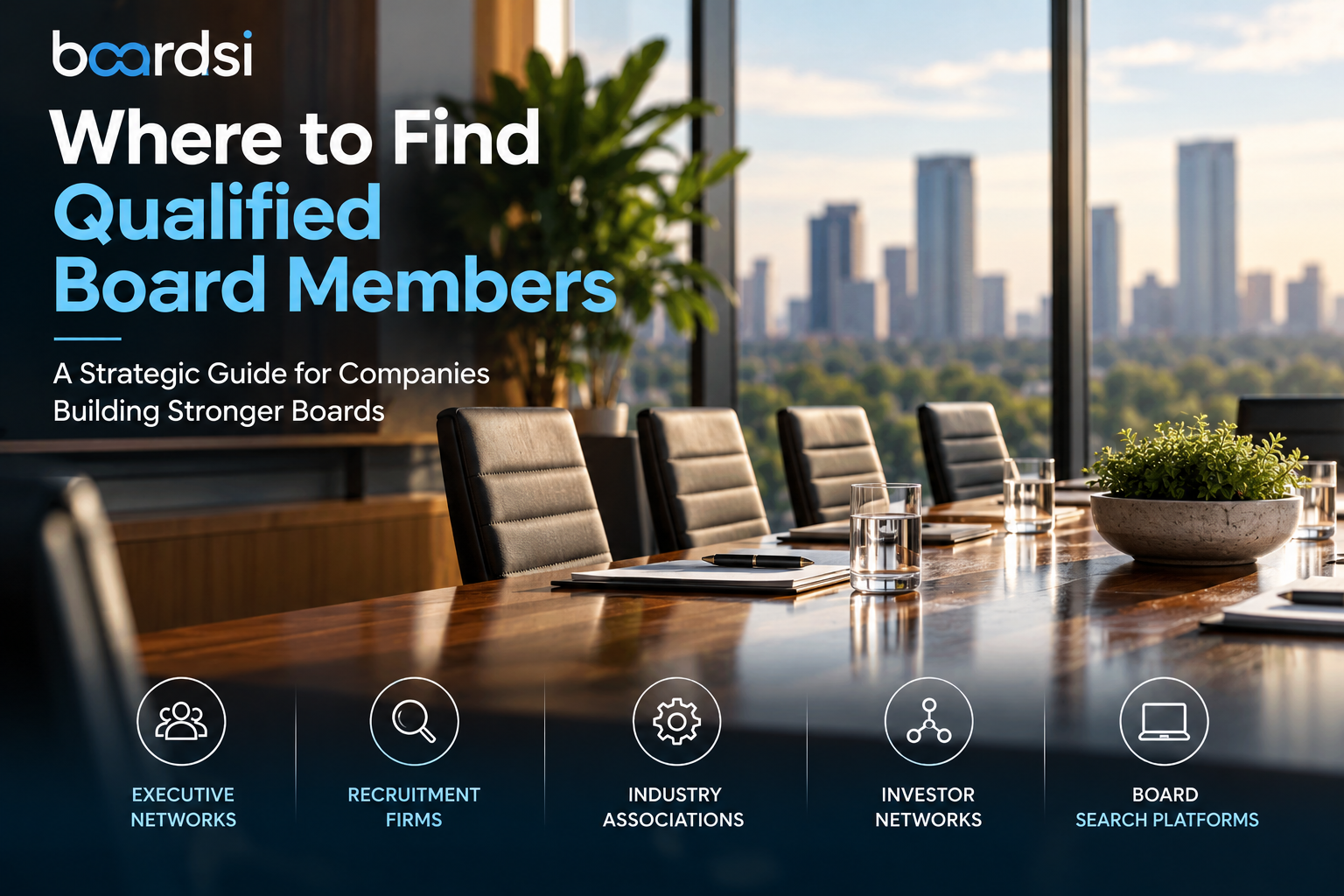

For decades, board appointments operated quietly behind closed doors. Names were passed across mahogany tables, vetted in backchannel calls, and filtered through an inner circle of trust. But in today’s hyper-visible, accountability-driven environment, companies—and leaders—can no longer afford such opacity.
Enter the board‑placement network: a new breed of platforms, partnerships, and advisory firms redefining how the next generation of board members is discovered, prepared, and placed.
Board Seats Are No Longer Passive Perks
Gone are the days when a board seat was viewed as a cushy retirement post or a reward for career loyalty. In today’s governance landscape, board members are expected to be strategic contributors, enterprise risk navigators, and stewards of long-term value.
At the same time, the demands placed on boards—cybersecurity oversight, ESG governance, geopolitical risk, digital transformation—have outpaced traditional pipelines. Companies are looking beyond familiar faces and legacy resumes. They want diversity of thought, fresh competencies, and cross-sector insight. And they need a faster, more targeted way to find it.
That’s where board‑placement networks step in.
From Executive Search to Boardroom Curation
Unlike traditional executive recruiters focused on C-suite roles, board‑placement networks operate with a dual mission: to expand access to board opportunities for a broader range of leaders, and to help companies identify qualified directors with real strategic alignment.
These networks act as talent matchmakers—but with a governance lens. They vet for more than experience. They assess for boardroom readiness: governance fluency, fiduciary judgment, stakeholder awareness, and the ability to collaborate under pressure.
Some, like Boardsi or Equilar, layer on proprietary technology to map board competencies to corporate needs. Others, like The Boardlist or Athena Alliance, focus on underrepresented talent—particularly women and leaders of color—who have historically been excluded from informal succession channels.
In every case, the result is a shift away from the “who you know” model toward a more meritocratic, mission-aligned approach.
Visibility Is the New Prerequisite
For executives, the board‑placement network era introduces both opportunity and accountability. It is now possible to raise your profile for board roles without waiting for a call from a recruiter. But doing so requires clarity on what you offer, where you can contribute, and why you’re board‑ready.
That means building a board-specific profile—one that highlights enterprise thinking, strategic acumen, and risk oversight experience. It means participating in governance education programs, writing thought leadership, and joining curated networks where board placement is the intent—not the byproduct.
And critically, it means showing up where modern boards are looking—not just in elite networks, but on the platforms designed to surface new voices.
Boards Are Buying In
For corporate nominating committees, these networks offer more than convenience. They offer credibility. The best platforms conduct rigorous due diligence, reference checks, and even simulations to evaluate fit. In an era where every board appointment is scrutinized by investors, proxy advisors, and the press, such validation matters.
Additionally, these networks allow boards to solve for gaps more strategically—identifying candidates with expertise in AI, sustainability, regulatory affairs, or digital transformation before the pressure hits.
The Future of Board Recruitment Is Networked and Intentional
As governance complexity rises and the demand for inclusive, capable boards intensifies, board‑placement networks are no longer optional. They’re a strategic tool—for companies that want the best minds around the table, and for executives who aim to bring their best to the boardroom.
This is not the end of traditional board searches. It’s their evolution.
In a world where performance, perspective, and trust all matter deeply, the board‑placement network has emerged as a new engine of alignment—quietly reshaping who leads at the top, and how they get there.
#boardplacement #executiveleadership #governance #strategicnetworking #boardreadiness #boardrecruitment #diverseleadership #futureofboards #corporategovernance #forbesstyle